Soil microbial communities appear more strongly linked to disease rates than demographics, wealth, or climate, new research suggests
15 December 2025
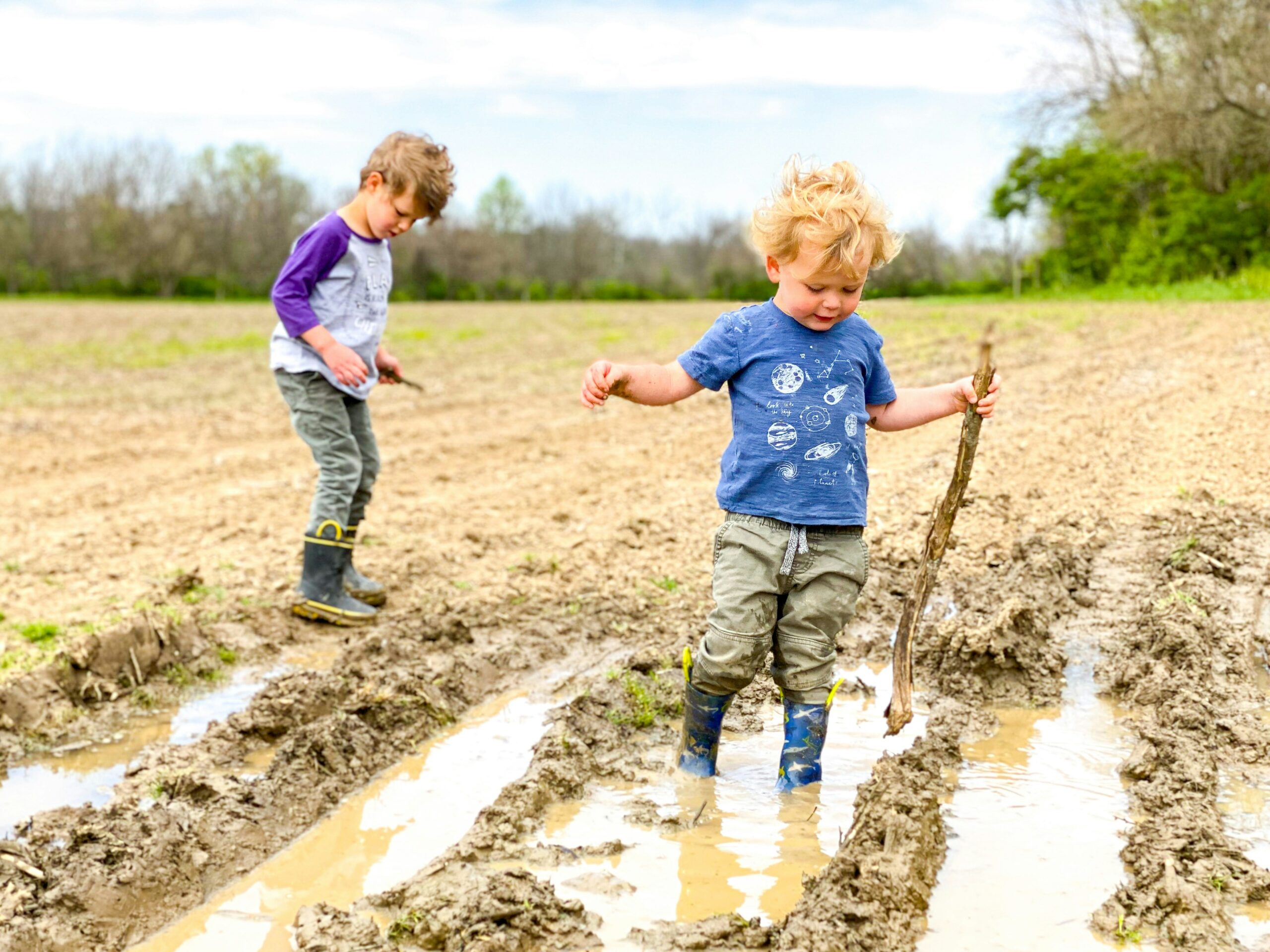
Growing evidence suggests that getting cozy with soil microbes, especially as kids, can guard against allergic disease. Credit: Jenna Stensland
Researcher contact:
Joshua Ladau, Arva Intelligence, [email protected] (UTC-8 hours)
AGU press contact:
Sean Cummings, [email protected] (UTC-5 hours)
NEW ORLEANS — The unique blend of fungi and bacteria in a region’s soil may be the strongest factor explaining its rates of childhood allergic disease, with certain assemblages of soil critters appearing linked with better health outcomes, according to new research to be presented at AGU’s 2025 Annual Meeting in New Orleans. Although a causative connection has yet to be established, the researchers say the pattern appears with remarkable consistency across the globe.
“We’ve analyzed the data in every way we can think of—adding datasets, looking at different measures of [soil] diversity…but no matter how we’ve done it, this result is consistent,” said Joshua Ladau, a microbial ecologist involved in the research and working at Arva Intelligence, a farmer-focused environmental solutions company. “At this point, I’m exceedingly confident this association is real.”
Ladau will present his research on 16 December at AGU25, joining more than 20,000 scientists discussing the latest Earth and space science research.
A global question
Allergic disease affects an estimated 2.5 billion people worldwide, or roughly 30% of humanity. A growing body of research indicates that exposure to a diversity of soil microbes, especially in childhood, can help limit allergic disease — potentially by helping us develop immune tolerance early in life, experts hypothesize. However, how much this matters in comparison to other influencing factors remains unclear.
“When you compare the effects of beneficial microbes with things like access to health care, genetics, climate, and pollution, how do they stack up? That was our question,” Ladau said. “Soils are not generally the things people point to first when thinking about health.”
To dig into this, the team drew on datasets recording the prevalence and severity of atopic dermatitis, asthma, and allergic rhinitis among over a million children in over 250 cities across 97 countries, plus three global surveys of soil fungal and bacterial diversity amounting to over 8,200 soil samples from around the globe. They then used a model to tease out the associations between the disease rates and soil biodiversity represented in the data.
The sheer volume of information made this a daunting task. Just preparing the massive datasets for analysis took many months, Ladau said. And the soil samples didn’t always come from the exact same locations as the allergic children, requiring the researchers to develop a mathematical method to account for the distance between them when drawing connections. Even so, Ladau said, “the fact that we’re seeing such a strong signal despite this mismatched dataset points to how important the microbial measures are in predicting allergic disease.”
On top of that, each soil sample contained thousands of microbial taxa, making it difficult to determine which ones were actually associated with lower rates of allergic disease. But having carried on this project since 2022, Ladau said his team is starting to figure it out. Based on their model, soil microbes are the most important predictor of regional differences in allergic rhinitis and asthma, in terms of both disease prevalence and severity. Compared to already-known predictors of allergic disease like climate, wealth, and demographics, soil microbes are up to four times more predictive than the next most important variable.
(Microbial) community matters
Crucially, simply having a broader diversity of microbes doesn’t seem to matter. Instead, it’s all about which microbes a soil has. “It looks like there are a number of taxa that are promoting health, and ones that are negatively associated, which makes sense — not everything out there is good,” Ladau said. What’s more, he added, those negative ones weren’t already known as pathogens, adding to the novelty of the discovery.
This doesn’t prove that soil microbes are causing kids to have less allergic disease, only that the two seem to go hand-in-hand. But so far, Ladau said, no other factor has emerged that accounts for that link.
Besides establishing whether the connection is causative, Ladau would like to investigate ways to promote public exposure to potentially healthful soils. This could happen through encouraging people to spend more time outdoors, but also through policies and land management strategies aimed at conserving and restoring soils—which can also improve soils’ ability to sequester carbon, remediate fire damage, decompose detritus, and control pest prevalence. Human health only adds to that list of boons, Ladau said.
“Linking soil biodiversity to public health provides a major additional facet to the importance of soils and what’s living in them,” he said.
Abstract information:
Microbial Diversity in Soils Is the Top Predictor of Global Rates of Childhood Allergic Disease
Tuesday, 16 December, 2:15 – 5:45 P.M. CST
Hall EFG, Poster Hall (Convention Center)
AGU’s Annual Meeting (#AGU25) will bring more than 20,000 Earth and space scientists to the Ernest N. Morial Convention Center in New Orleans, LA from 15-19 December. Members of the press and public information officers can request complimentary press registration for the meeting now through the end of the conference. Learn more about the press AGU25 experience in our online Press Center.
AGU (www.agu.org) is a global community supporting more than half a million professionals and advocates in Earth and space sciences. Through broad and inclusive partnerships, AGU aims to advance discovery and solution science that accelerate knowledge and create solutions that are ethical, unbiased and respectful of communities and their values. Our programs include serving as a scholarly publisher, convening virtual and in-person events and providing career support. We live our values in everything we do, such as our net zero energy renovated building in Washington, D.C. and our Ethics and Equity Center, which fosters a diverse and inclusive geoscience community to ensure responsible conduct.
Subscribe or change your emailing preferences for the AGU Newsroom