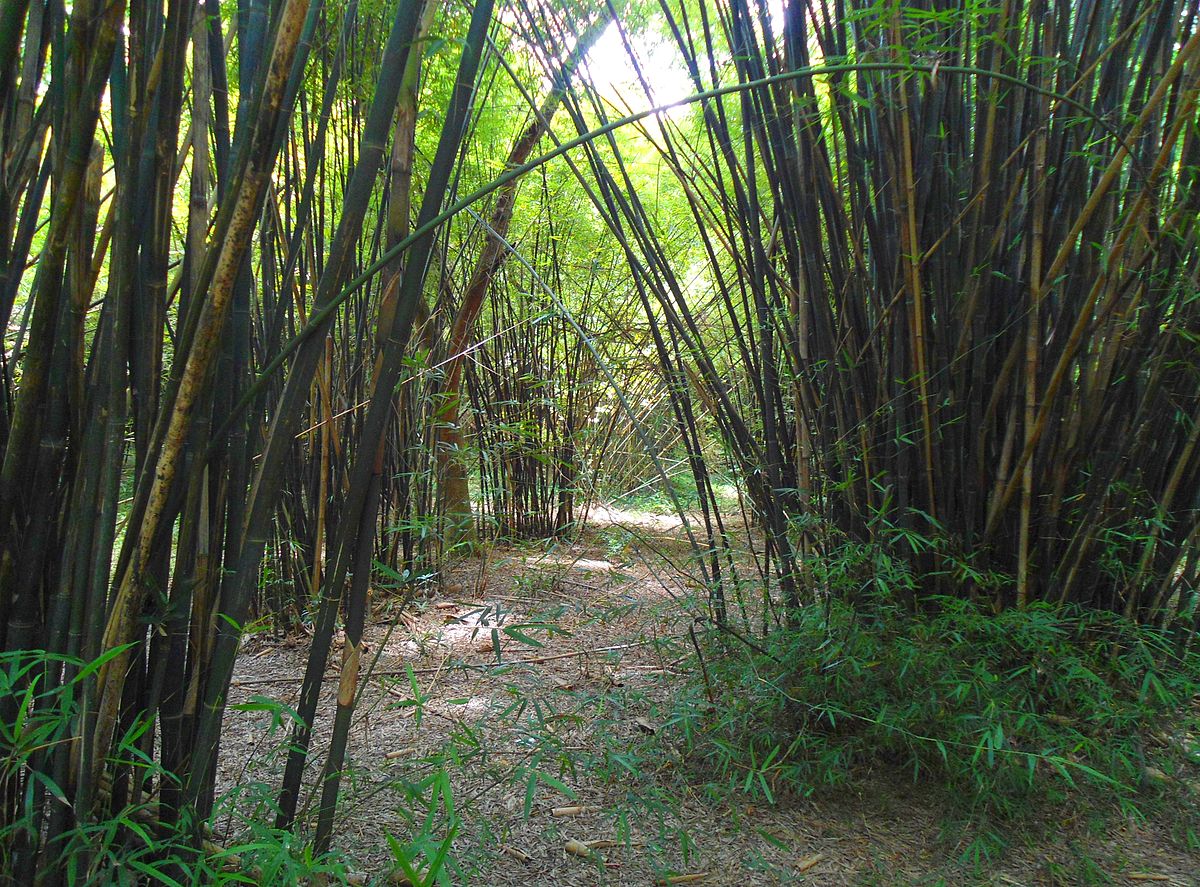
Bamboo forest in Golden Bull Mountain Ridge Park, Haikou City, Hainan Province, China.
Credit: Anna Frodesiak

AGU News
Register for Ocean Sciences Meeting in Glasgow, 22-27 February 2026
Staff, freelance and student journalists, press officers and institutional writers are eligible to apply for complimentary press registration. Book conference hotels early! [media advisory][OSM26 Press][eligibility guidelines]
Featured Research
Stronger windstorms ahead in warming northern Europe
In 1999 Cyclone Anatol hit northern Europe with winds the equivalent of a category 1 hurricane, inflicting record storm surge on Denmark’s coast, a severe test for onshore wind turbines, and 2 billion Euro in damage. Climate change is predicted to bring more storms like Anatol as warmer temperatures energize stronger winds and the potential for more destruction. [Geophysical Research Letters study]
Bamboo forest in China holds 500 million tons of carbon
While it may seem like a drop in the bucket compared to the Amazon forest at 150 billion tons, this single Moso bamboo forest in China holds a third the amount of carbon the Rocky Mountains store. Soil stores around 70% of the carbon while vegetation holds the rest. However, hotter temperatures and droughts along with increased human activity like overharvesting damage the soil’s ability to store carbon. [JGR Biogeosciences study]
Tidal waves of dust on Mars
Almost all of Mars is covered in dust, making dust devils and storms very common across Mars’ surface. Massive dust storms sometimes cover the whole planet for weeks. Tides of dust ebb and flow, like water tides on Earth but driven by heat from the sun as opposed to gravity from the moon. A new study finds the dust tides happen throughout the year, even without dust storms. The dust moves with meridional and vertical winds, allowing scientists to study how wind currents flow on Mars. They can also use it for research of sand on Earth. [JGR Planets study]
In the arctic, consequences of heat waves linger
The aftermath of a historic 2020 heat wave could still be felt in Siberia a year later. [Eos research spotlight][Global Biogeochemical Cycles study]
Tree rings record history of jet stream-related climate extremes
Persistent spatial patterns of summer weather extremes in the northern hemisphere recorded in tree ring growth records provide a thousand-year history of jet stream ‘wave5’ dynamics. [Eos editors’ spotlight][AGU Advances study]