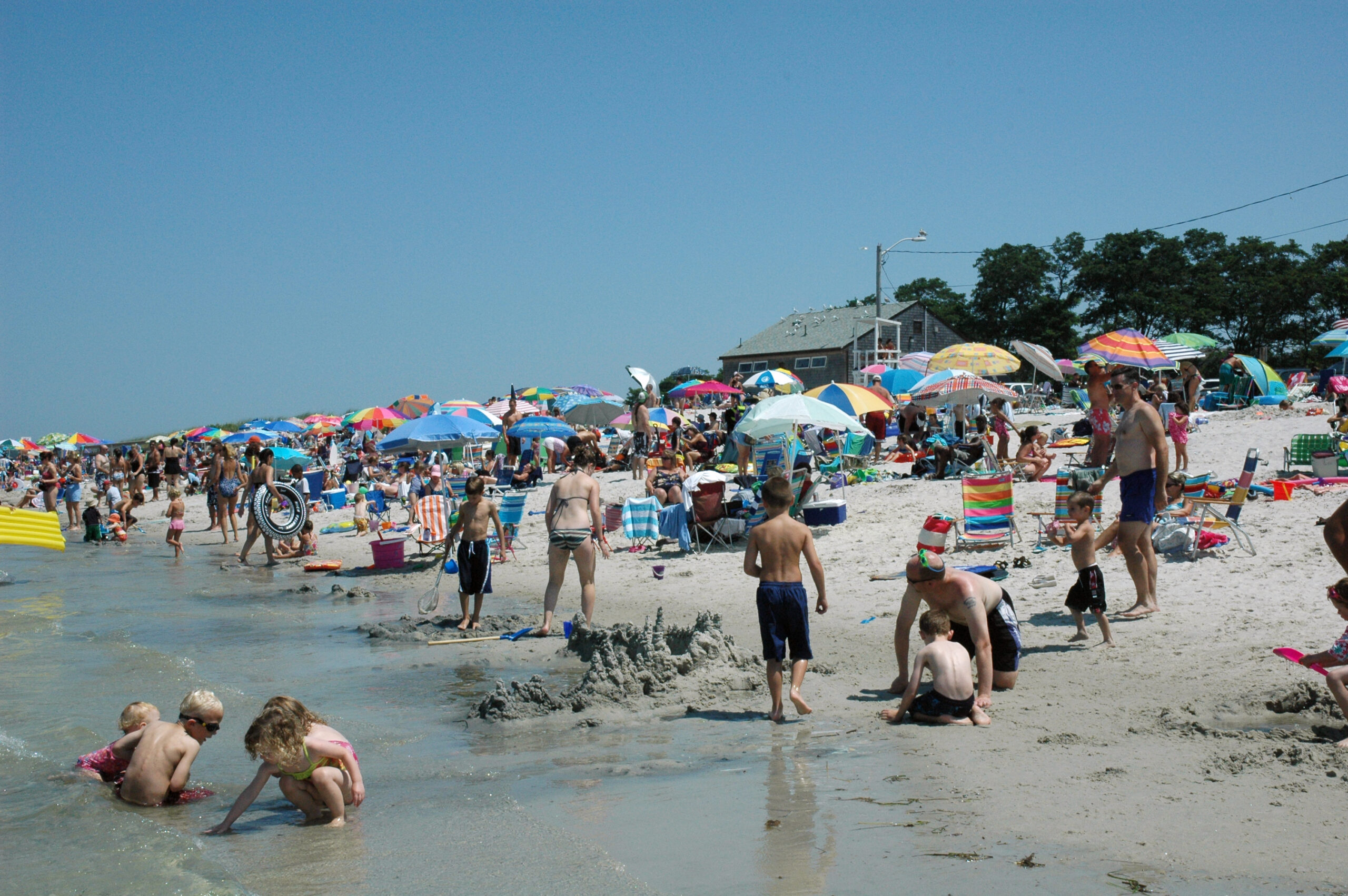
A crowded day at Skaket Beach in Orleans, Massachusetts, U.S. As climate change warms sea surface temperatures along the U.S. East Coast, beachgoers face worsening risk of infection by heat-loving, marine Vibrio bacteria, especially on northern coastlines. Credit: DimiTalen

AGU News
AGU Denounces Trump Administration’s Repeal of the EPA Endangerment Finding
AGU President Brandon Jones released a statement today on the Trump Administration’s repeal of the EPA Endangerment Finding, calling it a reckless, senseless decision with global implications for human well-being and the environment. Read more: [From the Prow]
Press registration is open for the 2026 Ocean Sciences Meeting in Glasgow, Scotland
Staff, freelance and student journalists, press officers and institutional writers are eligible to apply for complimentary press registration for the conference, which will convene 22-27 February. [media advisory][OSM26 Press][eligibility guidelines][preview conference hotels]
Featured Research
Climate change raises risk of bacterial disease for U.S. East Coast beachgoers
Even in a future of moderate greenhouse gas emissions, beachgoers along the U.S. Eastern Seaboard will face up to 100 times more risk of infection from marine bacteria known as Vibrio in 2100 than in 2020. Knowing the bacteria proliferate faster in warmer waters, researchers simulated risk of infection by two Vibrio species (V. vulnificus and V. parahaemolyticus) over the next 75 years, comparing warming scenarios from moderate and high emissions. Under the high-emissions scenario, risk multiplied up to 1,000 times from 2020 levels. The team projected greater danger along northern coastlines and noted that actual hazards may exceed their estimates, which accounted for Vibrio exposure from accidentally swallowing seawater but not infection through wounds. [GeoHealth study]
India’s entire coastline is sinking, putting millions at risk
In the first assessment of land subsidence across India’s entire coast, based on satellite data from 2016 to 2024, researchers have documented ubiquitous land sinking, far more widespread than previously thought. Hotspots include several high-population cities, with Chennai and Kolkata among them. The five major deltas of India’s east coast, heavily farmed regions, are sinking up to 20 millimeters per year, while over 8.5 million people live in areas sinking more than 5 millimeters per year. Land subsidence augments the risks of sea level rise for the more than 200 million Indians living within 100 kilometers of the coast, many in low-lying, flood-prone regions. [Geophysical Research Letters study]
Socially vulnerable Americans face worsening, disproportionate extreme heat risk
Residents of the contiguous U.S. in socially vulnerable communities, on average, weathered extreme heat nearly 3 degrees Fahrenheit hotter than their low-vulnerability counterparts between 1994 and 2023. That’s up from a 2.3-degree disparity over the period from 1951 to 1980, a recent study finds — and the gap will continue to widen as human-driven global warming continues. Using climate observations and future climate projections at fine spatial scales, researchers also found that at 2 degrees Celsius of warming, vulnerable communities will see up to 18 more days per year over 95 degrees F than non-vulnerable ones, with some areas getting more than 180 days per year over that threshold. Above 95 degrees F, using fans to cool off can worsen heat stress by blowing hot air over the body. [Earth’s Future study]
Global warming and rising seas stymie salt marshes’ carbon sequestration
The combination of human-driven global warming and saltwater intrusion from sea level rise may hinder salt marshes’ ability to sequester carbon and mitigate climate change. Researchers monitored soils from salt marshes in China’s Yangtze River estuary both in the field and under controlled levels of temperature and salinity. Temperatures over 25 degrees Celsius (77 degrees Fahrenheit) boosted the soils’ emissions of carbon dioxide and nitrous oxide, both greenhouse gases — and saltier conditions amplified the effect. This suggests that salt marshes may become less effective carbon sinks as temperatures climb and sea levels rise, the team said. [Earth’s Future study]
Children’s asthma-related hospital visits rise when wildfire smoke fills the air
Asthma-related hospital visits among children rise when wildfire smoke pollutes the air, a recent study finds. Looking at data from 2017 to 2020 from a children’s hospital serving two counties in Northern California, researchers found that an additional 10 micrograms per cubic meter of smoke particulates correlated with a 4% higher risk of hospital visits the same day and a 13% higher cumulative risk over the ensuing five days. The effect amplified in communities already facing environmental and socioeconomic stress. As wildfire smoke events to continue worsening in the Western U.S. under human-driven climate change, the team wrote, public health efforts must prioritize children in vulnerable communities during wildfires. [GeoHealth study]