6/19/2025: Extreme heat may raise risks of early and preterm births

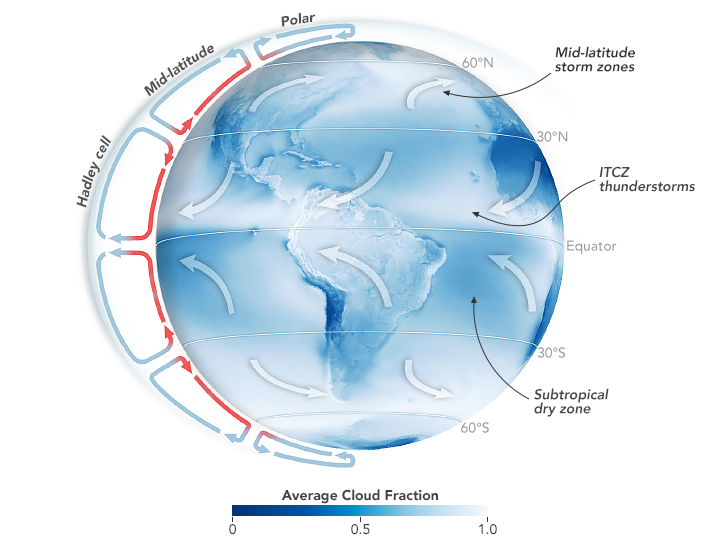
Graphic of the Earth with South America centered shows average cloud fraction on a scale from white to blue. Location of Hadley Cell circulation is marked.

Marine storm cloud zones have shifted poleward and narrowed, and the changes are contributing to our planet’s growing energy imbalance. Credit: Michala Garrison/ NASA Earth Observatory

AGU News

AGU and IPCC partner to expand access to publications for work on Seventh Assessment Report
Access to AGU journals will provide critical climate research and data for co-authors from developing countries and anyone facing access barriers to content. [press release]

Heat wave science roundup

  • Heatwave-flooding double-disasters are increasing [Geophysical Research Letters study]
  • Current city planning can’t keep up with combined heat and drought events [Earth’s Future study]
  • Wet heat or dry heat? Humidity lags on hottest days as climate warms [Earth’s Future study]
  • Unhoused older adults struggle to cope with rising temperatures in Phoenix [GeoHealth study]
  • How urban greenspace compares in Beijing and NYC, and who benefits [Earth’s Future study]
  • Where to hang out to avoid heat-related emergency department visits [GeoHealth study]
  • Temperature-related deaths could rise five-fold by end of century in US [GeoHealth study]
  • Urban overheating risks are personal, study finds [Earth’s Future study][press release]

Featured Research

Extreme heat may raise risks of early and preterm births
Scientists looked at the births of nearly four million babies between 1990 and 2017 and found an association between preterm and early-term births during extreme heat waves, compared to the rest of the year. Heat-related preterm births (between 28 and36 weeks) were more commonly found in women over 35 whereas women under the age of 25 had a greater association with early-term births (between 37 and 38 weeks) during the hottest days of each year. [GeoHealth study][see also: flooding disasters]

Earth’s storm cloud zones are shrinking, and that means warmer oceans
Earth’s cloudiest regions form a band around the equator and in the middle latitudes, where converging winds generate storms. These bands have been contracting by 1.5% to 3% per decade since the turn of the century. The shrinkage lets more sunlight reach the surface, warming the oceans and tipping the balance of energy absorbed and energy reflected back to space. [Geophysical Research Letters study][NASA Earth Observatory graphics]

AI forecasts PM2.5 pollution at U.S. embassies and consulates worldwide
Fine particulates (PM2.5) bring serious, expensive risks for cardiovascular health. The U.S. State Department and EPA monitor air quality at 80 embassies. Researchers at NASA applied deep learning to satellite imagery, using the ground monitoring data for calibration to extend accurate 3-day forecasts to 269 embassy locations worldwide. [Earth and Space Science study]

Fracking high stress faults risks bigger earthquakes
Injecting fluids underground for fracking, wastewater disposal or geothermal energy raises pressure in the rock, which can cause small earthquakes. New research finds stress, pore pressure, and rock structure all affect earthquake magnitudes, and offers better interpretation of seismic signals to assess the risks from these projects. [Geophysical Research Letters study]

Water density shifts can drive rapid changes in AMOC strength
High-latitude variations in density, which appear to be driven by changes in atmospheric pressure, can propagate to midlatitudes and affect the current’s strength within just a year. [Eos research spotlight][Geophysical Research Letters study]

How Greenland’s glacial troughs influence ocean circulation
Glacial troughs in Antarctica promote mixing of warm and cold water, affecting global climate. A new study explores whether the same is true in troughs along Greenland’s coastline. [Eos research spotlight][ Journal of Geophysical Research Letters: Oceans study]
5/30/2025: California’s earthquakes run late

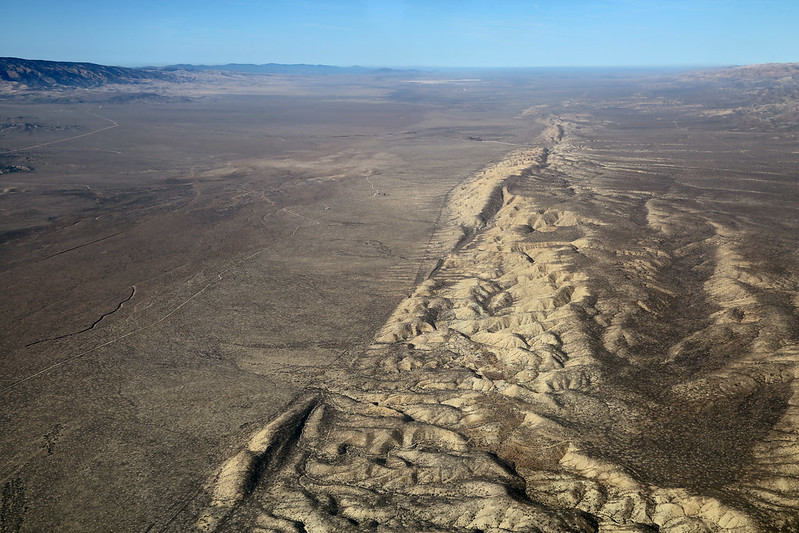
Aerial photograph of a dry grass plain, blue sky in background. A furrow of the San Andreas Fault runs vertically.

The San Andreas Fault cuts across southern California’s Carrizo Plain. Credit: Doc Searls

Featured Research

Cooling the Great Barrier Reef likely presents low risk of remote problems
A case study of the Great Barrier Reef, which has suffered coral bleaching from record high ocean temperatures in recent years, used the Community Earth System Model to investigate effects of interventions such as marine cloud brightening far from the treatment location under a spectrum of scenarios and intensities. Results suggest limited, localized cooling over the reef in summer has a low risk of remote impacts. The authors say their approach can be applied to risk management of climate interventions for other sensitive ecosystems. [Geophysical Research Letters study]

Earthquakes on California’s faults tend to run late
California’s fault systems have had an outsized influence on earthquake forecast models. Intrigued that New Zealand’s earthquakes are rarely “late,” researchers examined the time of recurrence for 210 faults in five tectonically active regions around the world, drawing on data from 890 large prehistoric and historic earthquakes. California was the outlier, possibly because of the predominance of fast-moving slip-faults there. The researchers suggest a different calculation may be more useful for forecasters elsewhere.[Journal of Geophysical Research: Solid Earth study]

On-the-ground solar storm nowcasting for the UK
Severe to extreme geomagnetic storms can induce currents in ground-based infrastructure, with unfortunate consequences. New nowcast and forecast codes estimate geomagnetically induced currents in Great Britain’s high voltage power transmission network, high pressure gas pipeline network and railway network using ground and satellite data.[Space Weather study]

River alkalinization and ocean acidification face off in coastal waters
Factors ranging from rainfall to nutrient runoff to changing mining and agricultural practices drove decades-long pH trends in the Chesapeake Bay. [Eos research spotlight][AGU Advances study]

AI pictures augment rock datasets key to subsurface engineering
Boosting digital rock images with AI-powered augmentation and quality analysis makes the invisible underground environment more accessible. [Eos editors’ highlight][Water Resources Research study]

5/22/2025: Who’s exposed to oil and gas wastewater?

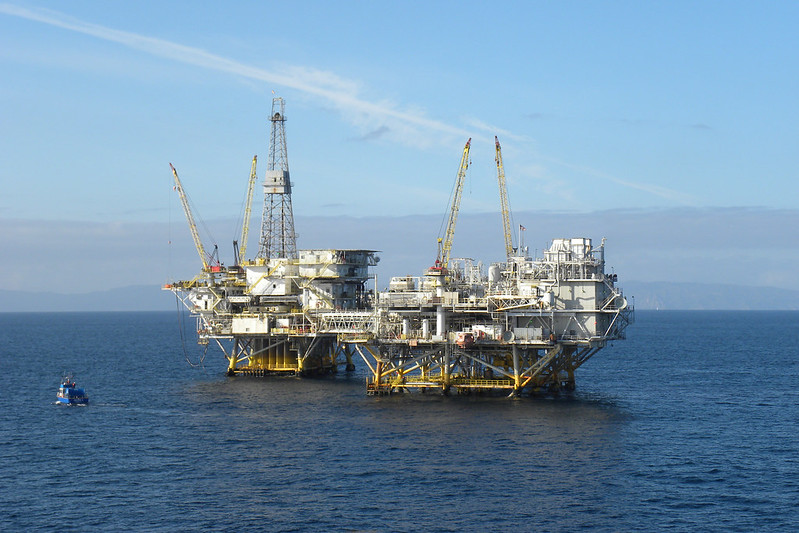
Oil production from submerged federal lands on the U.S. Outer Continental Shelf. Credit: Bureau of Safety and Environmental Enforcement

AGU News

Weather & climate 100-hour science-a-thon next week
U.S. federally-funded climate scientists and meteorologists will hold a public-facing, nonpartisan 100-hour relay of virtual 20-minute talks sharing their work and why it matters for every American. Viewers will get a chance to interact with the speakers via moderated questions. [livestream Wednesday 28 May to Sunday 1 June]

Featured Research

Storm prediction gets 10 times faster thanks to AI
Forecasters hope new algorithms will lead to earlier warnings of when dangerous weather is on the way. [Eos research spotlight][Geophysical Research Letters study]

Who’s exposed to oil and gas wastewater?
Oil and gas extraction uses a lot of water — four trillion liters in 2021. Most of the contaminated wastewater (98%) is disposed into deep injection wells, but demand for fresh water means “produced water” is sometimes put to other uses, such as irrigation, livestock watering or road treatments. Contaminated water can also leak or spill. Information is spotty about exactly which chemicals contaminate the water and their toxicity, mobility and ultimate environmental fate. A review of what is known about human exposure identifies key knowledge gaps. [GeoHealth study]

Heatwave and flooding double disasters are increasing
Some atmospheric conditions have the potential to generate paired disasters, like heat + drought or heavy rain + wind. The conditions that bring extreme heat and extreme rain are typically opposing, but synchronicity has increased 34% since the 1980s and is rising. [Geophysical Research Letters study]

Scientists reveal hidden heat and flood hazards across Texas
A wider swath of the Lone Star State may be affected by more heat and flood events than previous recordkeeping suggests. [Eos research spotlight][AGU Advances study]

Deforestation is reducing rainfall in the Amazon
Researchers found that between 2002 and 2015, a 3.2% reduction in Brazilian forest cover led to a 5.4% reduction in precipitation levels. [Eos research spotlight][AGU Advances study]

Heat and pollution events are deadly, especially in the Global South
Researchers found that the combination of heat waves and high PM2.5 pollution led to nearly 700,000 premature deaths in the past 30 years — most of which occurred in the Global South. [Eos research spotlight][GeoHealth study]

Earth’s last rapid global warming event had a long recovery
During the Paleocene-Eocene Thermal Maximum, global temperatures jumped 5 degrees Celsius in conjunction with a burst of carbon dioxide. New research suggests the recovery took more than 140,000 years — which may be bad news for our current carbon cycle situation. [Eos research spotlight][Geophysical Research Letters study]

Shade is not enough to cool old forests in a new climate
It’s usually cooler under a forest than outside the forest, but that natural temperature buffering didn’t make global warming any less strong during the last 45 years in an old-growth forest of Oregon. [Eos editors’ highlight][AGU Advances study]


5/15/2025: California almond harvest could halve by 2100

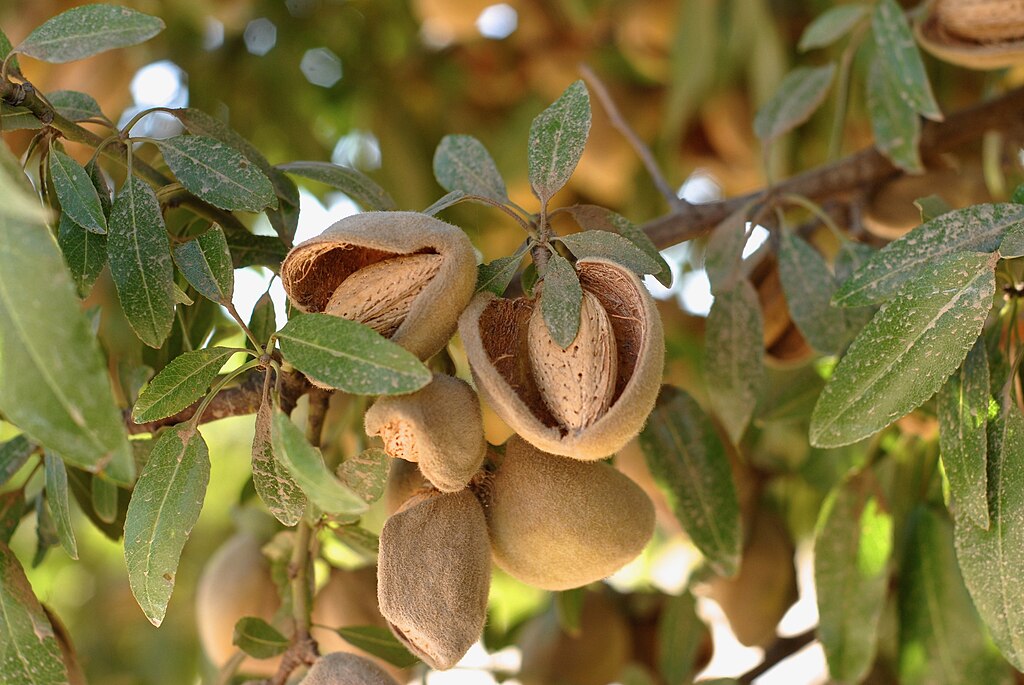
close up photograph of almonds on a tree

Almonds maturing in California’s Central San Joaquin Valley. Credit: PAC55/Wikimedia

Featured Research

Unchecked climate warming may shrink California’s almond harvest 49% by end of century
Even under moderate warming, producers can expect a 17% yield reduction, but innovation in farming techniques could offset the damage, according to a new study that models the effects of temperature and humidity changes at each developmental stage. [Earth’s Future study]

Rise of electric vehicles shifts pollution concerns to brakes and tires
A case study in Tianjin city, China, inventoried the vehicle emissions that don’t spill out of exhaust pipes, finding fine particulates (PM2.5) release during wear on brakes and tires surpassed particulates produced from combustion engines. [Journal of Geophysical Research: Atmospheres study]

Dust devils could dust solar panels on Mars
Dry whirlwinds roam the Red Planet, often rising hundreds of meters above the surface. When conditions are right, they lift bright, reflective dust off a layer of coarser grained surface material, leaving dark tracks that mark their passage for months after the vortex has passed. The first high-resolution global survey of dust devil tracks found they peaked in summer around 60 degrees north and south of the equator, coinciding with the peak of Mars’ dust storm season. The authors suggest placing solar-powered missions in the path of heavy dust devil traffic to take advantage of the occasional scouring. [Geophysical Research Letters study]

Panama connected the Americas 4.1 million years ago
4.6 million years ago, the Central America Seaway still flowed between the Americas, but it was growing shallow. Half a million years later, thin channels may have carried animals across the isthmus, but the ocean basins were functionally separate on the ocean scale, say the authors of a new geochemical study. Isotopes bound in the fossils of tiny ocean animals record the end of exchange of seawater and nutrients between the oceans. Previous estimates put this date at 3.2 million years ago based on evolutionary divergence of related animals in the Atlantic and Pacific.  [Paleoceanography and Paleoclimatology study].

New study questions Curiosity Rover’s methane detection on Mars
Curiosity’s detection of the gas, if atmospheric, could be an indicator of life on the Red Planet. But skeptics say further work is needed to rule out the rover itself as the source of the methane. [Eos research spotlight][Journal of Geophysical Research: Planets study]

The uncertain fate of the Beaufort Gyre
Climate models produce widely varying predictions for what will happen to this influential ocean current, but most models predict it will weaken or stop. [Eos research spotlight][Journal of Geophysical Research: Oceans study]

#

4/24/2025: Solar power droughts on the rise

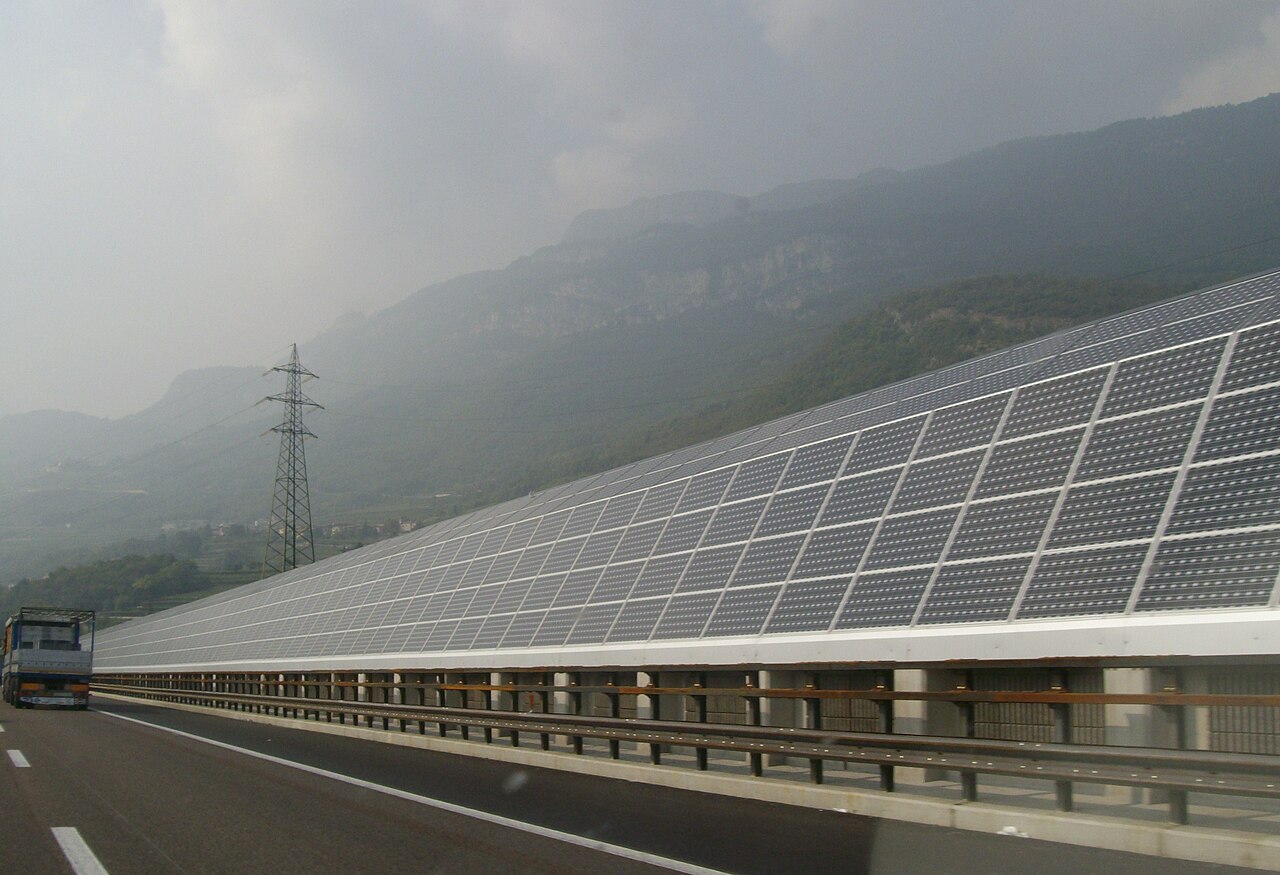
Cloudy outlook for solar power? Heat, weather and pollution cause power generation shortages. Credit: Piergiuliano Chesi

AGU News

Protecting the global scientific enterprise
AGU is gathering stories of impact to share with leaders and policy makers. We particularly want to hear from AGU members outside the United States to make the critical case that threats to the scientific enterprise are interconnected and global. [share your story] [message from AGU leaders]

U.S. Federal Administration Science Tracker
Keep up with major and minor changes to science policies from the Trump administration with a handy chart from AGU’s Eos magazine. The tracker is sortable by date and one of four categories relevant to Earth and space scientists. Every item in the tracker includes a one-sentence “what happened” explanation and a link to a story from Eos or another trusted source. [U.S. Science Policy Tracker] 

AGU leadership available at the European Geophysical Union meeting
President Brandon Jones and Interim ED & CEO Janice Lachance will be on site at EGU in Vienna next week and available for interviews. Email [email protected] to connect.

Featured Research

Climate-fueled droughts trouble Africa’s Great Green Wall
The African Union launched the African Great Green Wall initiative in 2007 to hold back expansion of the Sahara into the Sahel. Knowledge of long-term weather patterns informs management of the region. An examination of rain and drought from 1950 to 2022 finds a rising drought trend which accelerated in the mid-nineties, when severe droughts hit the northern parts of the region. [JGR Biogeosciences study]

150,000 years of geomagnetism from eastern equatorial Africa
A 129-meter core of sediments from the bed of Lake Chala, a crater lake near Mt. Kilimanjaro, records changes in Earth’s magnetic field and environment over much of human prehistory. Comparable to ice cores from Greenland and Antarctica, the new core is the longest geomagnetic record from continental Africa. [Geochemistry, Geophysics, Geosystems study]

Earthworms not necessarily the bad guys of Arctic carbon story
Earthworms are burrowing into Arctic ecosystems where icesheets once eradicated them. What does the arrival of these voracious soil detritovores mean for tundra carbon reservoirs? It’s complicated, new research found. In experiments, meadows lost soil carbon while heath gained. But earthworm presence encouraged more root biomass in both vegetation types resulting in a net carbon wash for the meadow and gain for heath. [JRG Biogeosciences study]

Isolated wetlands are carbon-storing powerhouses
Non-floodplain wetlands may account for more than half the world’s wetlands and store about twice the carbon of wetlands connected to frequently flooded streams, rivers, and lake areas. [Earth’s Future study]

Compost and biochar could boost carbon sequestration by crushed rock
Crushed rock additives may also help decrease soil emissions of other greenhouse gases, such as nitrous oxide and methane.[Eos research spotlight][AGU Advances study]

Solar power shortages are on the rise
More communities are relying on solar power as a source of renewable energy, but increasing demand, light-blocking pollution and climate change threaten its reliability with “solar droughts.” [Eos research spotlight][Geophysical Research Letters study]

320 million years of polar wander
A new quantitative assessment of the wanderings of Earth’s axis of spin from the Carboniferous to today rules out previous suggestions of sudden shifts, but finds oscillations of up to 20 degrees. [Eos editors’ highlight][AGU Advances study]

4/17/2025: Strong solar flare disrupts air traffic visibility


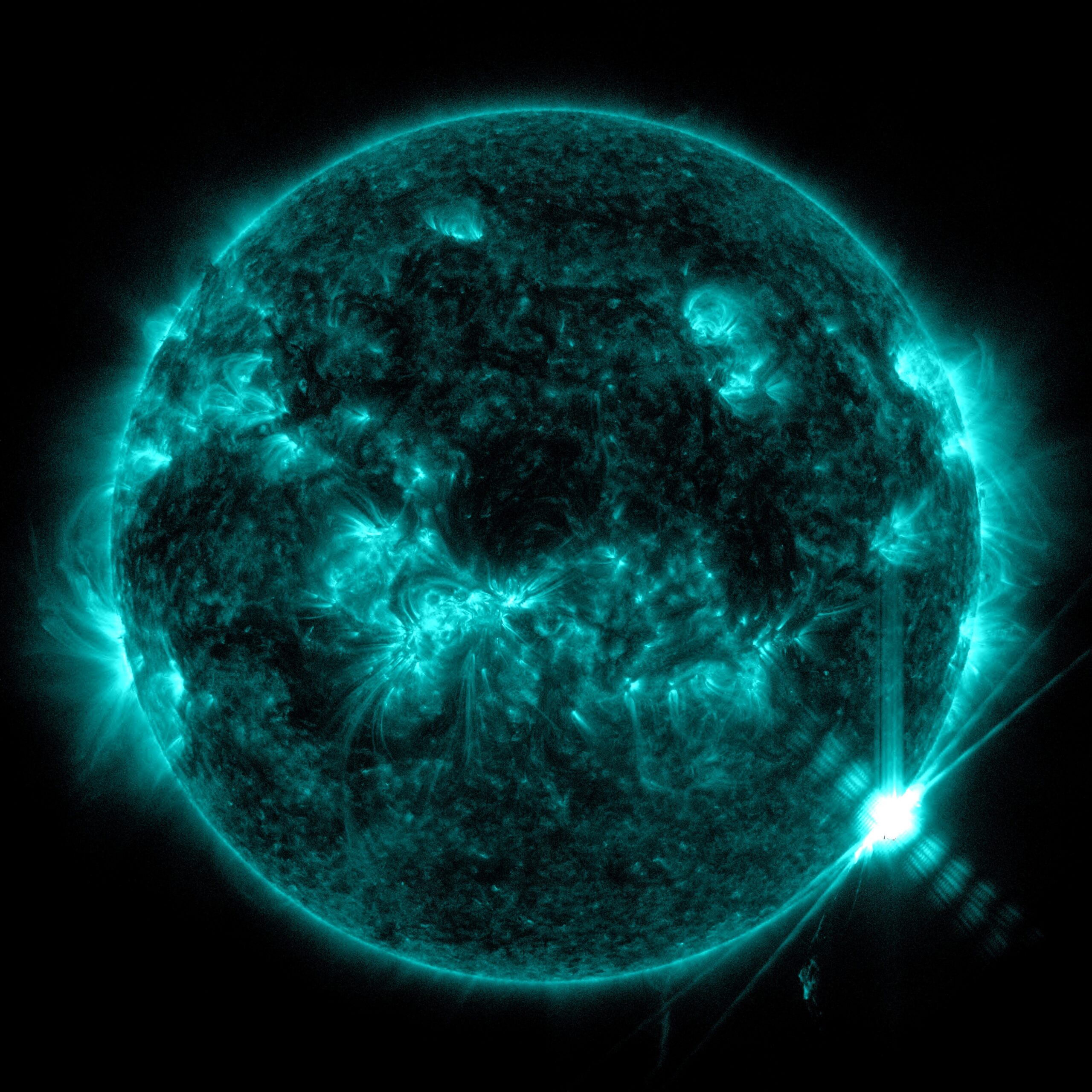
An ultraviolet image of the Sun colorized teal against a black background shows the hottest

An solar flare classed X3.3 erupted on 9 February 2024, seen in extreme ultraviolet. Credit: NASA’s Solar Dynamics Observatory

Featured Research

Solar flare fritzed satellite tracking of aircraft
To avoid collisions, pilots and air traffic controllers rely on a network of global navigation satellites. But the network is susceptible to heavy weather in space. A strong solar flare on 9 February 2024 caused gaps and position errors in data broadcasts of aircraft identity and location. Researchers describe the event and offer solutions. [Space Weather study]

Weird weather in North Atlantic impacts tropical Pacific tuna catch
A new study explains how spring water temperatures in the North Atlantic can make waves in the autumn yellowfin tuna population, far away in the Pacific warm pool. A pattern of unusual sea surface temperatures called the North Atlantic Tripole is associated with 8.3% larger catch in its positive phase and 16.9% smaller catch in its negative phase. [Geophysical Research Letters study]

Can the world’s cargo ships meet carbon targets?
The U.N.’s International Maritime Organization member (IMO) countries (absent the United States) agreed Friday to levy carbon fees encouraging adoption of cleaner fuels. International shipping conveys over 80% of global trade by volume and emits an estimated 3% of the world’s greenhouse gases. Surveyed experts predict the industry can hit the IMO’s 2030 carbon targets with operational improvements. Longer term gains will require alternative fuels. [Earth’s Future study][UBC press release]

When ice ages end, ocean circulation fine-tunes ocean heat
New Antarctic ice core data bolster model predictions of ocean heat content during glacials and interglacials. [research spotlight][Geophysical Research Letters study]

Martian magmas live long and prosper
Marsquakes detected by the InSight rover at Cerberus Fossae may be volcanic.[Journal of Geophysical Research: Planets study][Editors’ highlight]


4/10/2025: Corals grow in cold water where methane seeps

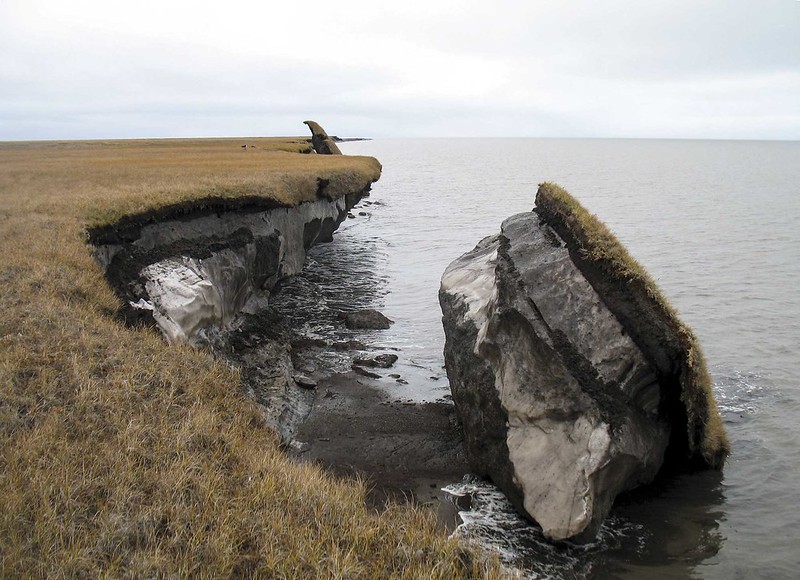
Photograph: Dry tundra grass crumbles where it meets the Arctic ocean. Permafrost is visible in the soil of broken edges. Grey sky in background and grey water to the right.

Coastal bluffs at Drew Point, on Alaska’s coastal plain, can erode 20 meters per year. As soil melts, storm waves may bite abrupt and unpredictable chunks out of the coastline.
Credit: U.S. Geological Survey.

Featured Research

Coldwater corals thrive near methane cold seeps
Most corals live in sunny, oxygen-rich waters off tropical coasts. But in the dark, cold, low-oxygen depths of Norway’s Hola trough, corals coexist with methane cold seeps bubbling up from gas hydrates frozen in the ocean floor. A new study suggests a “delicate equilibrium” of diverse microbial life, dissolved organic carbon and biochemical mechanisms associated with the seeps in the low oxygen depths benefit the corals. Further warming could release a burst of methane, upsetting that balance. [Journal of Geophysical Research: Biogeosciences study]

Storms will eat Alaska’s Arctic coastal tundra in increasingly unpredictable bites
New research from Point Hope, Alaska, finds large land losses are inevitable on the Arctic coastal plain along Alaska’s north coast. Predictable yearly coastal retreat will shift to sudden losses from extreme storms as thawing soil makes coastlines more vulnerable to waves and rising seas. Remote coastal Inupiat communities may need to step up timelines for adaptation or relocation. [Journal of Geophysical Research: Earth Surface study]

Sailors’ historical accounts key to rare, glowing “milky seas”
Satellites have caught the mysterious milky waters lighting more than 100,000 square kilometers of open ocean, but the phenomenon is so rare that only a single scientific expedition has encountered it, leaving scientists in the dark about when, where and why it happens — and if the leading bacterial suspect, Vibrio harveyi, is the true source of the eerie glow. A new global database assembles 400 years of eyewitness accounts with the aim of predicting future bioluminescent blooms.[Earth and Space Science study][CSU press release]

“Thirstwaves” are the new climate threat for US crops
Like heat waves, these can damage crops and ecosystems and increase pressure on water resources. New research shows they’re becoming more severe. [Eos research spotlight][Earth’s Future study]

Restoring preindustrial CO2 levels won’t bring back all Arctic sea ice. This may make North Atlantic winter weather weird.
Incomplete Arctic sea ice recovery results in equatorward-shifted winter jets. The North Atlantic jet shift is particularly uncertain due to the ocean circulation acting as an additional driver. [Eos Editors’ highlight][Geophysical Research Letters study]

#


1/8/2024: People, power lines ignite more wildfires in US West

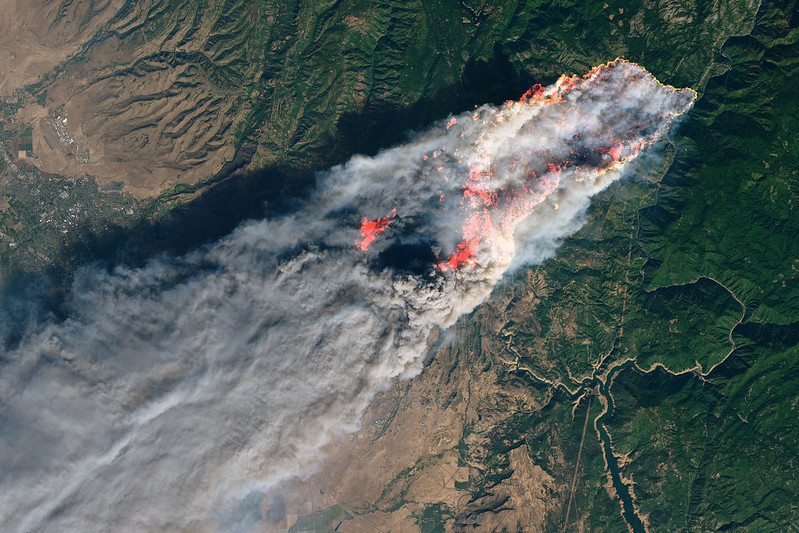
Satellite image of wildfire burning in a forest and smoke plume.

Aging power utility lines ignited the Camp Fire near Paradise, California on 8 November 2018, captured by the Operational Land Imager on Landsat 8. Credit: NASA Goddard Space Flight Center.


People and power lines are starting more wildfires in tinder-dry West
Large wildfires have increased in the western U.S. in the last 50 years. Identification of the causes of ignition has not kept pace. More than 50% of wildfires now have unknown sources — a problem for prevention. A new study used machine learning to retroactively assign causes to 150,247 wildfires that ignited from 1992 to 2020, finding increasing trends for firearms, fireworks and power infrastructure. [Earth’s Future study]

Where the chickens are: High density farms cluster in socially vulnerable areas of North Carolina and Southeast US
Waste from Concentrated Animal Feeding Operations (CAFOs) accumulates in heaps and lagoons and is sprayed over nearby farmland, creating nasty health hazards for local people. Poultry farms are mostly unregulated in poultry powerhouse North Carolina, making environmental impacts difficult to assess. A new study maps these operations from space to identify who has to live with the chicken poo: primarily regions with low socioeconomic status. [GeoHealth study]

Vulcan-like exoplanets could be habitable
Some terrestrial planets with extreme internal heating, like Jupiter’s volcanic moon Io, can have solid surfaces and surface temperatures suitable for life. [Journal of Geophysical Research Planets study]

What lurks beneath the Antarctic ice
A new model of the plumbing underlying the full Antarctic Ice Sheet aims to improve predictions of global sea level rise. [Geophysical Research Letters study]

Rivers meandering faster on the Tibetan Plateau
Warmer temperatures are releasing the sinuous rivers of the “third pole” from their existing channels, speeding the migration rates of permafrost rivers by 34.6% from 1987 to 2022 through the combined effects of higher water discharge, ground ice melt and an additional 35 thawing days each year. [Geophysical Research Letters study]

Antarctic ice melt may fuel eruptions of hidden volcanoes
More than 100 volcanoes lurk beneath the surface in Antarctica. Ice sheet melt could set them off.[Eos research spotlight] [Geochemistry, Geophysics, Geosystems study]

Will the volcanoes of Germany’s Eifel Mountains erupt again?
New processing strategies applied to old seismic data reveal potential pockets of magmatic fluids or melts from the upper mantle. [Eos research spotlight] [Geophysical Research Letters study]

###

Subscribe to This Week from AGU or update your subscription preferences

5/22/2024: Earth’s high mountains drying since the 1970s

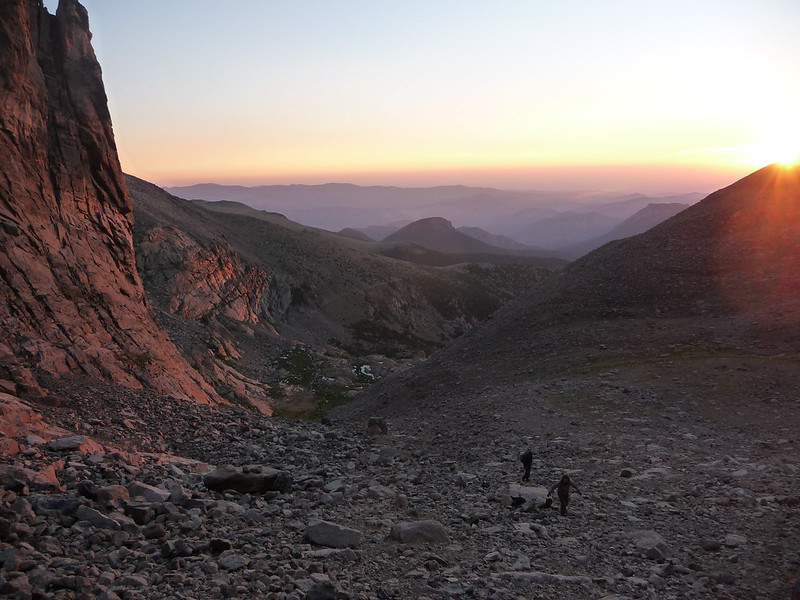
photograph of sunrise over mountain peaks. In the foreground, two people climb a scree field with cliffs to the left and a small peak to the right.

Sunrise on the Loft, Longs Peak, Rocky Mountain National Park.
Credit: Ryan Carpenter/NPS CC BY-ND

AGU News

WaterSciCon press registration open
Registration is open for the Water Science Conference, a collaboration of AGU and the Consortium of Universities for the Advancement of Hydrologic Science, Inc. (CUAHSI) convening 24-27 June in Saint Paul, Minnesota. The program features the confluence of science, policy and community and sessions coupling research to applied workshops. Interested reporters and press officers should email [email protected] with credentials. [press information][scientific program][eligibility]

Featured Research

Rockies and Ethiopian Highlands most vulnerable to high elevation drying trend
The air and soil of most mountain ranges worldwide have dried significantly since the 1970s due to warming temperatures and shifting precipitation patterns driven by climate change. The Rocky Mountains and Ethiopian Highlands have seen the most critical drying, with both atmospheric and soil aridity increasing by 13% across all elevation gradients. [Earth’s Future research]

More frequent winter warm spells threaten snowpack in western US and Canada
In western North American, warms spells —three or more days of unseasonably warm temperature highs — account for 49% of snow loss in winter. The loss occurs during a small window of time, only 0.6 days on average. But climate change is projected to make winter warm spell three times more frequent in humid regions, increasing snow loss by 147%, and stressing water supplies for many communities. [Water Resources Research]

Low carbon emission pathway halves future anthropogenic mercury pollution
Burning fossil fuels, especially coal, releases mercury, a toxin with severe health consequences for people and wildlife. High carbon emissions scenarios release mercury at present-day levels through 2060. On the low emissions pathway, the mercury peak will come at 2030 and decline faster. The cost of delay is compounded by re-emission of mercury deposited on land and in oceans. [Earth’s Future research]

Nature-based carbon removal strategies most popular, least effective
To achieve net zero carbon, countries will need to remove carbon dioxide that has already been released to the atmosphere. German researchers assessed 14 carbon removal options for technological, legal and institutional readiness, economic and environmental impact, and public perception. Removal potential is small compared to the size of the problem, underlining the need to reel back emissions now.  [Earth’s Future research]

Red-light-loving bacteria could expand the search for life
Most stars in our galaxy are red dwarfs, which emit far-red light. Whether they can fuel significant oxygen-generating photosynthesis is unknown. Scientists are uncovering genes responsible for oxygenic photosynthesis in cyanobacteria to shift the search for potentially habitable worlds. [Eos news highlight][Astrobiology Science Conference abstract]

###

Subscribe or update your subscription preferences.

5/16/2024: Farming seas wisely brings ecological benefits

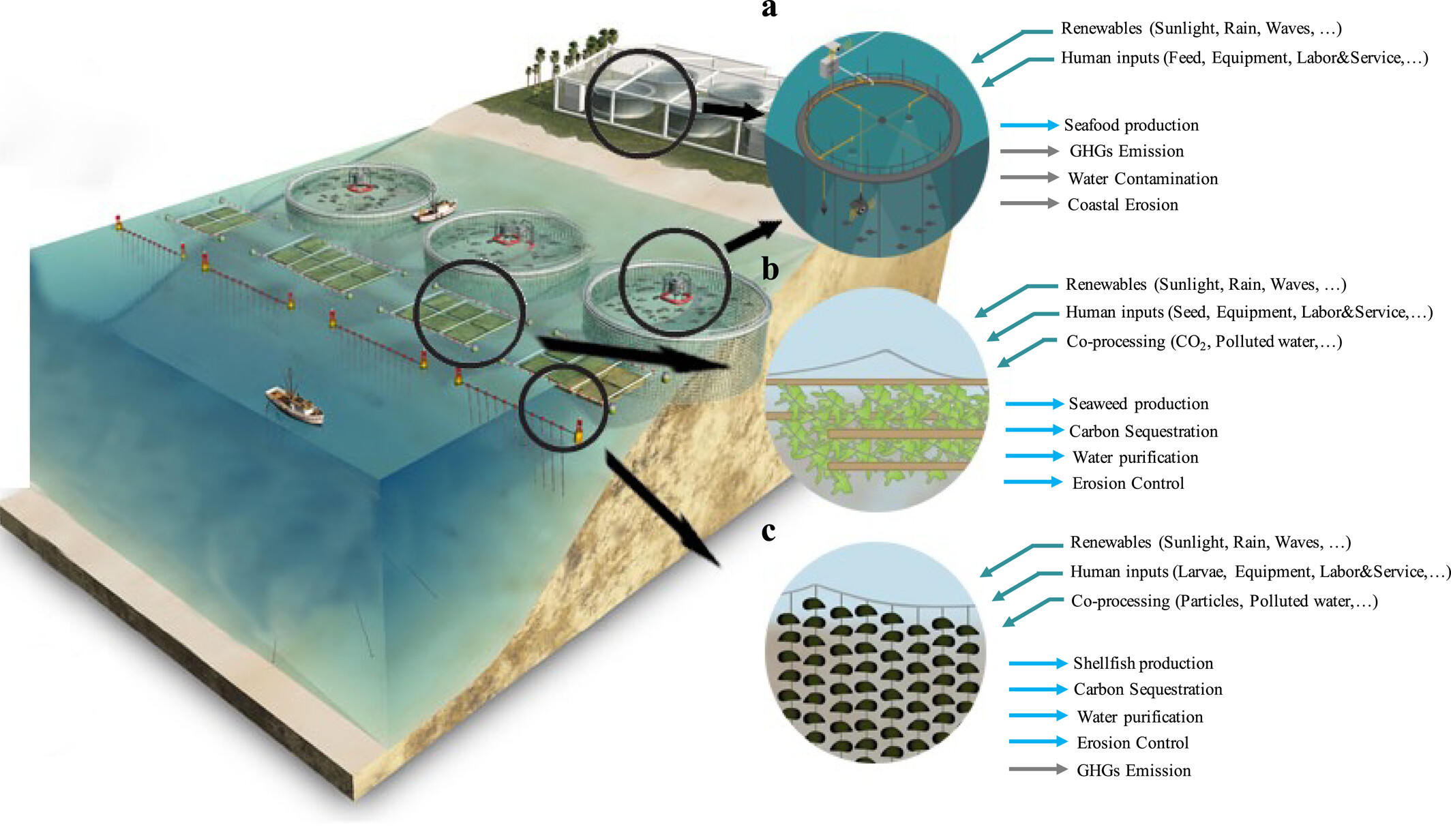
A new paper in Earth’s Future examines the inputs and outputs, costs and benefits of three categories of ocean farming: human fed (fish, crustaceans), sunlight fed (seaweed) and “unfed” (shellfish).
Credit: Liu et al. (2024) Earth’s Future https://doi.org/10.1029/2023EF003766

AGU News

WaterSciCon press registration open
Registration is open for the Water Science Conference, a collaboration of AGU and the Consortium of Universities for the Advancement of Hydrologic Science, Inc. (CUAHSI) convening 24-27 June in Saint Paul, Minnesota. The program features the confluence of science, policy and community and sessions coupling research to applied workshops. Interested reporters and press officers should email [email protected] with credentials. [press information][scientific program][eligibility]

Featured Research

Streams lose year-round flow in California
A survey of stream gauges in dry regions of California found 13% of 158 minimally-disturbed streams had lost perennial flow — a sign of the drying influence of a warming climate. Streams burdened by human development are generally drying faster but, in some cases, regulation has made water flow perennially in previously ephemeral streams. [Water Resources Research]

Landslides mark “recent” tectonic activity on Mars
In western Arabia Terra, Mars, a long fault system shows signs of repeated activity during the last 2 billion years, a time when the Red Planet was thought to have little tectonic activity. Four landslides of different ages tumble to the crater floor, triggered by tectonic processes that shorten the crust, thrusting up a chunk of the surface and creating a scarp up to 700 meters high. The total displacement would require about 3,300 marsquakes of the magnitude observed in the modern era, the researchers calculated. [Geophysical Research Letters research]

Farming the seas wisely has ecological benefits
Mariculture employing seaweed rafts, deep fish cages and shellfish rafts, hanging cages, and bottom sowing could turn ecological burdens into benefits with strategic selection of species, technology and location. Case studies off the coast of China, the largest mariculture producer, demonstrate combining approaches can mitigate water contamination from intensive fish farming – and feed a lot of people. [Earth’s Future research][special issue on Environmental Constraints to Increasing Complexity in the Biosphere]

Auroras signal more oxygen on Jupiter’s largest moon, Ganymede
in 2021, the Juno spacecraft passed within 1,053 kilometers of Jupiter’s moon Ganymede, getting a close look at the flow of plasma and charged particles between the massive magnetosphere of the planet and the moon. All of that electron inflow from Jupiter excites a UV aurora in the thin atmosphere of the moon, suggesting it holds 10 times more oxygen than previously calculated, and that a unique oxygen-generation process may be in effect on the solar system’s icy moons. [JGR Planets research]

Alerting communities to hyperlocalized urban flooding
A high-accuracy, low-cost sensor network may change the way urban floods are detected and monitored. [Eos research spotlight][Water Resources Research]

The secret to mimicking natural faults? Plexiglass and Teflon
Researchers found an effective way to produce natural fault behavior in the laboratory. [Eos research spotlight] [Journal of Geophysical Research: Solid Earth research]

Tiny satellites can provide significant information about space
Students and faculty at the University of Colorado Boulder use CubeSats to learn more about the near-Earth environment. [Eos research spotlight][AGU Advances research]

A new scheme to empower global air-conditioning energy modeling
An explicit air-conditioning adoption scheme and a global dataset improve urban energy demand modeling and unlock exciting capabilities in Earth system models. [Eos editors’ highlight][Journal of Advances in Modeling Earth Systems research]

###

Subscribe or update your subscription preferences.