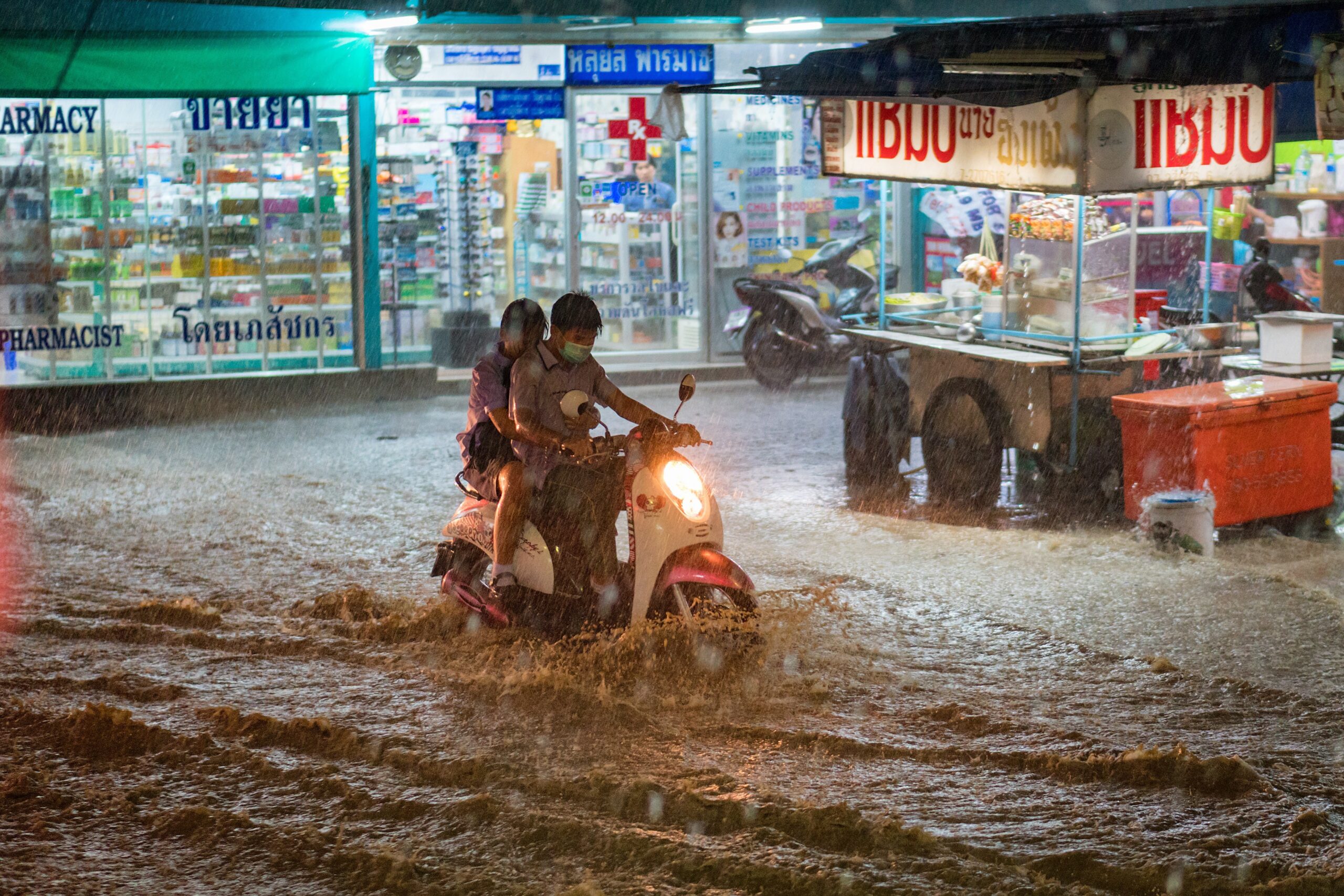
As climate change continues, more regions are receiving a greater share of their total rainfall through extreme rain events. Among other impacts, this can stress food and economic security in areas that rely on rainfed agriculture. Credit: qimono, Pixabay
AGU News
AGU 2026 Journalism Awards call for nominations
AGU is now accepting nominations for its 2026 Journalism Awards, which honor outstanding reporting on the Earth and space sciences published in 2025. Nominate your or your peers’ best work by Sunday, 19 April 2026 at 11:59 p.m. ET. [press release and submission links]
Attend the 2026 Astrobiology Science Conference in Madison, Wisconsin, 17-22 May
Reporters and press officers interested in press registration should email AGU Media Relations at [email protected]. Please include a link to a byline, masthead or a staff page listing your name and position. Freelancers should provide a link to a portfolio or links to at least three bylined science news stories published in the last 12 months. [AbSciCon home] [program]
Lunar research roundup
With Artemis II’s crew set to begin their outbound lunar transit tonight, check out the latest research on Earth’s Moon from AGU journals:
- Apollo Next Generation Sample Analysis cracks open “new” 50-year-old lunar samples from NASA’s collection [JGR Planets special collection][introduction]
- Looking for a sunny spot near cold pits of darkness: where to land on the south pole of the Moon [JGR Planets study]
- How to bring a snowball souvenir back from space: the challenge of icy sample return begins with Artemis [Geophysical Research Letters study]
- Day-night temperatures for scientific sightseeing locations on the Moon [Earth and Space Science study]
- Astronauts could listen for moonquakes with fiber optic cables [Earth and Space Science study]
- Lunar spacecraft exhaust could obscure clues to origins of life [press release][JGR Planets study]
Featured Research
As the climate warms, more of Earth’s rainfall arrives via extreme rain events
Should Earth warm by four degrees Celsius from preindustrial levels, much its land area could see a 15% to 20% increase in the fraction of its rain that comes from extreme rain events. The African Sahel, the Amazon, Southeast Asia, and northern Australia would rank among the most affected regions, according to new climate model projections. More than half of global croplands could suffer as a result, and low-income countries reliant on rainfed agriculture would be especially hard-pressed to maintain food security and economic stability. The finding highlights the need to limit warming to below 2 degrees Celsius, the researchers wrote, especially as many regions are already seeing extreme rain dominate their total annual rainfall even faster than models predict. [Water Resources Research study]
Meteorites from Earth or Mars could theoretically seed life on the clouds of Venus
Chunks of rock knocked loose from Earth or Mars (if life existed there) could, in theory, fly through space and deliver life to the clouds of Venus, according to recent model simulations. Small amounts of the rock could survive entering Venus’ atmosphere while still carrying living cells, scattering in fragments tiny enough to float in the clouds. Researchers estimate this process could theoretically send about 100 cells to Venus’s clouds every Earth-year. What happens after that remains unclear: although too little water exists in the Venusian sky to support Earthly life, the pressures and temperatures there resemble those on Earth’s surface, making it a place of interest to scientists studying the possibility of extraterrestrial life. [JGR Planets study]
Global wheat yields take a hit from rising extreme heat-drought combos
Simultaneous extreme heat and drought, on the rise due to human-driven climate change, is hurting global wheat yields. For over 70% of the world’s wheat-growing area, when these hot-dry combos persist for more than 10% of the growing season, yields drop by over 6%, on average. Canada, Australia, and Central Asia suffer the most severe impacts, while heavily irrigated regions like China and India are less affected. The findings come from a recent study including analysis of meteorological and soil data from 1981 to 2020. Heat and drought can hinder wheat production more in tandem than when they occur separately, the researchers wrote. [Earth’s Future study]
Air pollution disproportionately affects Cape Town’s vulnerable communities
Over 40% of the population of Cape Town, South Africa, lives in areas at high or very high risk for air pollution, mostly in informal settlements and historically disadvantaged neighborhoods. Researchers arrived at the result after comparing social vulnerability data with satellite data on air quality, an approach that allowed them to consider areas lacking traditional air quality monitors. The finding highlights the need to consider social factors and prioritize high-risk areas when addressing air pollution, the team wrote: improving housing and healthcare access in socially vulnerable communities, for instance, could mitigate adverse impacts. [GeoHealth study]
Asia’s heat-flood combo of 2022 unlikely without human-driven climate change
An extreme weather combination that hit Asia in the summer of 2022, consisting of simultaneous floods in Pakistan and heatwaves in the Yangtze River Basin, likely wouldn’t have happened without the influence of human-driven climate change. Researchers compared the atmospheric conditions of 2022 against those during a similar combined weather event in 2010 that inflicted significant socioeconomic impacts in the same regions. They found that the 2022 event was essentially a version of its 2010 counterpart, but amplified by warming. In a future scenario of high greenhouse gas emissions, they estimated, events like that of 2022 could become 57 to 326 times more probable by the last 30 years of this century. [Water Resources Research study]
What’s under the water matters
The fate of barrier islands in presence of sea level rise depends on their underwater shape. [Eos editors’ highlight][JGR Earth Surface study]