4/17/2024: Low-lying Tuvalu to face “half-island floods” every 5 years by 2060

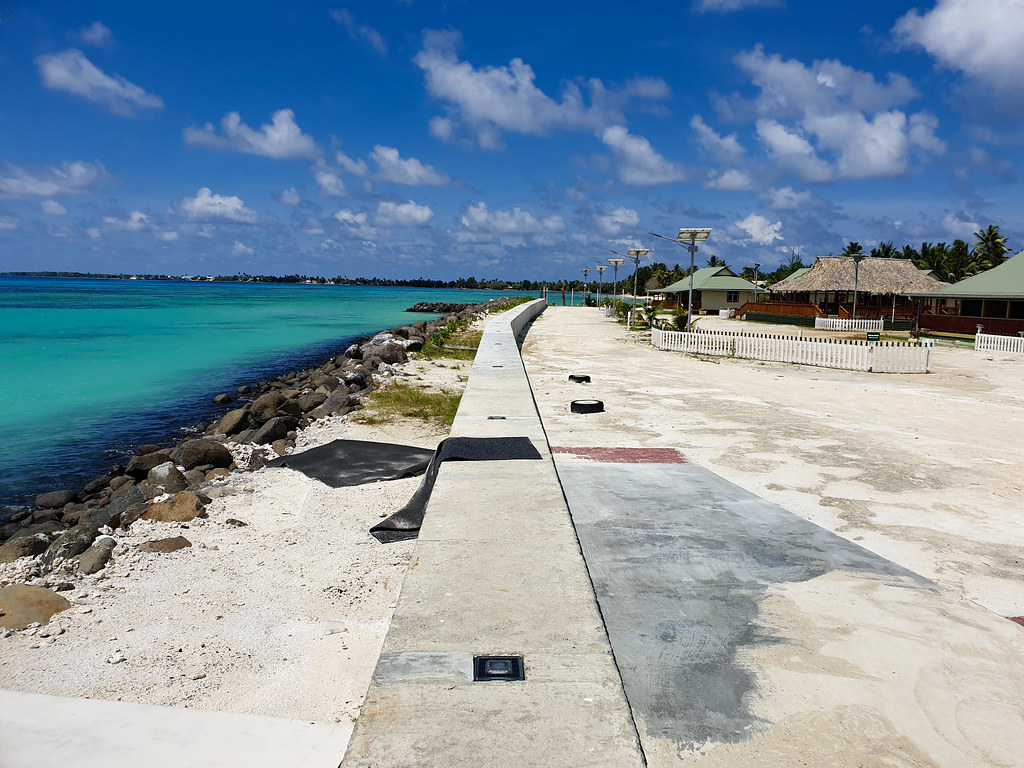
A sea wall in the low-lying island nation of Tuvalu, which faces growing flooding risks as climate change and sea level rise progress. A new Earth’s Future study models the nation’s flooding future and finds that today’s 50-year floods, covering nearly half the island, will occur once every 5 years by 2060. Credit: TCAP/UNDP

AGU News

Register for Astrobiology Science Conference 2024. It’ll be out of this world!
Join us in Providence, Rhode Island from 5-10 May for #AbSciCon24, where the international astrobiology community will share new research investigating life’s potential, from Earth’s extreme environments and distant past to our solar system’s icy moons and exoplanets. To register, email [email protected] with your credentials. [media advisory][press credentialing requirements][AbSciCon24 scientific program]

Featured Research

Tuvalu’s current 50-year floods, inundating half the island, will be ten times more likely by 2060
Low-lying island nations around the world are at high risk of inundation due to sea-level rise and storm-generated waves. One such nation is Tuvalu, in the South Pacific, which has already experienced severe flooding events and seawater intrusion. New modeling finds that climate change will make Tuvalu’s present-day “1-in-50 year floods,” covering >45% of land area, occur once every 5 years — ten times more likely. [Earth’s Future research]

Animals can be allies in carbon sequestration
Most models of the carbon cycle and carbon sequestration do not include animals, instead focusing on rocks, plants, microbes and the atmosphere. But animals affect their environments and carbon pathways, and new modeling shows that animals could play a larger role in ecosystems’ carbon cycles than previously thought. [JGR Biogeosciences research]

Climate-changed winds have made oceans less efficient at removing carbon
The oceans can take up carbon dioxide, acting as an important mitigating factor in climate change. In recent years, the oceans have been taking up more carbon as atmospheric concentrations of greenhouse gases increased. But without climate change, oceans — especially at high latitudes — would be taking up even more because of shifts in wind patterns, a new study finds. [Geophysical Research Letters research]

Half of marine habitat loss will be abrupt, challenging for adaptation
Warming ocean waters, and associated loss of oxygen, can stress or kill ocean-dwelling organisms. Species that can’t adapt as quickly as conditions are changing may become extinct. A new study of marine habitat loss from 1850 to 2100 finds that abrupt, not gradual, habitat changes will lead to approximately half of the marine habitat loss over that time. Most habitat losses will be between 1950 and 2040, mainly due to sudden warming at the surface. [Earth’s Future research]

“Pour points” funnel rainfall through the forest canopy
When rain falls in a forest, it doesn’t fall evenly. A new study shows that leaves and branches can funnel water into “pour points,” where rain is concentrated and can fall to the ground at rates up to 15 times that of rainfall. [Water Resources Research research][Eos editor’s highlight]

#
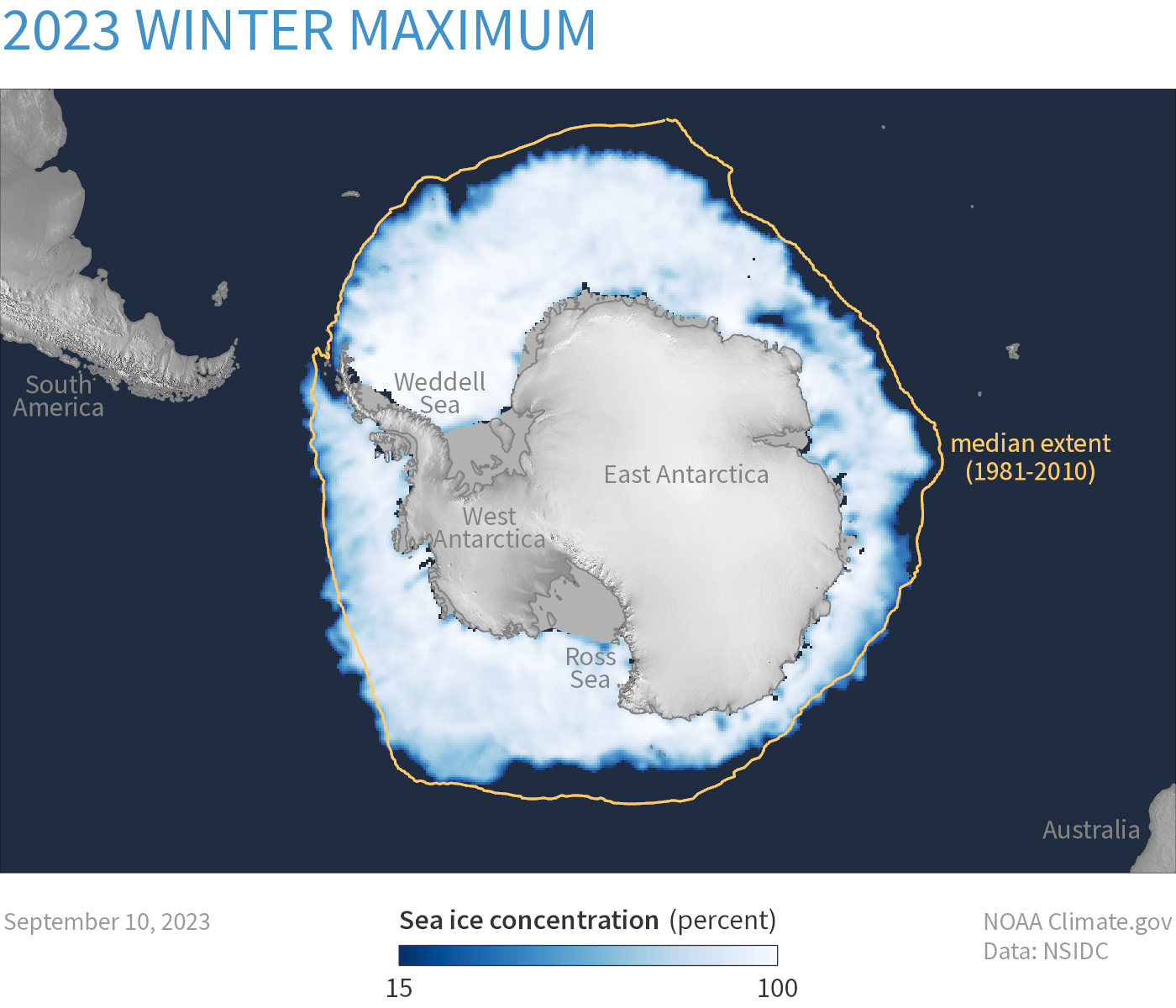
4/10/2024: Hot oceans and strong winds shrank 2023 Antarctic sea ice

AGU News 

Register for Astrobiology Science Conference 2024. It’ll be out of this world!
Join us in Providence, Rhode Island from 5-10 May for #AbSciCon24. The international astrobiology community will share new research investigating life’s potential, from Earth’s extreme environments and distant past to our solar system’s icy moons and exoplanets. To register, email [email protected] with your credentials. [media advisory][press credentialing requirements][AbSciCon24 scientific program]  

Featured Research 

Hot oceans and strong winds shrank 2023 Antarctic sea ice
The 2023 Antarctic sea ice extent maximum on 7 September was the smallest observed since the satellite era began: about 17 million square kilometers. This was due to warm upper ocean water and strong winds that impeded sea ice development, a new study finds. [Geophysical Research Letters research] 

Great Basin snowfall can’t make up for aridification
The Great Basin in the western United States has been losing groundwater increasingly quickly. Even during heavy snowfall years, when snowmelt can replenish some groundwater, total water storage has been dropping. This is partly due to increased evaporation rates as temperatures warm, a new study finds. [Geophysical Research Letters research] 

Cutting emissions could reverse European drought trends
New models of a world in which greenhouse gas concentrations and temperatures are no longer rising find that the decline in summer rainfall in Europe, which has persisted in recent years, could be reversed. The pattern is strongest for northern Europe and the Mediterranean. [Geophysical Research Letters research] 

Marine heatwave helped create mega-hail event in Spain
In August 2022, hailstones up to 12 centimeters in diameter struck Spain. New modeling shows that a marine heatwave, caused by anthropogenic climate change, led to conditions favorable for the formation of such an extreme hailstorm. [Geophysical Research Letters research] 

Simulation suggests “great Caribbean quake” 600 years ago
Geologists have debated what caused flooding that left corals mysteriously stranded inland on the British Virgin Islands 600 years ago. New simulations explore two possible culprits: a large hurricane and a tsunami triggered by a strong earthquake north of Puerto Rico. A tsunami fits their models better. [JGR Solid Earth research] 

Curiosity Rover could be stirring up methane from Martian soils
The Mars Curiosity Rover’s roving and drilling may be breaking up the hardened, salty soils that seal methane in the ground. That could explain the brief, localized methane spikes the rover’s instruments have been detecting. [JGR Planets research][Eos editor’s highlight] 

#
4/3/2024: Waves are getting taller because of climate change

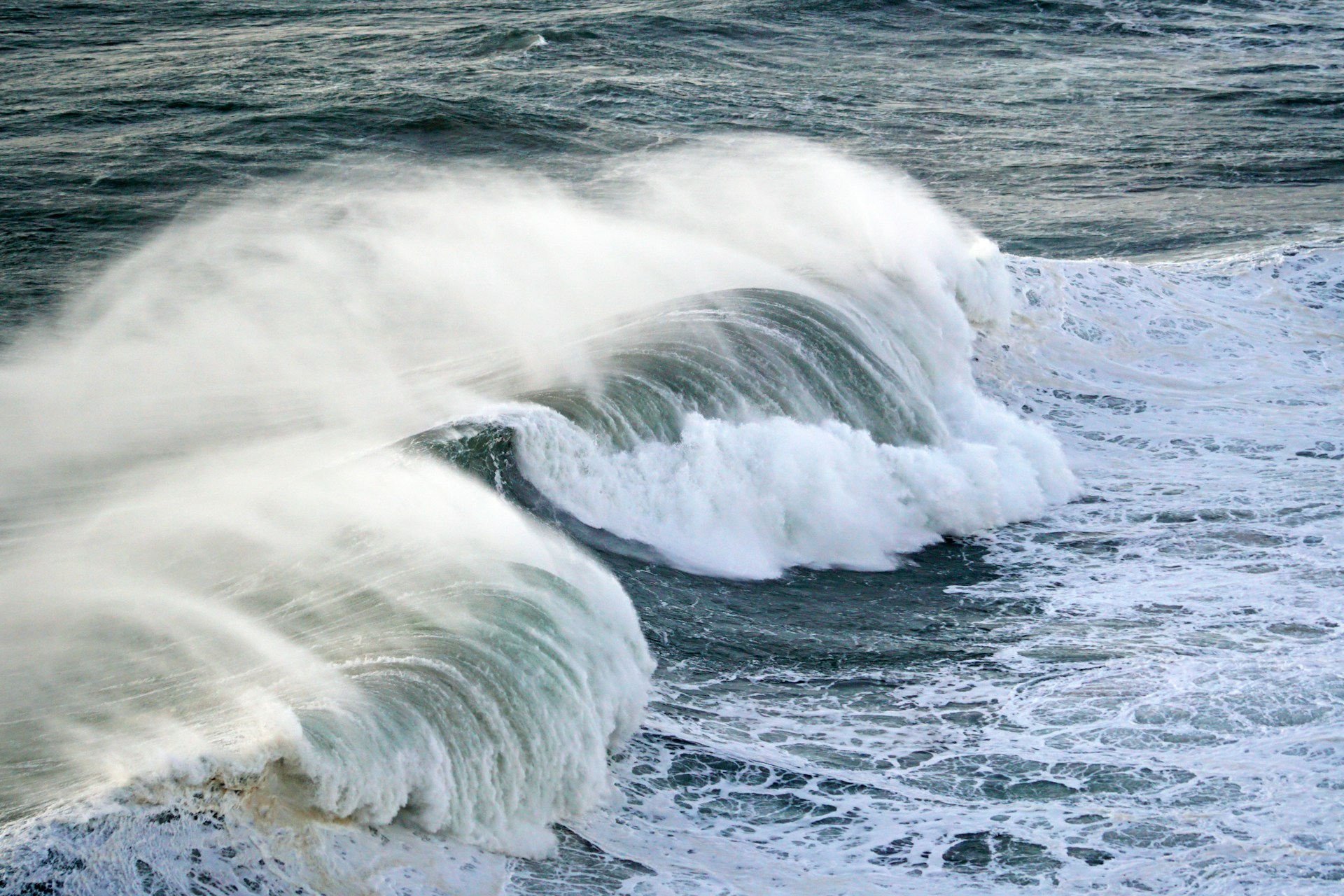
Anthropogenic climate change is impacting wave heights around the world, with waves in the Southern Ocean and Arctic Ocean growing the most, a new study in Geophysical Research Letters finds. Credit: Frederik Rosar/unsplash

AGU News

Register for Astrobiology Science Conference 2024. It’ll be out of this world!
Join us in Providence, Rhode Island from 5-10 May for #AbSciCon24, where the international astrobiology community will share new research investigating life’s potential, from Earth’s extreme environments and distant past to our Solar System’s icy moons and exoplanets. To register, email [email protected] with your credentials. [media advisory][press credentialing requirements][AbSciCon24 scientific program]

Celebrate the total solar eclipse with AGU
Join us before the eclipse on Monday, 8 April, for a TESS Pre-Eclipse Live Broadcast at 11 – 11:45 am CDT, featuring panelists Mike Liemohn, University of Michigan; Nicholeen Viall, NASA PUNCH Mission Scientist; and Fallon Konow, Georgia State University, University of Rome Sapienza. Don’t miss out on this stellar event streaming across our social media channels: Instagram, X (Twitter), Facebook, LinkedIn & YouTube. [watch the livestream here] [TESS website][scientific program][press site]

Featured Research

Waves are getting taller because of human-induced climate change
The world’s waves got a little bit taller on average from 1961 to 2020, a new study reveals. Waves in the Arctic and Southern Oceans saw the most growth, largely because the loss of sea-ice means more open water, which increases the distance wind has to build up waves. [Geophysical Research Letters research]

Gulf of Mexico dead zones are getting more acidic
The northern Gulf of Mexico experiences low oxygen zones, or “dead”
zones, that are ecologically and economically damaging. Now, the first
multi-decade study of pH reconstruction (1986-2019) finds that the summer dead zones also experience acidification driven by climate change; the acidification is projected to worsen over time. [Geophysical Research Letters research]

Data availability limits research on health impacts of wildfire smoke
Climate change is making wildfires more common and intense, and understanding health impacts from wildfire smoke is critical for public health. A new review of research on wildfire smoke exposures and health outcomes finds that while data on smoke exposure are widely available in real-time, data on health outcomes are delayed. This creates a barrier in robustly linking wildfire exposure to health outcomes at state and larger scales. [GeoHealth research]

Locusts drive people to cities, reduce agricultural output in eastern Africa
Locust swarms can quickly devastate crops, reducing food supply and increasing the cost of living. A new model examines how locust swarms can prompt people to abandon agriculture and move to urban areas, limiting food supply while increasing food demand in urban areas. [Earth’s Future research]

Wildfire smoke slows ponderosa pine photosynthesis
Wildfire smoke can impact photosynthesis by decreasing sunlight, but a new study reveals that as smoke interacts with ponderosa pine needles, it changes how the leaves physically take in and emit gases, slowing photosynthesis. [Geophysical Research Letters research]

Human activities threaten microbial life in cryptic subterranean estuaries
Subterranean estuaries are where terrestrial groundwater and seawater mix. These underground environments have been studied relatively little, and now, a new study profiles the microbes living in these unique environments and uses lab experiments to explore how human activities could alter the microbes’ demographics, with consequences for water quality. [JGR Biogeosciences research][Eos editor’s highlight]

3/27/2024: Lightning does strike twice in these hotspots

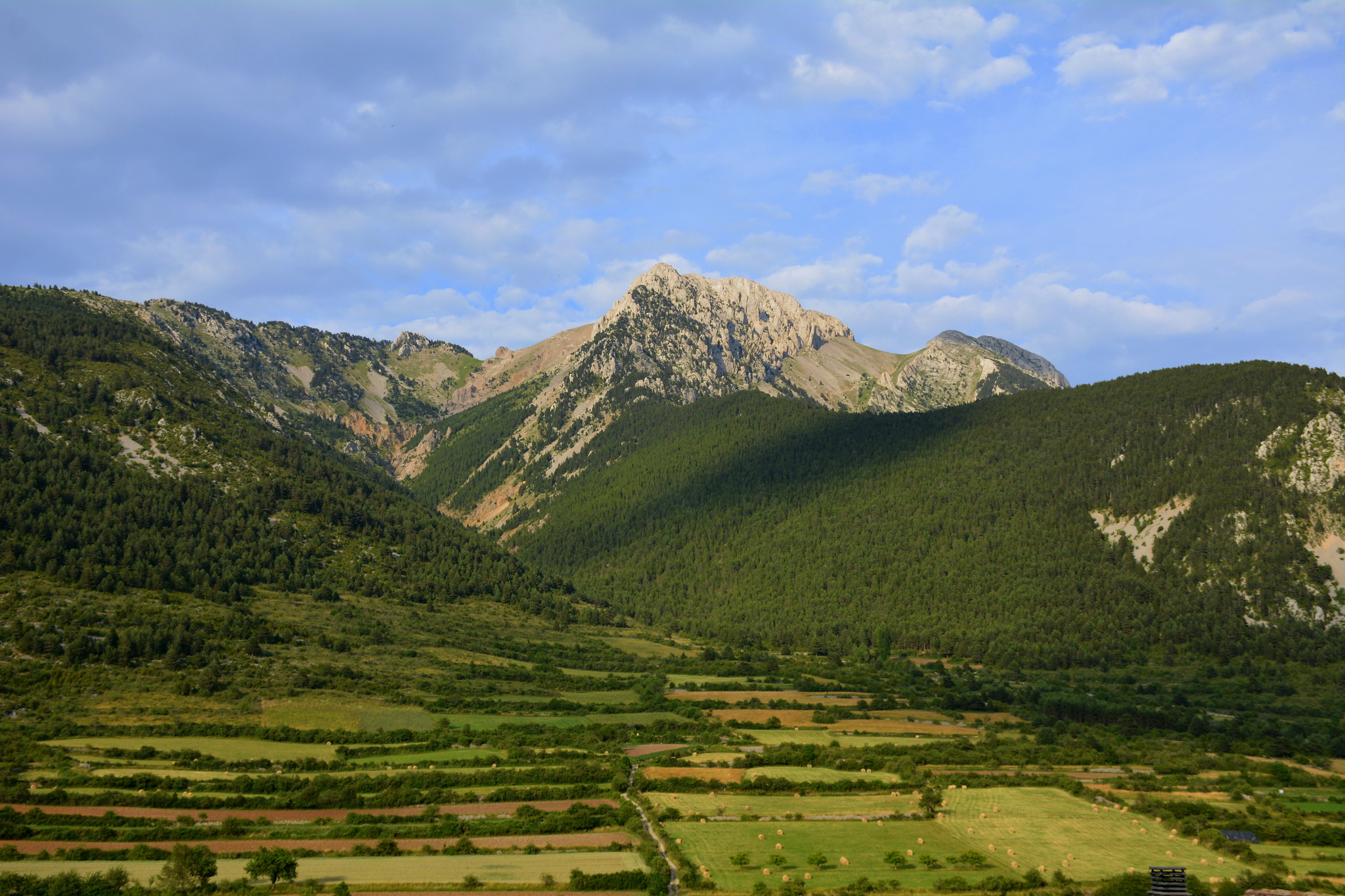
A mountain in the Catalonia region of Spain, where a new JGR Atmospheres study finds a hotspot of recurrent lightning strikes on high peaks. Credit: Angela Llop/flickr

AGU News

AGU Journalism Awards: deadline TONIGHT!
Don’t miss out! The deadline to nominate stories is 27 March at 11:59 p.m. ET. News and feature stories published in 2023 and focused on the Earth and space sciences are eligible. One entry per individual. [AGU journalism awards]

Register to attend the Triennial Earth-Sun Summit during the eclipse!
The Triennial Earth-Sun Summit (TESS) will be held 7-12 April in Dallas, Texas, in the path of totality. Scientific programming begins on 9 April, the day after the eclipse. To register, simply email us at [email protected]. Scientific sessions are on-site only. AGU’s housing is full. [TESS website][scientific program][press site]

Total eclipse of the Sun: The April issue of AGU’s Eos magazine is all about the eclipse. [Eos issue pdf, table of contents]

Featured Research

Lighting does strike twice in these hotspots
A new study questions the saying that “lightning never strikes twice.” Their analysis of 10 years of lightning activity in two suspected lightning hotspots, in northeastern Spain and north-central Colombia, reveals that high mountain peaks get more than their share of strikes. [JGR Atmospheres research]

Gulf of Mexico’s “dead zone” is acidifying rapidly
The northern Gulf of Mexico experiences a low-oxygen, high-nutrient “dead zone” in its bottom waters each summer. The first multi-decade reconstruction of pH reveals the dead zone is getting more acidic over time, in part due to ocean acidification and warming. Acidification is likely to worsen if emissions are not curbed. [Geophysical Research Letters research]

High lead levels in urban farm compost in Boston
Urban farms and gardens can be an important source of fresh, local food, improving food security, but soil and compost used can be contaminated with legacy metals such as lead. A new 15-year study of lead levels in municipal compost provided to urban farms in Boston reveals persistently elevated lead levels, even after the city switched vendors. [GeoHealth research]

Atmospheric aerosol injection side effects could warm as much as emissions
Injecting aerosols high into Earth’s atmosphere has been proposed as a mechanism for cooling the planet, with aerosol particles reflecting sunlight back into space. But uncertainties remain about what unintended effects the technique could have. Side effects from low-latitude injections could lead to as much warming as greenhouse gases could contribute, a new study finds. [Geophysical Research Letters research][AGU-led framework for ethical climate intervention research]

Manila confronts its plastic problem
The Philippine capital is the latest city to address rampant plastic pollution through a community-guided protocol. [Eos research spotlight][Community Science research]


AGU (www.agu.org) is a global community supporting more than half a million advocates and professionals in Earth and space sciences. Through broad and inclusive partnerships, AGU aims to advance discovery and solution science that accelerate knowledge and create solutions that are ethical, unbiased and respectful of communities and their values. Our programs include serving as a scholarly publisher, convening virtual and in-person events and providing career support. We live our values in everything we do, such as our net zero energy renovated building in Washington, D.C. and our Ethics and Equity Center, which fosters a diverse and inclusive geoscience community to ensure responsible conduct.


3/20/2024: Colorado River Basin historically drought-stricken; warming may amplify

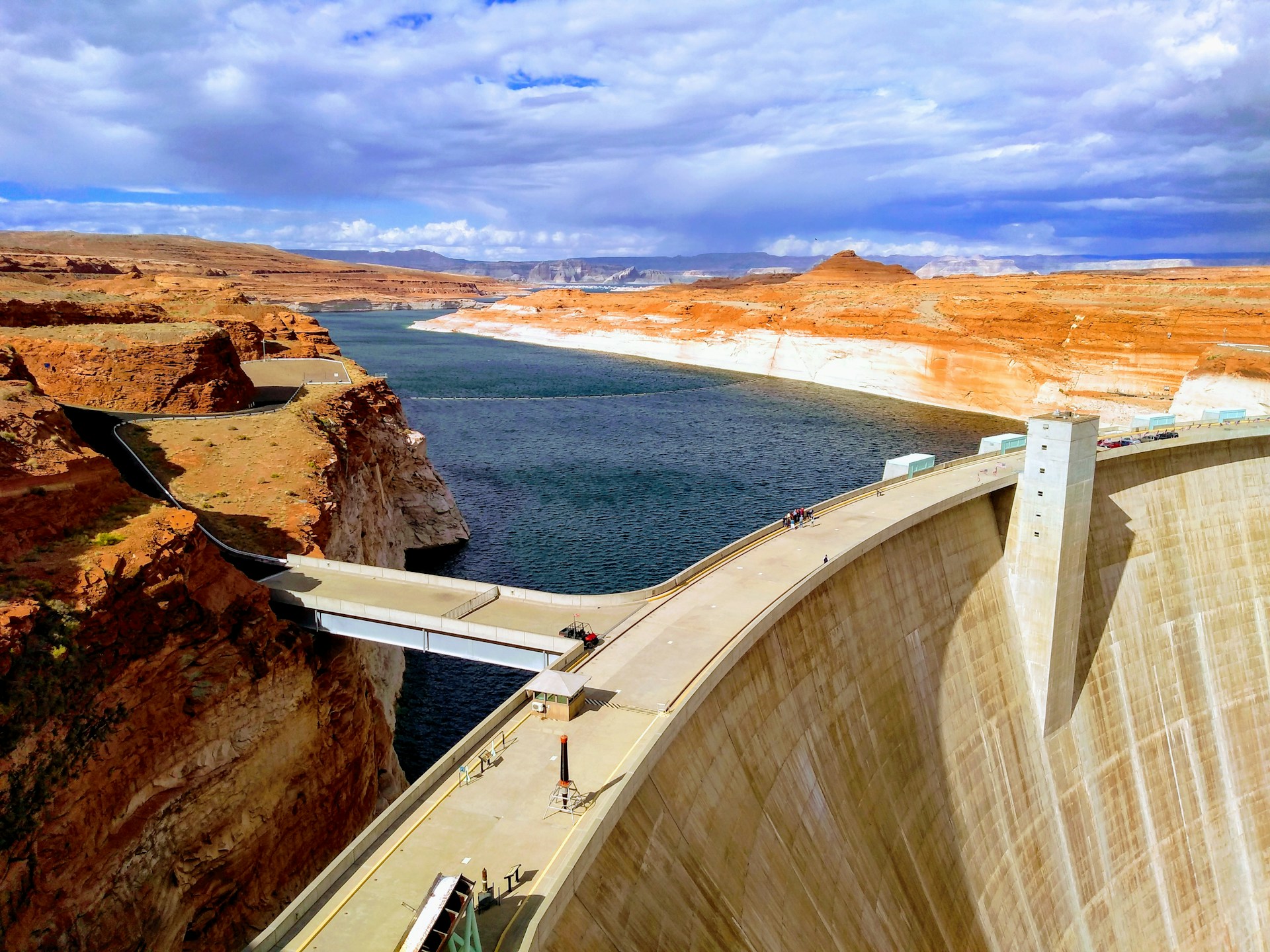
Glen Canyon Dam, Arizona. Credit: David Lusvardi/unsplash

AGU News

Register to attend the Triennial Earth-Sun Summit during the eclipse!
The Triennial Earth-Sun Summit (TESS) will be held 7-12 April in Dallas, Texas, in the path of totality. Scientific programming begins on 9 April, the day after the eclipse. To register, simply email us at [email protected]. Scientific sessions are on-site only. AGU’s housing is full. [TESS website][scientific program]

Nominate work for AGU’s journalism awards by 27 March
The deadline to nominate your own or others’ stories for the 2024 AGU Journalism Awards is 27 March at 11:59 p.m. ET. News and feature stories published in 2023 and focused on the Earth and space sciences are eligible. Email us at [email protected] with any questions. [AGU journalism awards]

Featured Research

Research roundup: Reykjanes geology and eruptive history
The coastal town of Grindavík on the peninsula of Reykjanes in Iceland faces yet another eruption, dig into some recent and foundational research on Reykjanes’ tectonic and volcanic history. [Kinematics of the Reykjanes Ridge][Variations in Volcanism and Tectonics Along the Hotspot-Influenced Reykjanes Ridge][Detailed tectonic evolution of the Reykjanes Ridge during the past 15 Ma]

Colorado River Basin historically drought-stricken; warming may amplify
The Colorado River has a long history of naturally occurring droughts, and a new study reports more dry spells than previously known over the past 2000 years. Tree-ring records of streamflow in the Upper Colorado River Basin from 1 CE onward and modern streamflow values reveal that 12 of 51 droughts over that period were worse than the 2000-2021 megadrought. Warming is likely to exacerbate the Basin’s natural wet-dry cycles. [Geophysical Research Letters research]

Green space can help mental health, but access and location matter
Green space, or areas with vegetation, can help alleviate mental health issues, but access to and quality of green space varies geographically and across the urban-rural divide. A new study of youth mental health and green space in North Carolina finds youth in (sub)urban areas would benefit most from added green space, while youth in rural areas may benefit more from increased accessibility to existing greenspace. [GeoHealth research]

Scientists track down elusive record of strongest observed solar flare
The strongest solar flare in observed history was “the Carrington event” in 1859. Strong solar flares can leave fingerprints in carbon isotopes, but scientists didn’t find the isotopic signature for the Carrington event in mid-latitude trees. A new study finally finds a carbon signature in high-latitude trees, prompting questions of why only high-latitude trees had captured this important signal. [Geophysical Research Letters research]

Where and how sea-level rise threatens coastal areas and communities
To better understand how sea-level rise threatens coastal areas, scientists propose a new indicator to estimate the risk of coastal flooding under climate change. [Eos editor’s highlight][AGU Advances research]


AGU (www.agu.org) is a global community supporting more than half a million advocates and professionals in Earth and space sciences. Through broad and inclusive partnerships, AGU aims to advance discovery and solution science that accelerate knowledge and create solutions that are ethical, unbiased and respectful of communities and their values. Our programs include serving as a scholarly publisher, convening virtual and in-person events and providing career support. We live our values in everything we do, such as our net zero energy renovated building in Washington, D.C. and our Ethics and Equity Center, which fosters a diverse and inclusive geoscience community to ensure responsible conduct.

3/13/2024: Florida Keys’ winter oceans heating up for more than a century

AGU News

Register to attend the Triennial Earth-Sun Summit during the eclipse!
The Triennial Earth-Sun Summit (TESS) will be held 7-12 April in Dallas, Texas, in the path of totality. Scientific programming begins on 9 April, the day after the eclipse. To register, simply email us at [email protected]. Scientific sessions are on-site only. AGU’s housing is full. [TESS website][scientific program]

Nominate work for AGU’s journalism awards by 27 March
The deadline to nominate your own or others’ stories for the 2024 AGU Journalism Awards is 27 March at 11:59 p.m. ET. News and feature stories published in 2023 and focused on the Earth and space sciences are eligible. Email us at [email protected] with any questions. [AGU journalism awards]

Featured Research

Warmer winters in surface ocean near Florida Keys
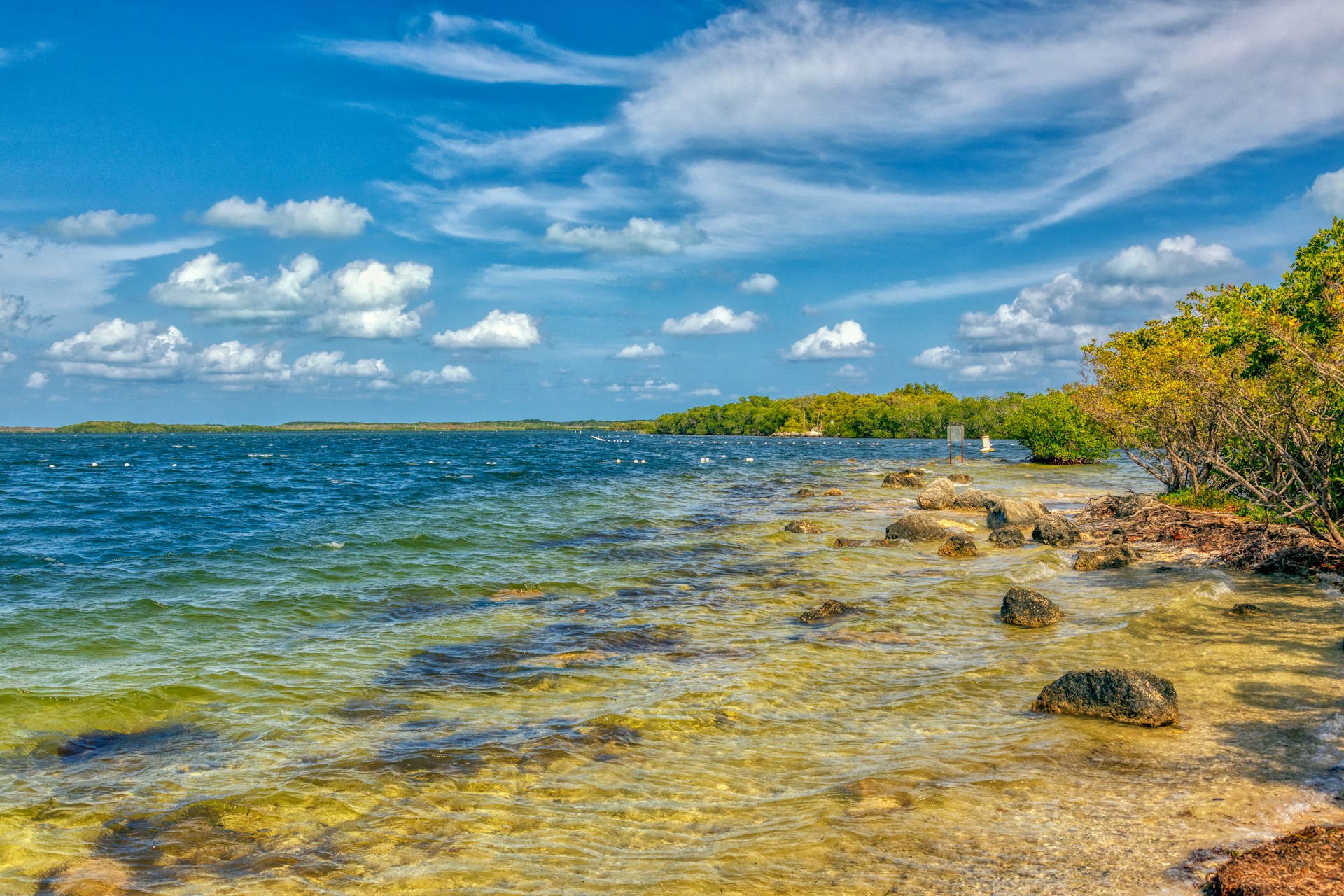
As oceans continue to reach record-high temperatures, understanding the drivers of warming becomes increasingly urgent. A new 150-year record of sea surface temperatures from long-lived coral species reveals that waters heated up especially during winters between 1830 and 1980, pointing to changes in the Florida current as a potential cause. [Paleoceanography and Paleoclimatology research]

Marine exhaust scrubbers may actually increase pollution
Marine fuel typically has high sulfur content, which add sulfur oxides to the atmosphere when burned. That pollution can be limited by using low-sulfur fuel or, per regulations, adding a wet exhaust scrubber. Low-sulfur fuel reduces emissions, but exhaust scrubbers may actually increase the number of particles emitted, a new study finds. [JGR Atmospheres research]

Warming increases tropical cyclone intensification, flooding hazard
Tropical cyclones can quickly intensify just before making landfall, increasing the amount of rainfall and therefore raising the likelihood of dangerous floods. Warmer air will make rapid intensification more common over the next century, and cyclone-associated rainfall will greatly increase, a new study finds. [Geophysical Research Letters research]

Marine heatwaves are choking the Chesapeake Bay
Marine heatwaves in estuaries are less well-understood than in the ocean. A new case study of marine heatwaves in the Chesapeake Bay finds the heatwaves can lead to reduced oxygen in bottom waters, threatening marine life and biogeochemical cycles. [JGR Oceans research]

Inland waters are a blind spot in greenhouse gas emissions
Researchers call for an extensive monitoring network to quantify carbon dioxide and methane released by China’s rivers, lakes, reservoirs, and ponds. [JGR Biogeosciences research][Eos research spotlight]


AGU (www.agu.org) is a global community supporting more than half a million advocates and professionals in Earth and space sciences. Through broad and inclusive partnerships, AGU aims to advance discovery and solution science that accelerate knowledge and create solutions that are ethical, unbiased and respectful of communities and their values. Our programs include serving as a scholarly publisher, convening virtual and in-person events and providing career support. We live our values in everything we do, such as our net zero energy renovated building in Washington, D.C. and our Ethics and Equity Center, which fosters a diverse and inclusive geoscience community to ensure responsible conduct.

2/21/2024: Atmospheric rivers deliver ozone along with rain

An atmospheric river hits California in 2017. Credit: NASA

AGU News 

Press registration for #OSM24 remains open through 23 February
Register this week to gain access to recordings and content from nearly 5,000 abstracts on all things ocean science! Join us Thursday for a livestreamed roundtable on shipwreck science—we’re way beyond archaeology. [OSM24 scientific program][OSM24 press registration][press events and tipsheets] 

Register to attend the Triennial Earth-Sun Summit during the eclipse!
The Triennial Earth-Sun Summit (TESS) will be held 7-12 April in Dallas, Texas, in the path of totality. Scientific programming begins on 9 April, the day after the eclipse. To register, simply email us at [email protected]. Scientific sessions are on-site only. AGU’s housing is full. [TESS website][scientific program] 

Featured Research

Atmospheric rivers deliver ozone along with rain
Atmospheric rivers are long, skinny trails of water vapor that frequently deliver multi-day deluges. The more water vapor they carry, the more ozone they can also bring, according to a new study that used 11 years of atmospheric data to make that connection for the first time. [JGR Atmospheres research]

Most of US on track to lose surface water, worsening droughts
Climate change is shifting temperature and precipitation patterns. Most U.S. regions are on track to get drier and lose surface water, particularly in the summer-fall transition period when droughts are the strongest, suggesting droughts will hit harder in the future, new USGS research finds. On the other hand, parts of the north-central Midwest are on track to gain surface water. [Earth’s Future research]

Mars was once as wet as Earth is today, new estimate says
Geologic records and the presence of water ice on Mars suggest the planet was once covered by seas, lakes and rivers — but how much water was there? Based on possible water “sinks,” water could have covered the planet in up to 1,970 meters. That’s a similar ratio to modern-day Earth, supporting the idea of ancient Mars being habitable. [JGR Planets research]

Mountainous waves reach thermosphere in Venus’ weird atmosphere
Venus rotates once every 243 days, but its atmosphere whips around once every 4 days in a phenomenon called “superrotation.” A massive standing wave stretches at least 150 kilometers up from the surface, holding steadily even in the intense zone of superrotation — and scientists aren’t sure how. [Geophysical Research Letters research]

What happens to nutrients after they leave agricultural fields?
To better quantify the fate of nutrients after they are released from agricultural fields, scientists examine storage and nitrate export regimes in agricultural hydrology systems. [Eos editor’s highlight][Water Resources Research research]  


AGU (www.agu.org) is a global community supporting more than half a million advocates and professionals in Earth and space sciences. Through broad and inclusive partnerships, AGU aims to advance discovery and solution science that accelerate knowledge and create solutions that are ethical, unbiased and respectful of communities and their values. Our programs include serving as a scholarly publisher, convening virtual and in-person events and providing career support. We live our values in everything we do, such as our net zero energy renovated building in Washington, D.C. and our Ethics and Equity Center, which fosters a diverse and inclusive geoscience community to ensure responsible conduct. 

2/14/2024: Anzali wetland, Iran’s “ecological gem,” could run dry by 2060

Iran’s biodiverse Anzali wetland is at risk of becoming a seasonal waterbody or drying up entirely as a result of decreased rainfall, higher water demand, and more sediment choking waterways, according to new research published in Earth’s Future. Credit: keyvan/Adobe Stock

AGU News

Ocean Sciences Meeting starts next week! Press registration remains open through 23 February
Browse nearly 5,000 abstracts for #OSM24, held 18-23 February in New Orleans. [OSM24 scientific program][OSM24 press registration][press release]

Register to attend the Triennial Earth-Sun Summit during the eclipse!
The Triennial Earth-Sun Summit (TESS) will be held 7-12 April in Dallas, Texas, in the path of totality. Scientific programming begins on 9 April, the day after the eclipse. To register, simply email us at [email protected]. Scientific sessions are on-site only. AGU’s housing is full. [TESS website][scientific program]

Featured Research

Iran’s “ecological gem,” the Anzali wetland, could dry up by 2060
The Anzali wetland sits in northern Iran, where nine major rivers meet the Caspian. Facing mounting environmental pressures, this hotspot of biodiversity, tourism and fishing could become a seasonal waterbody by 2100 or, in the worst-case scenario, dry up entirely as soon as 2060. [JGR Atmospheres research]

Cryptomare hiding on Moon’s backside suggest more volcanic past
Cryptomare, or cooled lava deposits covered by other material, hold important information about how much volcanic activity the Moon once had. New mapping of cryptomare and their “dark halos” suggests more extensive volcanism than previously thought, with about half the mare on the dark side of the Moon. [JGR Planets research]

Geomagnetic storms were a drag for Starlink
In February 2022, a pair of geomagnetic storms struck the upper atmosphere, causing the density in the atmosphere to suddenly and significantly increase. Higher atmospheric density dragged Starlink satellites as they whizzed by, causing them to fall out of the sky within several days. [Space Weather research]

Foreshock or swarm? Scientists need a big quake to decide
Clusters of seismic activity called foreshocks can occur before a larger earthquake, but similar clusters can also happen without a big quake. Scientists can only tell them apart after a big quake has happened, limiting foreshocks’ predictive capabilities, a new study finds. [JGR Solid Earth research]

Prescribed burns could expose more Californians to smoke
Prescribed burns can lower the risk of intense, uncontrolled wildfires, instead producing more days of less-dense smoke. For some densely populated areas in CA, adding prescribed burns could end up exposing more people to smoke, pointing to a need for good public awareness of burn days to minimize public health risks. [Earth’s Future research]

The escalating impact of global warming on atmospheric rivers
Climate change is set to intensify atmospheric rivers and exacerbate extreme rainfall worldwide. [Eos research spotlight][JGR Atmospheres research]

Intense rainstorms sculpt desert cliffs
New mathematical models show that the persistence of near-vertical cliffs in arid landscapes is maintained by infrequent but intense rainstorms. [Eos editors’ highlight][JGR Earth Surface research]


AGU (www.agu.org) is a global community supporting more than half a million advocates and professionals in Earth and space sciences. Through broad and inclusive partnerships, AGU aims to advance discovery and solution science that accelerate knowledge and create solutions that are ethical, unbiased and respectful of communities and their values. Our programs include serving as a scholarly publisher, convening virtual and in-person events and providing career support. We live our values in everything we do, such as our net zero energy renovated building in Washington, D.C. and our Ethics and Equity Center, which fosters a diverse and inclusive geoscience community to ensure responsible conduct.

2/7/2024: Climate extremes stress world’s roads and rails

Road damage following flooding. Credit: USFWS

AGU News

Press registration open for Ocean Sciences Meeting
Browse nearly 5,000 abstracts for #OSM24, held 18-23 February in New Orleans. [OSM24 scientific program][OSM24 press registration][press release]

Register to attend the Triennial Earth-Sun Summit during the eclipse!
The Triennial Earth-Sun Summit (TESS) will be held 7-12 April in Dallas, Texas, in the path of totality. Scientific programming begins on 9 April, the day after the eclipse. To register, simply email us at [email protected]. Scientific sessions are on-site only. AGU’s housing is full. [TESS website][scientific program]

Research roundup: Atmospheric rivers
As California is hit with yet another atmospheric river, check out the latest research on this increasingly important phenomenon. [intensity scale for atmospheric rivers][ARs in the western US tend to come in clusters][600 years of atmospheric rivers in western US][atmospheric river “super-sequences” challenge California’s infrastructure][wetter than your average storm, yet not great for groundwater recharge][climate model predicts more frequent, intense, long-lasting atmospheric rivers]

Featured Research

Climate extremes stress world’s roads and rails
Heavy rains, extreme temperatures, and more freeze-thaw events can lead to damaging wear-and-tear on road and rail infrastructure. Risks are highest in places like south and east Asia, west and central Europe, and eastern North America because of the density of roads and railways there. [Earth’s Future research]

Europe’s rainiest days are getting worse
Climate change is causing precipitation extremes, leading to deadly flooding and other hazards. In Europe, just 22 to 34 rainy days are responsible for half of the year’s precipitation, a significant increase from the mid-1900s. [Geophysical Research Letters research]

Drought-to-flood whiplash events increasing in China
Sudden switches from drought conditions to heavy precipitation and flooding are hazardous and becoming more common in many parts of the world, including China. Since 1961, there have been nearly three more drought-to-flood events per decade in the country, with northern China being hardest-hit. [JGR Atmospheres research]

Seasonal water scarcity tied to conflict in northwest Africa
Climate change is expected to increase the occurrence of violent conflicts related to water scarcity, but regional outlooks depend on localized water predictions. A new study of the Sahel and Lake Chad Basin finds water conflicts have been driven by soil moisture deficits and use rates in different seasons. The clearer picture of water scarcity may help improve water management, decreasing the likelihood of conflict. [Earth’s Future research]

High water levels cause problems for Mississippi shipping, too
High water levels can make barges difficult to maneuver and overwhelm locks. Those conditions have become more common in recent decades. [Eos research spotlight][Geophysical Research Letters research]


AGU (www.agu.org) is a global community supporting more than half a million advocates and professionals in Earth and space sciences. Through broad and inclusive partnerships, AGU aims to advance discovery and solution science that accelerate knowledge and create solutions that are ethical, unbiased and respectful of communities and their values. Our programs include serving as a scholarly publisher, convening virtual and in-person events and providing career support. We live our values in everything we do, such as our net zero energy renovated building in Washington, D.C. and our Ethics and Equity Center, which fosters a diverse and inclusive geoscience community to ensure responsible conduct.

1/24/2024: Black Sea could be hot spot for carbon sequestration

The Black Sea. Dmitry Ant/unsplash

AGU News

Register to attend the Triennial Earth-Sun Summit during the eclipse!
The Triennial Earth-Sun Summit (TESS) will be held 7-12 April in Dallas, Texas, in the path of totality. Scientific programming begins on 9 April, the day after the eclipse. To register, simply email us at [email protected]. Scientific sessions are on-site only. AGU’s housing is full. [TESS website][scientific program]

Nominate yourself or a colleague for AGU’s 2024 Journalism Awards
Awards for news and feature writing honor outstanding reporting in the Earth and space sciences published in the previous year (2023). Self-nominations are encouraged. The deadline is 27 March 2024 at 11:59 p.m. ET. [press release]

Housing deadline for Ocean Sciences Meeting 1/24
Browse nearly 5,000 abstracts for #OSM24, held 18-23 February in New Orleans, and register with housing before the housing deadline on 24 January. [OSM24 scientific program][OSM24 press registration][press release]

Featured Research

Black Sea could be best spot for some carbon sequestration
One proposed method of carbon sequestration involves storing large volumes of organic carbon, or biomass, on the seafloor, but doing so risks upending the seafloor’s ecological balance and chemistry. A new study of those impacts pinpoints the low-oxygen Black Sea as a potential pot for biomass storage with fewer knock-on effects. The study cautions extensive further evaluation would be needed to implement the plan. [AGU Advances research][AGU-led ethics of geoengineering research]

Marine ecosystem changes are getting more abrupt
Ocean changes, such as acidification, warming, and oxygen loss, stress marine ecosystems, and the more abrupt those changes are, the harder it is for ecosystems to respond. Abrupt changes are occurring more frequently and will continue to increase, factors which have been left out of some climate analyses, according to a new study. The timeline of effective climate mitigation may “close sooner than expected.” [Geophysical Research Letters research]

Soaring temps evaporate away California’s water
Droughts can be caused by high temperatures, a drop in precipitation, or a combination of both. New modeling shows that in California, soaring temperatures alone may be enough to drive severe droughts in the future. [Earth’s Future research]

Volcanism may have breathed life into the “boring billion”
Some geologists call the period from about 1.8 billion years ago to 800 million years ago the “boring billion” because generally, it had low nutrient availability and low oxygen levels. But around 1.4 billion years ago, there’s some evidence of a global puff of oxygen. New mercury measurements, which can indicate volcanic activity, support large-scale volcanism as a potential cause of this brief oxygenation event. [Geophysical Research Letters research]

Mars has equatorial belt of thick, buried ice
New radar results reveal the mystery buried material in Mars’ Medusae Fossae formation are 3.7 kilometers deep, thicker than previously thought, and likely water ice. If the ice melted, it would cover the planet in up to nearly 3 meters of water. [ESA press release][Geophysical Research Letters research]


AGU (www.agu.org) is a global community supporting more than half a million advocates and professionals in Earth and space sciences. Through broad and inclusive partnerships, AGU aims to advance discovery and solution science that accelerate knowledge and create solutions that are ethical, unbiased and respectful of communities and their values. Our programs include serving as a scholarly publisher, convening virtual and in-person events and providing career support. We live our values in everything we do, such as our net zero energy renovated building in Washington, D.C. and our Ethics and Equity Center, which fosters a diverse and inclusive geoscience community to ensure responsible conduct.