1/10/2024: Could seaweed be the food of the post-apocalypse?

Seaweed could be a remarkably resilient food source in the aftermath of a massive volcanic eruption or nuclear event, either of which could devastate global food supplies, according to new Earth’s Future research. Credit: Marco Verch/flickr

AGU News

Ocean Sciences Meeting 2024 housing closes soon
Browse nearly 5,000 abstracts for #OSM24, held 18-23 February in New Orleans, and register with housing before the housing deadline on 24 January. [OSM24 scientific program][OSM24 press registration]

AGU23 live online poster discussion sessions coming 20-25 January
AGU’s 2023 annual meeting continues with discussion sessions for the 900 online-only poster presenters, accessible to registered press through the online conference platform. A free Vimeo account is required. [poster session schedule][AGU23 press event recordings][online conference platform][AGU23 advisories and press releases]

Featured Research

Polynya formation tied to calving at Pine Island Glacier
Polynyas are areas of open ocean encircled by sea ice that form because of heat emanating from the ocean. From 2000 to 2022, annual polynya formation varied, according to the first multi-decadal record of the features in Antarctica. The largest polynya, at 269 square kilometers, formed at the western edge of the Pine Island Glacier 68 days before a large calving event, suggesting a link. [Geophysical Research Letters research]

Low-income groups may see least health improvement from decarbonization
Reducing carbon emissions could also decrease the concentration of fine particulate pollution in the air, improving health outcomes, particularly in Asia, by 2050, a new study finds. Per the study’s models, all income groups would have health benefits, but low-income populations would experience the smallest improvements in air quality. [Earth’s Future research]

How do dams hurt fishies? Let me count the ways
A new review paper synthesizes dams’ physical impacts worldwide, focusing on keystone species across continents, and examines the successes and shortfalls of current fish conservation efforts. [Reviews of Geophysics research]

Record of ancient Turkey quakes suggests max magnitude of 8.2 for East Anatolian Fault
A paleoseismic investigation of the East Anatolian Fault system, which ruptured in the 6 February 2023 magnitude quake, identified 14 quakes of magnitude 7 or greater from 1000 CE onward in the region. An end-to-end rupture could result in a magnitude 8.2 quake, the researchers estimate. [Tectonics research]

Permafrost on Arctic lakebeds is thawing — even when below freezing
Thaw in saline permafrost can occur below 0° Celsius (32° Fahrenheit) because high salinity lowers the thawing point, as demonstrated by a case study in northern Alaska. Over 15 years, salty permafrost beneath a shallow lake  thawed, resulting in 60 centimeters of lake-level rise, a new study reports. [Geophysical Research Letters research]

Seaweed: food of the post-apocalypse?
Following a massive volcanic eruption or nuclear event, clouds may block out the sun’s light, leading to global cooling that would devastate agriculture. Seaweed would likely be remarkably resilient in such conditions and could be a reliable food source, once aquaculture ramped up, according to a new study. [Earth’s Future research][LSU press release]

Uncertainty abounds in seeding the sky to fight climate change
Some scientists have suggested injecting solid particles such as alumina, calcite and diamonds into the atmosphere to temporarily limit climate warming. But new research shows there are still big unknowns. [Eos research spotlight][Geophysical Research Letters research][AGU-led ethical framework for geoengineering research]


AGU (www.agu.org) is a global community supporting more than half a million advocates and professionals in Earth and space sciences. Through broad and inclusive partnerships, AGU aims to advance discovery and solution science that accelerate knowledge and create solutions that are ethical, unbiased and respectful of communities and their values. Our programs include serving as a scholarly publisher, convening virtual and in-person events and providing career support. We live our values in everything we do, such as our net zero energy renovated building in Washington, D.C. and our Ethics and Equity Center, which fosters a diverse and inclusive geoscience community to ensure responsible conduct.


12/20/23: Aerosols are drying out the Southwest US

AGU23 is a wrap! Recordings available thru February
A huge thank-you to everyone who helped make the press room buzz at #AGU23, both in-person and online! Recordings of scientific sessions will be available on the online conference platform through the end of February. [AGU23 press event recordings][online conference platform][AGU23 advisories and press releases] 

AGU23 press attendees: take our brief survey!
We invite press and PIOs who attended AGU23 to fill out our short survey. Let us know what was most useful for you and what you’d like to have next year! And don’t forget to tag @theAGU when sharing stories from the meeting so we can promote your hard work. 

Featured Research

Aerosols are helping dry out the Southwest US
In the southwestern United States, winter-spring precipitation is critical for the year’s water supply, but it has been declining since the 1980s. Anthropogenic aerosols could play a significant role in the drying west, new modeling finds. [Geophysical Research Letters research]

Aerosol injections could dry Africa’s Sahel further
Injecting aerosols into the stratosphere has been proposed to help cool the Earth, but the method could have many knock-on effects. Over the Sahel, where the West African Summer Monsoon is critical for livelihoods, aerosol injection could cause problematic drying. [Earth’s Future research]

Historic corals suggest weakening Atlantic circulation
The Atlantic Meridional Overturning Circulation (AMOC) is a critical element of Earth’s climate, facilitating the exchange of heat between the northern and southern hemispheres. Anthropogenic emissions have shifted the salinity and sea surface temperature in the Gulf of Mexico, as recorded by hundreds of years of corals in the Gulf, suggesting a partial weakening of the AMOC in the 1980s. [Paleoceanography and Paleoclimatology research]

Beyond Earth, mountaintops can be less cold
On Earth, frosty, snow-capped peaks are a well-known sight thanks in part to the planet’s thick atmosphere, which sets the rate at which the air cools with height. On planets with thin atmospheres, the temperatures near the surface and at mountaintops are likely more similar, with a shallower temperature gradient. [Geophysical Research Letters research]

We need to keep a better eye on dust
Dust can negatively impact air quality, human health and the environment, but it receives less attention than other forms of air pollution. This oversight is due in part to sparse and inconsistent dust monitoring stations and sampling, the authors of a new commentary argue. Improved dust monitoring is necessary to understand both its health and environmental effects as climate change increases dustiness in many regions. [GeoHealth research]

Sustainable sulfur in farming is overdue
Sulfur is widely used to protect crops against fungi, fertilize soil, and adjust farm soils’ chemical compositions. Similarly to nitrogen and phosphorus, applying too much sulfur has negative environmental impacts, but far less attention has been paid on the need for sustainable sulfur use in agriculture. Sulfur needs to be better studied and managed, the authors argue in this new review paper. [Earth’s Future research]


AGU (www.agu.org) is a global community supporting more than half a million advocates and professionals in Earth and space sciences. Through broad and inclusive partnerships, AGU aims to advance discovery and solution science that accelerate knowledge and create solutions that are ethical, unbiased and respectful of communities and their values. Our programs include serving as a scholarly publisher, convening virtual and in-person events and providing career support. We live our values in everything we do, such as our net zero energy renovated building in Washington, D.C. and our Ethics and Equity Center, which fosters a diverse and inclusive geoscience community to ensure responsible conduct. 
 

12/6/2023: Mars has a mini-magnetosphere

Registration to #AGU23, held 11-15 December at the Moscone Center in San Francisco, is free for credentialed members for the press and student journalists. Credit: Shen Pan/unsplash

AGU Annual Meeting: next week in San Francisco!

AGU23 is approaching! Press registration remains open for the duration of the conference. The press event schedule, recommended sessions and tipsheets will be available shortly. For media advisories, head over to the AGU Newsroom and search for posts tagged AGU23. We’ll be posting everything there.
[
AGU23 press center][AGU23 press registration][AGU23 announcements in the Newsroom] 

Featured Research

Mars has a mini-magnetosphere
A mini-magnetosphere, similar to the one found on Venus, has been observed above Mars by NASA’s MAVEN mission. Unlike Venus, whose magnetosphere is solely generated from the clashing of solar wind particles against the planet’s ionosphere, Mars also possesses inherent magnetic fields near its crustal surface that shield parts of the planet from solar winds. This combination of intrinsic and induced properties makes Martian solar defenses unique to the Solar System.
[Geophysical Research Letters research] 

The Amazon is getting drier
The southern Amazon is getting drier, decreasing its ecological health and ability to balance global hydrological and energy cycles. The trend will likely continue, a new study finds, as 2040-2070 is expected to be about 20% drier than the recent historical period. [JGR Atmospheres research] 

California regions prone to clusters of atmospheric rivers
Atmospheric rivers, or long narrow regions that transport water vapor, can arrive one after the other, in clusters and with compounding negative effects. While both the Pacific Northwest and California experience atmospheric rivers, mountainous regions in California tend to get more clusters that also last longer, a new study finds. [JGR Atmospheres research] 

How crabs engineer salt marshes
When fiddler crabs burrow, they create tunnels that speed up groundwater and salt circulation, promoting the export of carbon and nitrogen from salt marshes to the ocean. This process, which is vital for healthy plant production, can vary based on the shape of the burrows and the number of entrances that are dug, a new study finds.
[Water Resources research] 

Some high-threat volcanoes are severely understudied
Scientists have little understanding of where magma is stored along the Cascade Volcanic Arc or how its volcanoes could affect population centers. [Geochemistry, Geophysics, Geosystems research] [Eos Research Spotlight] 


AGU (www.agu.org) is a global community supporting more than half a million advocates and professionals in Earth and space sciences. Through broad and inclusive partnerships, AGU aims to advance discovery and solution science that accelerate knowledge and create solutions that are ethical, unbiased and respectful of communities and their values. Our programs include serving as a scholarly publisher, convening virtual and in-person events and providing career support. We live our values in everything we do, such as our net zero energy renovated building in Washington, D.C. and our Ethics and Equity Center, which fosters a diverse and inclusive geoscience community to ensure responsible conduct. 
 

11/22/2023: Plague-carrying gerbils to spread in Central Asia with climate change

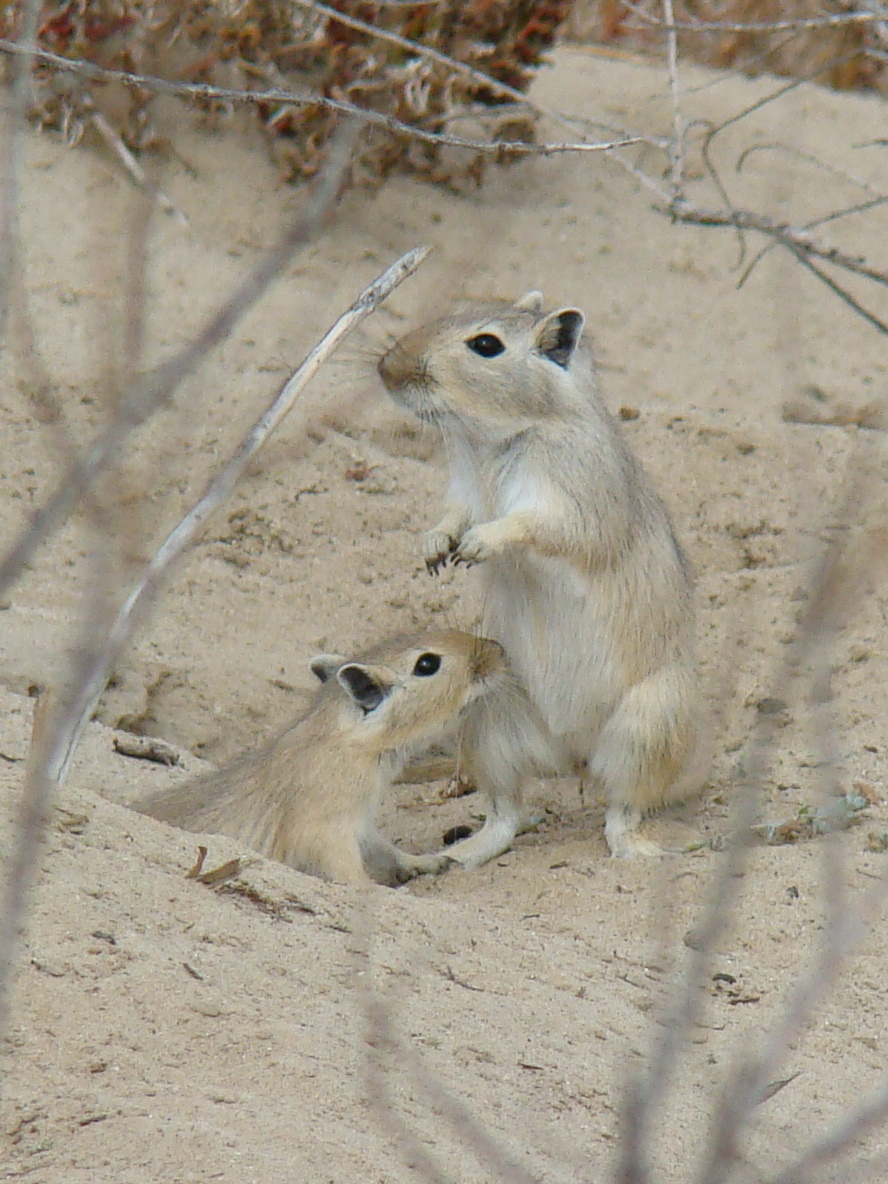
The great gerbil can carry plague throughout central Asia. Its range, along with other plague-carrying rodents, is expanding due to climate change, increasing the risk of plague spread and outbreaks, according to new research published in GeoHealth. Credit: wikimedia

AGU News

Ocean Sciences Meeting 2024 scientific program online
The scientific program for #OSM24, held 18-23 February in New Orleans, is now available online. Browse nearly 5,000 abstracts on all things ocean science and register today! [OSM24 scientific program][OSM24 press registration]

Climate engagement at AGU23: open dialogue, open minds, open science
On the heels of the National Climate Assessment and looking ahead to COP28, a letter from AGU’s President, Dr. Lisa J. Graumlich, outlines AGU23 Annual Meeting sessions and events at the intersection of climate science and action. [From the Prow post][AGU23 press registration]

Featured Research

Plague-carrying gerbils to spread in Central Asia with climate change
Researchers confirm more than 3,000 cases of plague-infected rodents, including the great gerbil and yellow ground squirrel, between 2000 and 2020 in the Zhambyl region of Southern Kazakhstan. Rising temperatures will only bolster the rodent population, expanding their range northeast toward the Qaragandy and Almaty regions by the year 2100 and increasing the likelihood of an outbreak. [GeoHealth research]

Greener forests can help track volcanic activity
In Yellowstone National Park, scientists observed greener forests associated with volcanic CO₂ emissions. Scientists can use this greening to remotely track the emissions, which are often a precursor to eruptions. The method is a safe and effective way to gauge potential volcanic hazards. [Geochemistry, Geophysics, Geosystems research]

Volcanic origin for ringed Venus structures
The formation of coronae, semi-circular structures on the surface of Venus, may be a result of surface and subsurface volcanism, as suggested by new observations of lava flows which appear to have flowed upslope. But subsurface volcanic activity likely tilted the topography, explaining the curious lava flows and concentric features. [JGR Planets research]

Oysters create more resilient coastlines as sea levels rise
Oyster reefs grow with sea level rise and self-repair after extreme events, making them highly adaptive coastal barriers. When paired with submerged breakwaters, they can reduce wave impacts by up to 75% over a hundred-year period and increase crucial  along sheltered coastlines. [JGR Earth Surface research]

The first slow-slip events seen off southern Costa Rica
Five events observed off the Osa Peninsula shed new light on the role that these small, slow earthquakes can play in strain accumulation and tsunami hazards along subduction zones. [Geophysical Research Letters research] [Eos research spotlight | Spanish translation]


AGU (www.agu.org) is a global community supporting more than half a million advocates and professionals in Earth and space sciences. Through broad and inclusive partnerships, AGU aims to advance discovery and solution science that accelerate knowledge and create solutions that are ethical, unbiased and respectful of communities and their values. Our programs include serving as a scholarly publisher, convening virtual and in-person events and providing career support. We live our values in everything we do, such as our net zero energy renovated building in Washington, D.C. and our Ethics and Equity Center, which fosters a diverse and inclusive geoscience community to ensure responsible conduct.


11/15/2023: Early humans in East Asia relocated due to changing climate

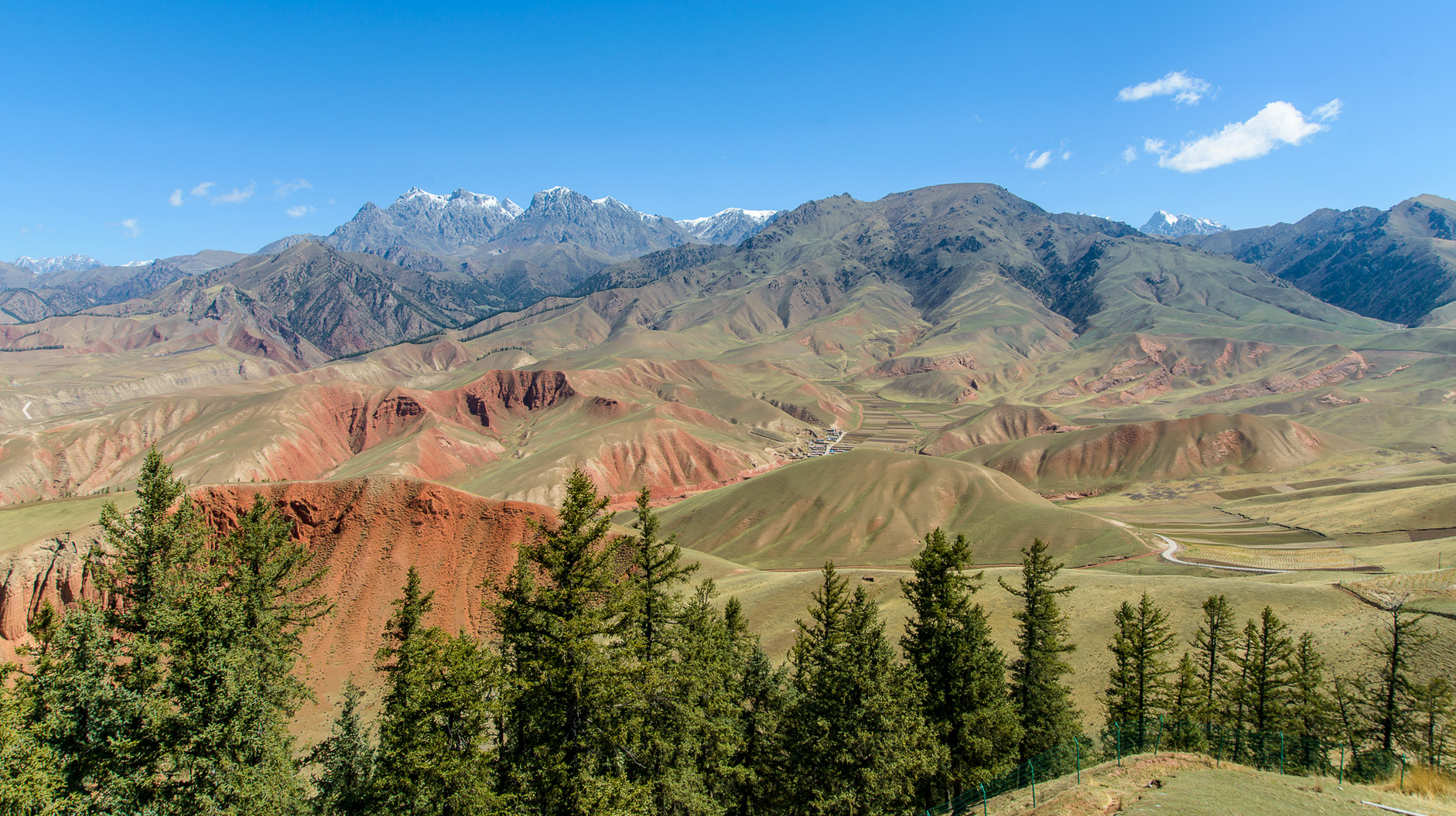
About 1.3 million years ago, climate swings and resulting changes in vegetation likely pushed early humans to relocate from sites on the southeastern Chinese Loess Plateau, according to new research in Geophysical Research Letters. Credit: Stefan Wagener

AGU News

AGU23 housing deadline TODAY, 15 November
Press registration for #AGU23 is open and will remain open during the meeting, held in San Francisco and online 11-15 December 2023. Book hotels at the conference rate by the end of today, 15 November. [AGU23 press center] [AGU23 scientific program]

Volcano experts available for comment
AGU supplies a list of volcano experts available for comment to the media. [expert list][recent commentary on the ethics of geoengineering volcanoes]

Featured Research

Early humans in East Asia relocated due to changing climate
During the mid-Pleistocene climate transition, around 1.26 million years ago, changes in climate likely caused early humans to relocate in pursuit of food and shelter. Archaeological evidence suggests that early humans moved to sites that were forested with easy access to water as opposed to exposed and resource-poor areas. [Geophysical Research Letters research]

First earthquake warning system made entirely from artificial intelligence
The Ensemble Earthquake Early Warning System (E3WS) uses machine learning to detect earthquakes, locate their epicenters, and estimate their magnitude from the first three seconds of seismic activity. The E3WS will provide users with the extra seconds necessary to take actions to reduce personal disaster risk. [JGR Solid Earth research]

Aquifer “memory” causes subsidence to shift in California
Historic groundwater pumping in western California led to dramatic subsidence, which made that region less susceptible to drought-driven subsidence today, a new study finds. Southern California is now experiencing the highest rates of subsidence in the state because of drought, but both regions will soon see record-breaking subsidence because of ongoing groundwater depletion. [Water Resources Research research]

Drier soils will bring more iron and phytoplankton to the Pacific Ocean
As temperatures rise, global desertification will increase the amount of dust blown to the Pacific Ocean. This dust contains iron, a necessary nutrient for phytoplankton growth. As a result, climate change will likely increase phytoplankton growth in the equatorial Pacific Ocean, but other nutrient deficiencies will curb growth in other areas of the Pacific. [Geophysical Research Letters research]

A wavier jet stream won’t cause stronger temperature extremes after all
Rapid warming in the Arctic may cause the atmospheric jet stream to slow down and meander, which previous studies suggest could lead to long-lasting extreme temperatures. New research finds that while the jet stream will likely meander as expected, temperature anomalies will be less extreme than previous predicted. [Geophysical Research Letters research]

Climate tipping points could be triggered by “committed warming”
As the planet warms, climate tipping points, such as the loss of the Amazon rainforest, become increasingly likely. Reducing greenhouse gas emissions won’t be enough to avoid tipping points, as the greenhouse gases already in the atmosphere will continue to warm Earth. New research suggests a net-zero emissions approach is necessary to avoid catastrophe. [Earth’s Future research] [Eos research spotlight]


AGU (www.agu.org) is a global community supporting more than half a million advocates and professionals in Earth and space sciences. Through broad and inclusive partnerships, AGU aims to advance discovery and solution science that accelerate knowledge and create solutions that are ethical, unbiased and respectful of communities and their values. Our programs include serving as a scholarly publisher, convening virtual and in-person events and providing career support. We live our values in everything we do, such as our net zero energy renovated building in Washington, D.C. and our Ethics and Equity Center, which fosters a diverse and inclusive geoscience community to ensure responsible conduct.

11/8/2023: Poorer countries pay heaviest price for climate extremes

Climate change threatens many of the world’s glaciers, including those in the Ruwenzori Mountains of Uganda. A new Earth’s Future study examines 25 glaciers from a range of environments and finds that half will be gone by 2050. Credit: Mandala Travel/flickr

AGU News

AGU launches new journal for AI and machine learning in the geosciences
On Wednesday, AGU announced the launch of the Journal of Geophysical Research: Machine Learning and Computation. The new open access journal is dedicated to research that explores data-driven and computational methodologies based on statistical analysis, machine learning, artificial intelligence and mathematical models, with the aim of advancing knowledge in the Earth and space sciences. [press release]

AGU23 housing deadline on 15 November
Press registration for #AGU23 is open and will remain open during the meeting, held in San Francisco and online 11-15 December 2023. Book hotels at the conference rate by 15 November. [AGU23 press center] [AGU23 scientific program]

Press registration for Ocean Sciences 2024 is now open
Press registration for Ocean Sciences 2024 (#OSM24), held in New Orleans and online from 18-23 February 2024, is now open. [media advisory][OSM24 press center]

Featured research

Poorer countries pay heaviest price for climate extremes
Twenty percent of the world’s poorest population has experienced a significant increase in drought-to-downpour events, with some regions enduring a nearly 50% rise in exposure over a 30-year period. These drastic swings have grown in intensity and frequency with climate change and may exacerbate inequalities in an increasingly warmer world. [Geophysical Research Letters research]

Half of these glaciers will disappear by 2050
A new study explores how climate change will impact 25 glaciers around the world, representative of regions with different climate conditions and sensitivities. Nearly half will disappear by 2050 due to widespread warming and drying, despite a trend towards wetter climates in some locations. [Earth’s Future research]

Slow earthquakes detectable with single seismic station
The 2011 Tōhoku earthquake and tsunami were preceded by two slow-moving quakes along the Japan Trench. These “slow slip” events have been well studied in recent years and are now easily detectable in areas with dense observational networks. For regions without observation networks, a new study has developed a detection method that only requires a single seismic station. [JGR Solid Earth research]

Atmospheric instability triggers heatwaves and extreme rainfall
Thunderstorms and shifting weather fronts can cause heatwaves, which can then trigger extreme rainfall, a new study says. These downpours often lead to flash floods and are expected to increase in intensity and frequency with climate change. The extreme rainfall adds moisture that is in turn favorable for the development of storms. [JGR Atmospheres research]

Where the wild marsquakes are
A new analysis of the seismic data gathered by the InSight lander reveals that marsquakes occur across a much larger area of the planet than previously known. [JGR Planets research] [Eos Editor Highlight]


AGU (www.agu.org) is a global community supporting more than half a million advocates and professionals in Earth and space sciences. Through broad and inclusive partnerships, AGU aims to advance discovery and solution science that accelerate knowledge and create solutions that are ethical, unbiased and respectful of communities and their values. Our programs include serving as a scholarly publisher, convening virtual and in-person events and providing career support. We live our values in everything we do, such as our net zero energy renovated building in Washington, D.C. and our Ethics and Equity Center, which fosters a diverse and inclusive geoscience community to ensure responsible conduct.
10/25/23: An extreme ENSO in 2014-2016 sped up sea-level rise

An extreme El Nino event in 2014-2016 led to an extra 7 millimeters (about 0.3 inches) of sea-level rise, according to a new study in Geophysical Research Letters. Credit: hermansyah/unsplash

AGU News

Press registration for Ocean Sciences 2024 is now open
Press registration for Ocean Sciences 2024 (#OSM24), held in New Orleans and online from 18-23 February 2024, is now open. [media advisory][OSM24 press center]

AGU23 Annual Meeting press registration open, program online
Press registration for #AGU23 is open and will remain open during the meeting, held in San Francisco and online 11-15 December 2023. Book hotels at the conference rate by 15 November. [AGU23 press center] [AGU23 scientific program]

Featured research

An extreme ENSO in 2014-2016 sped up sea-level rise
El Niño Southern Oscillation (ENSO) changes global weather patterns, including precipitation and land-based water storage. An extreme ENSO event from 2014-2016 led to an additional 7 millimeters (about 0.3 inches) of sea-level rise largely due to a drier Amazon Basin over that period, a new study finds. [Geophysical Research Letters research]

China will warm less than expected by the end of the century
China is expected to warm an average of 0.65 °C (about 1.2 °F) less than previously predicted by the end of the 21st century, a new study finds. The milder forecast reduces the impact of extreme heat on the nation’s population. [Geophysical Research Letters research]

The ethics of volcano geoengineering
Humans have tampered with volcanoes’ eruptions in the past, both intentionally and accidentally. In a new paper, scientists weigh the ethics and balance of what safety could be gained and what the risks of volcanic geoengineering could be. [Earth’s Future research]

Spraying sea salt into clouds to cool Earth’s temperature has mixed results
Scientists propose marine cloud brightening (MCB), which uses sea salt to make clouds more reflective, as an alternative to stratospheric aerosol injections because MCB’s impacts are more localized. Deploying MCB in one region can have unintended consequences in other regions of the world, but overall, the method reduces the risk of crossing many major climate tipping points, a new study finds. [Geophysical Research Letters research]

Machine learning highlights ways to improve flood mitigation
New research shows that home flood insurance coverage is often a reactive purchase in response to flooding, while top-down policies that focus on community resilience may offer more robust protection. [Earth’s Future research] [Eos editor’s highlight]


AGU (www.agu.org) is a global community supporting more than half a million advocates and professionals in Earth and space sciences. Through broad and inclusive partnerships, AGU aims to advance discovery and solution science that accelerate knowledge and create solutions that are ethical, unbiased and respectful of communities and their values. Our programs include serving as a scholarly publisher, convening virtual and in-person events and providing career support. We live our values in everything we do, such as our net zero energy renovated building in Washington, D.C. and our Ethics and Equity Center, which fosters a diverse and inclusive geoscience community to ensure responsible conduct.

10/18/2023: Arctic may experience first ice-free summer later than expected

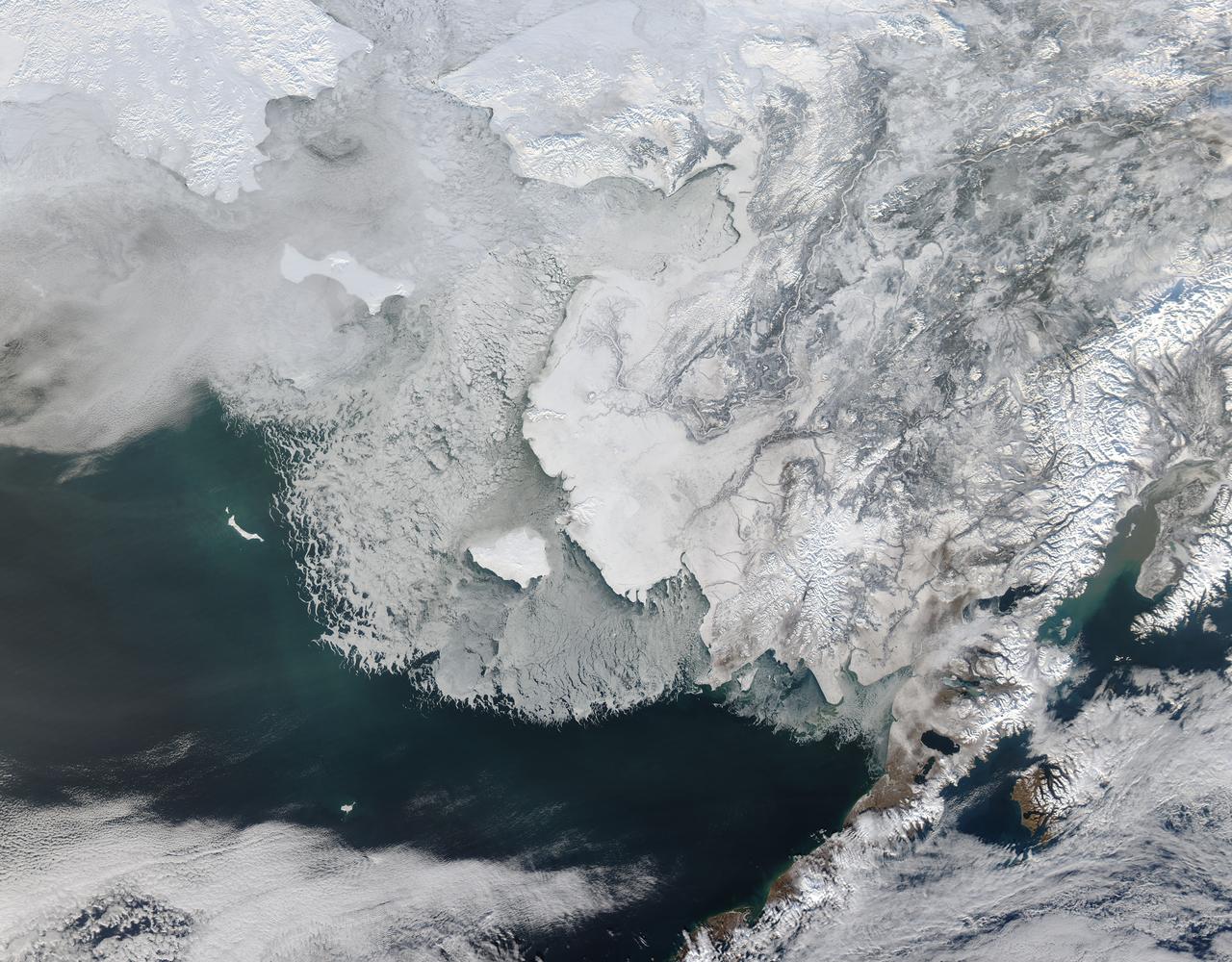
An “ice-free” Arctic summer, generally defined as having a sea-ice extent smaller than 1 million square kilometers (386,100 square miles), may come about 12 years later than previously predicted, according to new research from AGU’s journal Earth’s Future. Credit: NASA Goddard

Featured research

Arctic may experience first ice-free summer later than expected
Some studies predict that the Arctic’s first ice-free summer will be around 2044; however, they fail to consider how sea ice has historically changed on a regional scale. Climate models combined with regional observations find that the Arctic’s first summer without ice will likely occur 12 years later than previously estimated. [Earth’s Future research]

Largest recorded marsquake likely has tectonic origins
Most of Mars’ seismic activity can be traced to meteoroids striking the planet’s surface, but NASA’s InSight mission recorded a major marsquake in an area with no new impact crater. As a result, scientists now suggest that it may be tectonic activity, not a meteoroid, that triggered the marsquake. [Geophysical Research Letters research]

World’s largest water diversion project sees moderate success
To address a water shortage, China has been sending water from the wet south to the dry north in the world’s largest diversions — also one of the most controversial. The effort has some success with surface water recovery but more limited success with groundwater and terrestrial water, a new study finds.  [Water Resources Research research]

Surface water can be a better indicator of malaria than rainfall
Current malaria prediction tools use precipitation data to indirectly estimate surface water, where mosquitoes breed. But models using high-resolution surface water data can better mimic how malaria spreads and outperform precipitation-based predictions, a new study finds. [GeoHealth research]

Commitment to Paris Agreement could save thousands of lives in Chile
A growing population and higher vehicle use contribute to air pollution that is above global health guidelines in Santiago, Chile’s capital city. Adherence to the Paris Climate Agreement by 2050 could prevent more than 3,000 premature deaths and 2,590 new asthma cases in Santiago. [JGR Atmospheres research]

Melting glaciers send lead into coastal waters
The amount of lead currently found in glaciated environments is too high to be explained by atmospheric deposition alone, even with the phasing out of leaded gasoline. New experiments find that glacier sediments release more lead into meltwater with warmer temperatures. [JGR Biogeosciences research] [Eos editor’s highlight]


AGU (www.agu.org) is a global community supporting more than half a million advocates and professionals in Earth and space sciences. Through broad and inclusive partnerships, AGU aims to advance discovery and solution science that accelerate knowledge and create solutions that are ethical, unbiased and respectful of communities and their values. Our programs include serving as a scholarly publisher, convening virtual and in-person events and providing career support. We live our values in everything we do, such as our net zero energy renovated building in Washington, D.C. and our Ethics and Equity Center, which fosters a diverse and inclusive geoscience community to ensure responsible conduct.
10/11/2023: Extreme ocean warming and cooling bleach Caribbean corals

Extreme water temperatures, both hot and cold, result in coral bleaching events throughout the Caribbean. Credit: G. Torda/ARC

AGU News

AGU 2023 Annual Meeting program now online
Staff, freelance and student journalists, along with press officers and institutional writers covering the conference, are eligible for free registration for AGU’s annual meeting (#AGU23), in San Francisco, CA and online 11-15 December. [program][AGU23 Press Center][Press registration and housing][Media advisories]

Research roundup: eclipse science
This Saturday, much of the western U.S. will experience an annular eclipse. What do scientists learn from such events? [eclipse curbs equatorial electrojet][nighttime ionospheric irregularities after an eclipse][eclipses can alter ozone][Triennial Earth-Sun Summit 2024]

Featured research

Extreme ocean warming and cooling result in widespread coral bleaching
In the last 40 years, marine heatwaves and cold spells have resulted in widespread coral bleaching throughout the Caribbean Sea. These events have become more frequent with climate change and are expected to heavily impact reef ecosystems. [JGR Oceans research]

Subglacial rivers melt ice shelves and impact ocean circulation
Below the Antarctic Ice Sheet, rivers carry large volumes of meltwater from the ice’s base to cavities that form beneath protruding ice shelves. A new study of The Amundsen Sea Embayment found these rivers can hasten shelf melting and have extensive impacts on ocean circulation. [JGR Oceans research]

Vegetation curbs debris flows after wildfires
Wildfires leave slopes barren and susceptible to dangerous debris flows after intense rainfall. Researchers found that in the western U.S., recovering two-thirds of an area’s vegetation can stabilize hillslopes and prevent debris flows. [Geophysical Research Letters research]

Historical aurora records reveal shortened solar cycle
Fastidious night sky observations from Korean historical texts provide novel evidence for a short, 8-year solar cycle in the Maunder Minimum, which lasted from 1645 to 1715. The departure from the typical 11-year solar cycle is an important marker for anomalous “grand” minima with exceptionally low magnetic activity, such as the Maunder. [AGU Advances research] [Eos Research Spotlight]


AGU (www.agu.org) is a global community supporting more than half a million advocates and professionals in Earth and space sciences. Through broad and inclusive partnerships, AGU aims to advance discovery and solution science that accelerate knowledge and create solutions that are ethical, unbiased and respectful of communities and their values. Our programs include serving as a scholarly publisher, convening virtual and in-person events and providing career support. We live our values in everything we do, such as our net zero energy renovated building in Washington, D.C. and our Ethics and Equity Center, which fosters a diverse and inclusive geoscience community to ensure responsible conduct.


9/27/2023: Space companies face heightened solar maximum

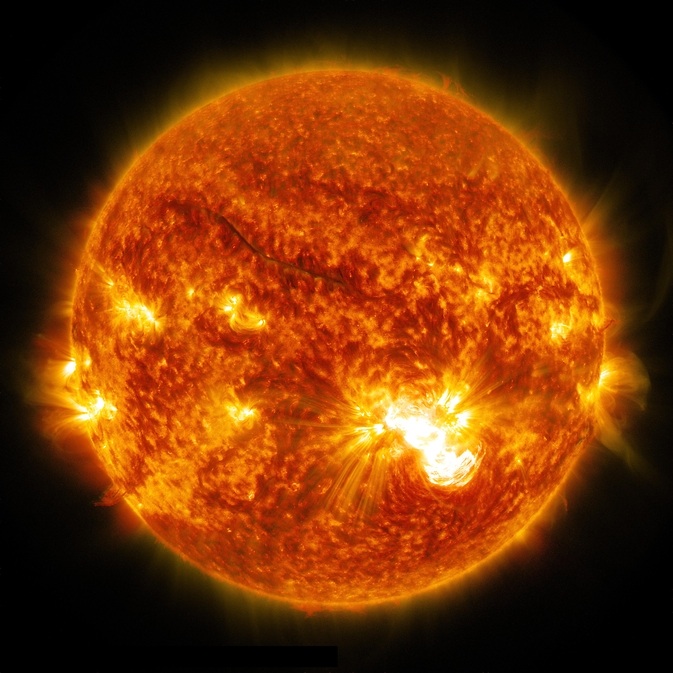
The current solar cycle is intense, forcing space-oriented companies to face inclement space weather. Credit: NASA Goddard

Featured research

Space companies face heightened solar maximum
Space companies face inclement weather as the current solar cycle has produced the highest rates of monthly sunspots in over two decades, with 163 and 159 in June and July, respectively. [Space Weather research]

Hydrogen insulates gas giants’ ultra-hot cores
Hydrogen, a primary component in gas giant planets, may be the reason why these distant worlds are able to maintain scorching internal temperatures despite their ice-cold surfaces. Researchers find that in its hot, liquid form, hydrogen has low thermal conductivity, making it a great insulator. [Geophysical Research Letters research]

Researchers pinpoint source of Turkey-Syria Earthquake tsunami
On 6 February 2023, two large earthquakes struck southeast Turkey and the northern border of Syria, generating a series of aftershocks and a mysterious tsunami in the Mediterranean Sea. Researchers now say the tsunami originated from landslides and liquefaction around Turkey’s Iskenderun Bay. [Geophysical Research Letters research]

Europe is getting drier and hotter
In 2022, western Europe experienced its hottest summer on record, resulting in more than 61,000 deaths. Low winds and an influx of hot, dry air are partially to blame, and similar weather patterns will be more likely with climate change, researchers say. [Geophysical Research Letters research]

Ocean’s largest Oxygen Deficient Zone is getting stronger
The world’s largest ocean Oxygen Deficient Zone, located in the Eastern Tropical North Pacific, has strengthened by 30% in the last 50 years. There, rapidly depleting oxygen supplies could drastically alter the carbon cycle and threaten marine organisms. [Global Biogeochemical Cycles research]

Exploring the mantle through microseisms
A new method for examining the tiny vibrations of Earth caused by ocean swells could help reveal details of deep-Earth structure. [Geophysical Research Letters research] [Eos Research Spotlight]


AGU (www.agu.org) is a global community supporting more than half a million advocates and professionals in Earth and space sciences. Through broad and inclusive partnerships, AGU aims to advance discovery and solution science that accelerate knowledge and create solutions that are ethical, unbiased and respectful of communities and their values. Our programs include serving as a scholarly publisher, convening virtual and in-person events and providing career support. We live our values in everything we do, such as our net zero energy renovated building in Washington, D.C. and our Ethics and Equity Center, which fosters a diverse and inclusive geoscience community to ensure responsible conduct.