2/12/26: Climate patterns put a damper on African dust storms


A dirt road in the desert with wind kicking up dust

Wind kicks up dust on a dirt road in the Sahara Desert. Dust storms in northern Africa can negatively impact human health and agriculture, but also play a major role in forming clouds and delivering nutrients around the world. Large-scale climate phenomena are making these storms less frequent, a trend likely to continue with climate change. Credit: Armands Brants

AGU News

AGU Denounces Trump Administration’s Repeal of the EPA Endangerment Finding
AGU President Brandon Jones released a statement today on the Trump Administration’s repeal of the EPA Endangerment Finding, calling it a reckless, senseless decision with global implications for human well-being and the environment. Read more: [From the Prow]

Press registration is open for the 2026 Ocean Sciences Meeting in Glasgow, Scotland
Staff, freelance and student journalists, press officers and institutional writers are eligible to apply for complimentary press registration for the conference, which will convene 22-27 February. [media advisory][OSM26 Press][eligibility guidelines][preview conference hotels]

Featured Research

North African dust storms are in decline. Climate change may continue the trend.
Dust storms in the Sahara and Sahel regions of northern Africa have declined at a rate of roughly 0.1 storms per month since the mid-1980s. In a recent study, researchers say the major cause was the Atlantic Multidecadal Oscillation, a long-term pattern of anomalous surface temperatures in the North Atlantic Ocean. In the Sahel, this phenomenon has brought wetter, warmer conditions that moisten soil and fuel plant growth, suppressing dust, while in the Sahara, it has altered wind patterns to the same effect. The team expects the trend to continue under climate change, potentially benefiting air quality and agricultural yields in northern Africa but also impacting how much dust is in the air globally, which in turn influences cloud formation, solar radiation, and nutrient delivery. [JGR Atmospheres study]

On dry-region farms, solar panels can boost crop growth and carbon sequestration
Agrivoltaics, which sites solar panels and farm crops together, can do more than produce food and energy on the same land: in some cases, it can fight drought and enhance carbon sequestration. Researchers fed data from agrivoltaic farms in Colorado and Illinois into a computer model to simulate how the panels affected the land’s water use and carbon storage. In drier Colorado, the panels’ shade kept the soil moist, boosting grass growth and thereby storing more carbon. Amid Illinois’ wetter conditions, however, the shade mostly served to hamper maize and soybean growth, reducing carbon storage. Combining data from both sites, the researchers estimated that solar panel coverage of about 60% worked best for balancing the benefits from both solar and crops. [JAMES study]

As climate change makes floods more variable, coastal deltas will shrink
Coastal deltas and wetlands will likely shrink and sequester less carbon as the timing and intensity of extreme rains and floods get more variable, as scientists expect due to human-driven climate change. In a recent study, researchers ran two experiments on miniature-scale deltas in a lab — one with a constant flood discharge, and one with a variable flow that tripled in volume from base flow to peak flow. The variable flow made its delta slope into the water nearly twice as steeply, and shrink in area by 2.5 times, compared to the steady flow. The former delta also held 108% less organic material, suggesting variable flooding patterns could reduce wetland’s carbon sequestration abilities. [Geophysical Research Letters study]

As warming worsens hot droughts, plants contribute more to ozone pollution
Simultaneous heatwaves and drought, an increasing phenomenon in the northern hemisphere due to global warming, spur plants’ production of ozone-forming chemicals while reducing their ability to suck ozone from the air, a recent study found. Researchers used models to estimate chemical interactions between plants and the atmosphere during hot droughts, with a focus on the US, western Europe, and China. Except in cases of severe drought, the models indicated that hot drought augments plant emissions of ozone precursors by 10% to 24%, mainly due to heat boosting the activity of enzymes central to the process. Drought, meanwhile, prompts plants to close their stomata, or pores, to save water, exchanging gases with the atmosphere up to 36% less and therefore removing less ozone from the air. [JGR Atmospheres study]

Rising gases flag hidden faults in Türkiye
Leaks of carbon dioxide and radon gas from soils in Türkiye align with the presence of underground faults, potentially even revealing previously unknown fault areas, according to a recent study. Researchers measured gas emissions from soils at 98 sites in the Hatay Province of southeastern Türkiye after the country’s 2023 earthquake. In two areas, they found gas leaking along linear paths. Faults may allow gases to rise to the surface, the team wrote, meaning the measurements may indicate buried faults associated with known fault structures. The gas patterns even showed one fault may stretch farther west than previously estimated. The researchers said this confirms soil gases offer a way to detect hidden faults and improve earthquake risk assessment. [Geochemistry, Geophysics, Geosystems study]

How the spring thaw influences arsenic levels in lakes
Four lakes near Yellowknife, Canada, show that there’s no one-size-fits-all answer. [Eos research spotlight][JGR Biogeosciences study]

A road map to truly sustainable water systems in space
Future astronauts need efficient, durable, and trustworthy closed-loop systems to provide water for missions lasting months to years. [Eos research spotlight][Water Resources Research study]

Why are thunderstorms more intense over land than ocean?
A new perspective on convective instability sheds light on the factors controlling intensity in the rising motions that produce precipitation, and occasionally thunder and lightning, over land. [Eos editors’ highlight][Geophysical Research Letters study]

Subscribe or update your subscription preferences

1/29/2026: Record Io eruption hints at a sponge-like interior

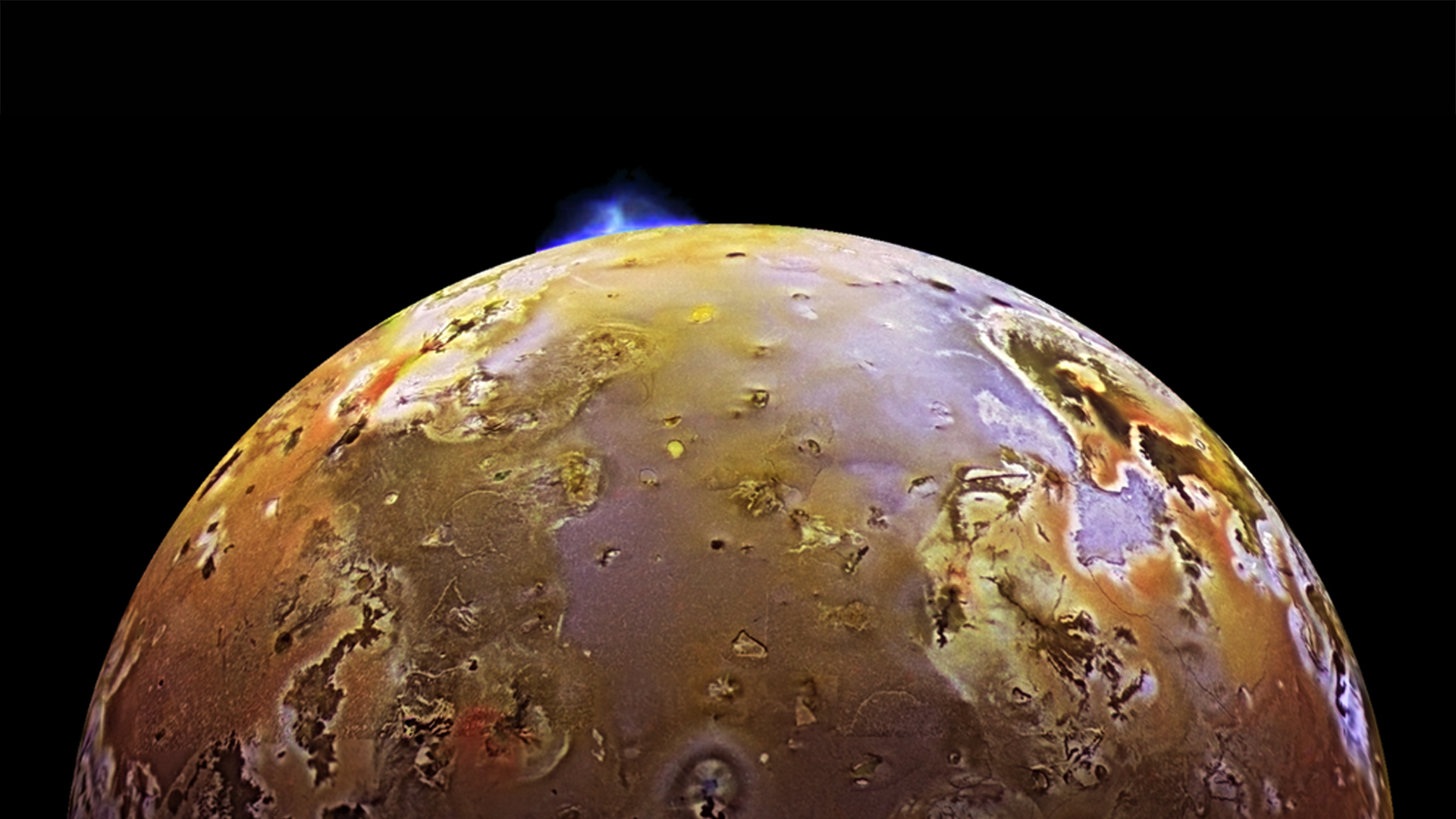
a glowing volcanic eruption on the surface of Io, a moon of Jupiter, as seen from space, with the eruption positioned on Io's horizon against the backdrop of space

A volcano erupts on Io, our solar system’s most volcanically active world, in an image captured in 1997 by the Galileo spacecraft. In late 2024, the Juno spacecraft witnessed Io’s most powerful known eruption, revealing clues about its subsurface structure. Credit: NASA, NASA-JPL, DLR

AGU News

Press registration is open for the 2026 Ocean Sciences Meeting in Glasgow, Scotland

Staff, freelance and student journalists, press officers and institutional writers are eligible to apply for complimentary press registration for the conference, which will convene 22-27 February. [media advisory][OSM26 Press][eligibility guidelines][preview conference hotels]

Featured Research

Io’s largest known eruption hints at a sponge-like interior
In late December of 2024, NASA’s Juno spacecraft witnessed the most intense eruption ever recorded on Io, Jupiter’s most volcanically active moon. The eruption spanned 65,000 square kilometers (over 25,000 square miles) of the southern hemisphere and released 140 to 260 terawatts of energy, over 1,000 times more than usual for the area by previous estimates. Three other hotspots also lit up enough to place them among the 10 most powerful known on Io — though other nearby volcanoes did not. Scientists interpret this as a single event affecting an underground network of massive, interconnected magma chambers, almost like pores in a giant sponge. [JGR Planets study]

Earthquakes may tease their final sizes right at the start
Just a few seconds of an earthquake’s onset hold enough information to predict its eventual size, potentially. After training a deep learning model on data from over 2,100 earthquakes showing changes in the energy they released over time, researchers found the model needed, at most, the first five seconds of data from a quake — accounting for the first 20% of the rupture process — to predict its magnitude with at least 80% accuracy. The finding could eventually inform the creation of more effective earthquake early warning systems. [JGR Machine Learning and Computation study]

To save water in the southwestern U.S., attitude change efforts alone may not suffice
Rather than rely solely on policies encouraging residents to save water, cities and towns in the southwestern U.S. should employ a diverse set of strategies to conserve water as human-driven climate change makes droughts more frequent and intense, a recent study suggests. Researchers used a computer model to simulate how policies aimed at reducing water demand affected reservoir supply in Denver, Las Vegas, and Phoenix under different climate change scenarios. While the policies counteracted the negative impacts of climate change in some cases, they proved insufficient in others. To maintain water availability under climate change, the team wrote, a multi-pronged approach may be the safest bet. [Water Resources Research study]

US faces coin-toss odds of trillion-dollar climate damages in the next five years
The U.S. has a roughly 54% chance of suffering over one trillion dollars in damages from extreme weather and climate disasters between 2026 and 2030 alone. The estimate comes from a recent statistical model using the National Oceanic and Atmospheric Administration’s database of billion-dollar climate disasters from 1980 to 2024 to extrapolate into the near future. Disasters at that level are occurring more often due to both climate change and communities’ increasing vulnerability: in the 1980 to 2024 period, even the record-high financial toll of Hurricane Katrina was not an outlier but an expected result. [Geophysical Research Letters study]

Beaufort Sea landfast ice, once thought consistent, is disappearing
An updated 27-year record of northern Alaska’s landfast sea ice — ice reaching over the sea from the coast — contradicts previous findings that the Beaufort Sea’s seasonal landfast ice has held steady since the 1970s. Instead, a comparison of the new data against 1970s satellite data shows its annual extent shrank an average of 2.5 kilometers (1.5 miles) from then to the late 1990s and aughts. The ice’s seasonal duration has also shortened at a rate of 13 days per decade from 1996 to 2023, an outcome consistent with ocean warming. The researchers say the Beaufort Sea is likely on track to lose its most extensive areas of landfast sea ice, which provide seasonal coastal erosion protection, wildlife habitat, and platforms for human hunting and travel. [JGR Oceans study]

Subscribe or update your subscription preferences

1/22/2026: Brightening clouds could cool the Arctic

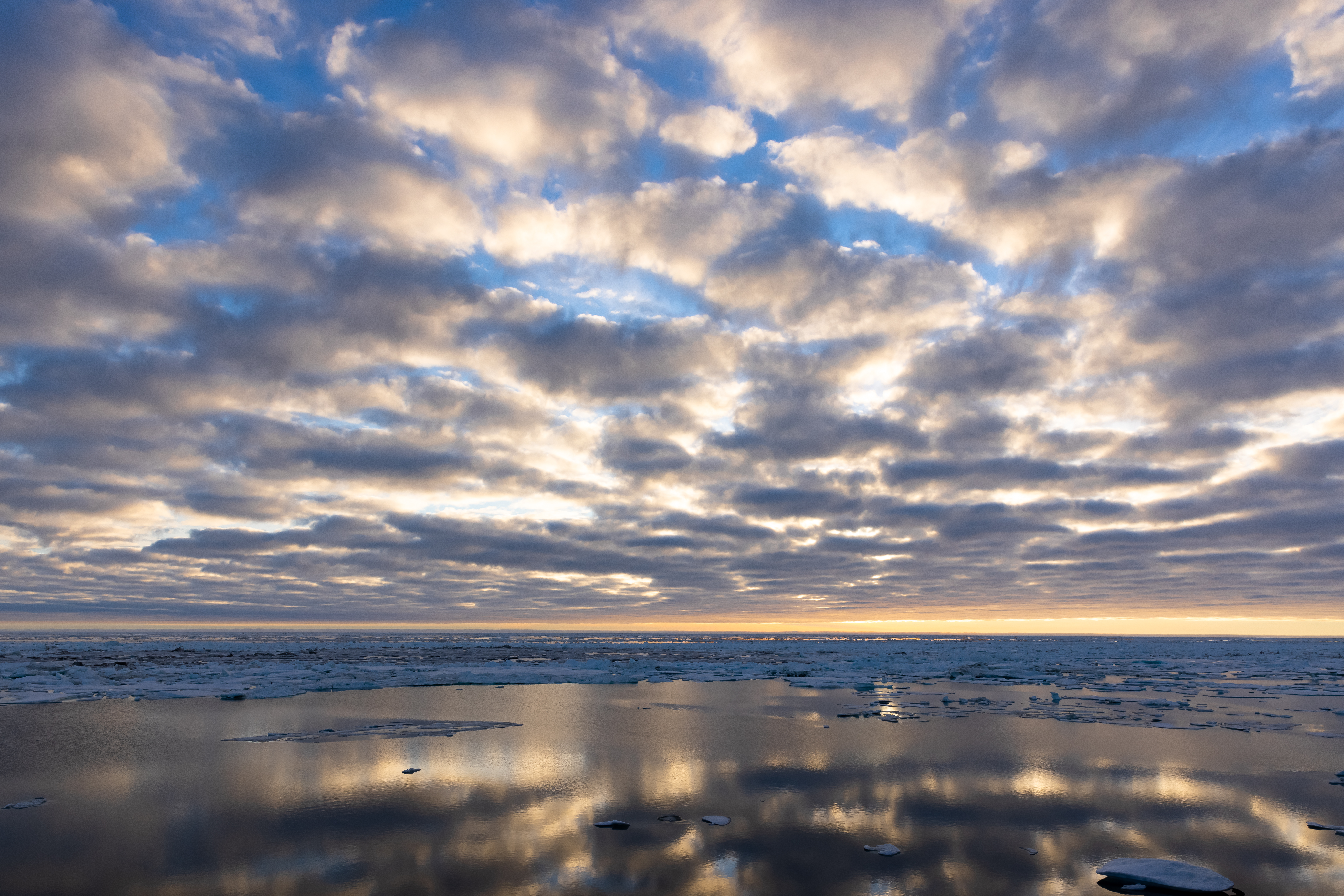
scattered clouds over a glassy ocean surface covered in icebergs

Clouds hang over the Chukchi Sea. Using salt particles to brighten Arctic clouds could potentially prevent warming there without impacting other regions, though researchers caution that this simulated result doesn’t account for all real-world factors and impacts. Credit: U. S. Fish and Wildlife Service

AGU News

Press registration is open for the 2026 Ocean Sciences Meeting in Glasgow, Scotland
Staff, freelance and student journalists, press officers and institutional writers are eligible to apply for complimentary press registration for the conference, which will convene 22-27 February. [media advisory][OSM26 Press][eligibility guidelines][preview conference hotels] 

Featured Research

Cloud brightening could cool the Arctic without affecting other regions, simulations indicate
Spraying sea salt particles into the low Arctic atmosphere could brighten clouds, significantly cooling the region and restoring Arctic sea ice, according to simulations using three separate Earth system models. The models assumed a “middle-of-the-road” greenhouse gas emissions scenario in which global warming reaches three degrees Celsius by 2100, with the goal of using marine cloud brightening to maintain near-current temperatures in the Arctic. The approach also showed minimal climate impacts beyond the Arctic from spraying salt particles — though the researchers stressed that their simulations didn’t account for impacts to communities, ecosystems, and atmospheric chemistry within the Arctic. [Earth’s Future study]

Climate change will increase soil erosion, especially in dry regions
As rainfall gets less frequent but more intense — the forecast for many regions due to human-driven climate change — soil erosion will increase, especially in drier climates and places with coarse soil. Researchers arrived at this result after feeding different rainfall scenarios into computer models to simulate the resulting soil erosion over time in different landscapes. The outcome echoes long-term observations from real-world monitoring, the team notes. Erosion can negatively impact soils’ abilities to regulate water, carbon, and nutrient cycles, as well as to provide habitat for plants and animals. [JGR Earth Surface study]

Climate change may dry out tropical America even more than previously thought
Annual rainfall across tropical America will likely decline as human emissions heat up the Earth, climate models project, exacerbating the risk of Amazonian wildfires, Panama Canal disruptions, and other impacts to agriculture, ecosystems, and water resources. However, in a new study, researchers say most models underestimate this effect. The team used real-world observations to correct for this bias in 42 climate models and found that every degree Celsius of warming caused a 46-millimeter drop in the region’s annual rainfall — 50% more than expected without the correction. [Geophysical Research Letters study]

A viscous fluid could mitigate earthquakes triggered by industrial activity
Fracking, geothermal energy production, storage of captured carbon, and other industrial activities beneath Earth’s surface commonly trigger earthquakes that can sometimes threaten lives and livelihoods. Investigating ways to minimize this hazard, researchers found that a shear thickening fluid — a mix of silica powder and ethylene glycol that gets more viscous as friction builds up around it — helped a simulated fault slip more stably and silently in lab experiments with a friction-generating machine. Injecting similar fluids into fault zones could help limit the magnitude of industrially-induced earthquakes, the team writes. [Geophysical Research Letters study]

In arid mountains, wildfire may augment the volume of snowmelt runoff
In the dry Jemez Mountains of New Mexico, winter snowpack evaporates significantly less where wildfire has razed entire stands of trees — leaving more snow available for water runoff. Researchers attribute the finding, based on data from monitoring towers, to the loss of canopy: snow piled on treetops increases the total snow surface area, allowing for more evaporation than in a burn zone with all its snow flat and stable on the ground. Areas where forests had only been thinned, in comparison, saw only minor drops in snow evaporation. While fire might keep more snow for runoff, the authors note that snow typically melts faster in burned areas, releasing that runoff more rapidly. This knowledge can help land managers understand how intensifying wildfires in western North America will impact the amount and timing of snowpack runoff available for people and plants, as well as hazards like flood risk. [Water Resources Research study]

The Antarctic, like the Arctic, will warm faster than lower latitudes
Under two degrees Celsius of global warming, the Antarctic will warm roughly 40% more than the Southern Hemisphere average, according to recent climate model simulations. Researchers say the effect primarily owes to how the region responds to ocean surface warming and will intensify as global warming continues. Scientists had already recognized that human-driven climate change disproportionately warms the Arctic, a phenomenon dubbed “Arctic amplification” — but its southern counterpart, Antarctic amplification, has remained uncertain. [Geophysical Research Letters study]

Climate change may cause the oceans to release more ozone-depleting compounds
Climate change has set the oceans on track to release more brominated compounds, chemicals capable of efficiently destroying the ozone layer — up to 14% more in a moderate-emissions scenario and 40% more in a high-emissions scenario by 2100, according to model projections. Two key brominated compounds would together increase by up to 1.13 parts per trillion in the atmosphere, enough to make a dent in the stratospheric ozone budget, researchers say. Marine macroalgae and phytoplankton make these compounds naturally, but as climate change alters the balance of energy and nutrients entering and leaving the oceans, both the biological production of bromine and how it gets exchanged between the ocean and atmosphere are changing. [JGR Atmospheres study]

Marine snow grows faster and fluffier as it sinks
New observations highlight how abiotic and biotic processes influence the fall of tiny oceanic particles from the surface waters to ocean depths. [Eos research spotlight] [Global Biogeochemical Cycles study]

ALMA’s new view of the Solar System
High-resolution radio observations link the chemistry of local moons and comets to the birth environments of distant exoplanets. [Eos editors’ highlight] [AGU Advances study]

Subscribe or update your subscription preferences

1/15/2026: These pink reefs show surprising potential climate resilience

A frilly, coral-like, crustose algae growing among other marine life on a reef

Coralline algae growing near Manawatāwhi (Three Kings Islands) in New Zealand. These calcified seaweeds act as reef-builders, providing habitat for marine biodiversity in coastal seas worldwide. Credit: Peter Southwood

AGU News 

“State of Science” report details Trump administration’s disruptions to US science
Eos, the science news magazine of the American Geophysical Union, today released “The State of the Science 1 Year On,” a special report assessing how the Trump administration’s first year in its second term disrupted the U.S. scientific enterprise and what actions may lie ahead this year. The report contextualizes key federal actions taken in 2025 across climate and energy, health and public safety, the federal scientific workforce, academia and research, and environmental protection. [Eos report] 

Press registration is open for the 2026 Ocean Sciences Meeting in Glasgow, Scotland
Staff, freelance and student journalists, press officers and institutional writers are eligible to apply for complimentary press registration for the conference, which will convene 22-27 February. [media advisory][OSM26 Press][eligibility guidelines][preview conference hotels] 

Featured Research 

A marine biodiversity habitat may prove unexpectedly resilient to climate change
A crusty, pink seaweed known as coralline algae grows in coastal seas around the world, helping build reef habitats that support a rich diversity of marine life. Scientists expect the impacts of climate change, particularly ocean acidification, to hit these reefs particularly hard. But a recent study found that, for about two-thirds of the year, a coralline algae reef off the west coast of Scotland already experiences pH levels as low as those expected by 2100 under a scenario of at least moderate greenhouse gas emissions. The researchers say this prolonged exposure offers hope that as pH lows get more extreme in the future, these algae — and the ecosystems they underpin — may show more resilience than previously thought. [JGR Biogeosciences study] 

Faced with water restrictions, many Americans would willingly pay to reuse water
In water-stressed regions, treating and reusing water can offer a valuable way to meet demand for this precious resource—so much so that rural Americans would pay, on average, $49 a month for water reuse systems if it meant avoiding restrictions on their water usage, according to a recent national-level survey study of over 3,000 individuals. That’s enough to sustainably fund water reuse programs in communities with small water systems, positioning water reuse as a viable solution in rural regions facing water restrictions. [Water Resources Research study] 

Canada’s air was cleanest in the 2000s. Massive wildfires have reversed the trend.
Air pollution regulations have cleared the air in industrialized eastern Canada since the 1980s, while in the west, wildfire has made summers increasingly smoky, a new study reports, mirroring previous findings from the United States. The record 2023 fires are part of a trend; as the climate warms, the future will be even smokier for North America. Wildfire smoke is less tractable than vehicle exhaust and industrial pollution, which regulators can tackle at the source tailpipes and smokestacks, and will require new approaches to policy, monitoring, and education as well as air-cleaning technologies to reduce unhealthy exposure. [Earth’s Future study] 

Logging too often, even at low intensity, leaves forest soils no time to recover
Forest soils need at least 10 to 15 years to recover after logging, a recent study finds. Some foresters maintain forests with a wide range of tree ages, returning every 5 years or so to take whichever trees are ready for harvesting. This strategy can maintain a healthier forest structure compared to operations that plant trees of the same age and return a decade later to harvest them all at once. However, more frequent visits by heavy logging machinery keep the soil compacted, reducing the diversity of its microbial life and increasing erosion and runoff. Samples from Mediterranean beech forests in southern Italy revealed that while soils recovered somewhat after five years, they hadn’t fully healed. The researchers suggest waiting 10 to 15 years between operations and taking precautions to minimize soil compaction during logging to make forestry operations more sustainable. [JGR Biogeosciences study] 

Besides carbon emissions, direct heat from human activities boosts climate warming
Greenhouse gases aren’t the only things warming the planet: industrial facilities, heating and cooling systems, vehicle exhaust, and even our own bodily metabolisms release heat directly into the environment. Under a high-emissions scenario, these heat sources could contribute an additional 0.6 °C (1.08 °F) to average summer temperatures in North America during the end of this century, making heatwaves more frequent, according to a recent modeling study. They would also alter atmospheric conditions and reduce cloud cover to make the eastern and northwestern United States and central Canada hotter and drier, increasing plant stress and wildfire risk. This highlights the need to mitigate heat at its sources through solutions like urban greening, low-emissions transportation, and energy systems that make use of recovered heat, the researchers write. [JGR Atmospheres study] 

Successful liquid lake conditions in a cold Martian paleoclimate
Simulations from a new lake model explain how liquid water could have been maintained over Mars in a cold climate, thus resolving a critical scientific gap in our understanding of Mars’ early history. [Eos editors’ highlight][AGU Advances study] 
Melting glaciers mix up waters more than we thought
Existing theory underestimates the mixing of freshwater and seawater by up to 50%. [Eos research spotlight][JGR Oceans study] 

Subscribe or update your subscription preferences