11/8/2023: Poorer countries pay heaviest price for climate extremes

Climate change threatens many of the world’s glaciers, including those in the Ruwenzori Mountains of Uganda. A new Earth’s Future study examines 25 glaciers from a range of environments and finds that half will be gone by 2050. Credit: Mandala Travel/flickr

AGU News

AGU launches new journal for AI and machine learning in the geosciences
On Wednesday, AGU announced the launch of the Journal of Geophysical Research: Machine Learning and Computation. The new open access journal is dedicated to research that explores data-driven and computational methodologies based on statistical analysis, machine learning, artificial intelligence and mathematical models, with the aim of advancing knowledge in the Earth and space sciences. [press release]

AGU23 housing deadline on 15 November
Press registration for #AGU23 is open and will remain open during the meeting, held in San Francisco and online 11-15 December 2023. Book hotels at the conference rate by 15 November. [AGU23 press center] [AGU23 scientific program]

Press registration for Ocean Sciences 2024 is now open
Press registration for Ocean Sciences 2024 (#OSM24), held in New Orleans and online from 18-23 February 2024, is now open. [media advisory][OSM24 press center]

Featured research

Poorer countries pay heaviest price for climate extremes
Twenty percent of the world’s poorest population has experienced a significant increase in drought-to-downpour events, with some regions enduring a nearly 50% rise in exposure over a 30-year period. These drastic swings have grown in intensity and frequency with climate change and may exacerbate inequalities in an increasingly warmer world. [Geophysical Research Letters research]

Half of these glaciers will disappear by 2050
A new study explores how climate change will impact 25 glaciers around the world, representative of regions with different climate conditions and sensitivities. Nearly half will disappear by 2050 due to widespread warming and drying, despite a trend towards wetter climates in some locations. [Earth’s Future research]

Slow earthquakes detectable with single seismic station
The 2011 Tōhoku earthquake and tsunami were preceded by two slow-moving quakes along the Japan Trench. These “slow slip” events have been well studied in recent years and are now easily detectable in areas with dense observational networks. For regions without observation networks, a new study has developed a detection method that only requires a single seismic station. [JGR Solid Earth research]

Atmospheric instability triggers heatwaves and extreme rainfall
Thunderstorms and shifting weather fronts can cause heatwaves, which can then trigger extreme rainfall, a new study says. These downpours often lead to flash floods and are expected to increase in intensity and frequency with climate change. The extreme rainfall adds moisture that is in turn favorable for the development of storms. [JGR Atmospheres research]

Where the wild marsquakes are
A new analysis of the seismic data gathered by the InSight lander reveals that marsquakes occur across a much larger area of the planet than previously known. [JGR Planets research] [Eos Editor Highlight]


AGU (www.agu.org) is a global community supporting more than half a million advocates and professionals in Earth and space sciences. Through broad and inclusive partnerships, AGU aims to advance discovery and solution science that accelerate knowledge and create solutions that are ethical, unbiased and respectful of communities and their values. Our programs include serving as a scholarly publisher, convening virtual and in-person events and providing career support. We live our values in everything we do, such as our net zero energy renovated building in Washington, D.C. and our Ethics and Equity Center, which fosters a diverse and inclusive geoscience community to ensure responsible conduct.

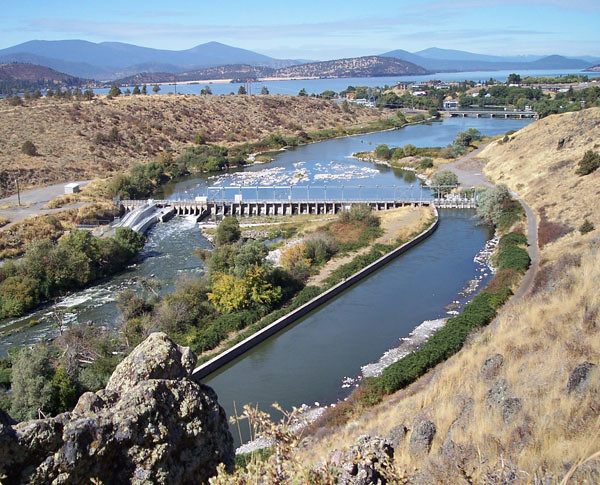
11/01/23: Dam management in US rises to environmental challenges

An image of Link River Dam on Link River at the head of Klamath River and just west of Klamath Falls, Oregon.

The Link River Dam at the head of Klamath River in Oregon. Removal of four dams from the Klamath river will be the largest dam removal project to date. Credits: Bureau of Reclamation (flickr)

AGU News

Press registration for Ocean Sciences 2024 is now open
Press registration for Ocean Sciences 2024 (#OSM24), held in New Orleans and online from 18-23 February 2024, is now open. [media advisory][OSM24 press center] 

AGU23 Annual Meeting press registration open, program online
Press registration for #AGU23 is open and will remain open during the meeting, held in San Francisco and online 11-15 December 2023. Book hotels at the conference rate by 15 November. [AGU23 press center] [AGU23 scientific program] 

Featured Research

Dam management in US rises to environmental challenges
Six decades past the era of big dam construction, a new era of dam removal hits a watershed moment, as work begins on the largest removal project to date on the Klamath River.  [Water Resources Research commentary] 

Biochar helps croplands absorb carbon and water in Europe
Scientists suggest that biochar, the burnt remains of biomass, could be a promising tool for removing carbon from the atmospheric cycle. A recent study examined the use of biochar in Europe’s croplands and found that it increased soil carbon, water holding capacity, and crop production. [Earth’s Future research] 

China’s lakes are experiencing more algal blooms
Fertilizer and rising temperatures may be behind China’s increasing algal blooms over the past two decades, a new study finds. Algal blooms can reduce drinking water quality and threaten aquatic biodiversity. In almost 100 Chinese lakes, algal blooms are occurring earlier, more frequently, and have longer windows to form. [Water Resources Research research] 

Heatwaves make it harder for urban greenery to absorb carbon dioxide
A Chicago study found urban plants could offset almost half the city’s traffic emissions, but heatwaves put a big dent in the plant’s capacity to absorb CO2 that could be partially mitigated by irrigation.  [JAMES research] 

Older, thicker Arctic sea ice is vanishing, export and melting are to blame
The Arctic’s multi-year sea ice is decreasing, leaving behind younger ice that is thinner and has less albedo than multi-year ice. But scientists have been unsure whether the loss was caused by export or melting. New research finds that export caused the first loss of multi-year sea ice in the 1980s, and a combination of melting and export caused the second major loss between 2006 and 2008. [JGR Oceans research] 

Piecing together the roots of the ancient Australian continent
The Kimberley craton in Australia is a classic locality for kimberlite, a mantle-derived igneous rock that delivers diamonds from the mantle lithosphere to near the surface where they can be mined. A recent study analyzed the craton and revealed the thickness, geothermal gradient, and history of melt extraction or addition from each layer of the mantle lithosphere. [Geochemistry, Geophysics, Geosystems research] [Eos Editor Highlight] 


AGU (www.agu.org) is a global community supporting more than half a million advocates and professionals in Earth and space sciences. Through broad and inclusive partnerships, AGU aims to advance discovery and solution science that accelerate knowledge and create solutions that are ethical, unbiased and respectful of communities and their values. Our programs include serving as a scholarly publisher, convening virtual and in-person events and providing career support. We live our values in everything we do, such as our net zero energy renovated building in Washington, D.C. and our Ethics and Equity Center, which fosters a diverse and inclusive geoscience community to ensure responsible conduct.
10/25/23: An extreme ENSO in 2014-2016 sped up sea-level rise

An extreme El Nino event in 2014-2016 led to an extra 7 millimeters (about 0.3 inches) of sea-level rise, according to a new study in Geophysical Research Letters. Credit: hermansyah/unsplash

AGU News

Press registration for Ocean Sciences 2024 is now open
Press registration for Ocean Sciences 2024 (#OSM24), held in New Orleans and online from 18-23 February 2024, is now open. [media advisory][OSM24 press center]

AGU23 Annual Meeting press registration open, program online
Press registration for #AGU23 is open and will remain open during the meeting, held in San Francisco and online 11-15 December 2023. Book hotels at the conference rate by 15 November. [AGU23 press center] [AGU23 scientific program]

Featured research

An extreme ENSO in 2014-2016 sped up sea-level rise
El Niño Southern Oscillation (ENSO) changes global weather patterns, including precipitation and land-based water storage. An extreme ENSO event from 2014-2016 led to an additional 7 millimeters (about 0.3 inches) of sea-level rise largely due to a drier Amazon Basin over that period, a new study finds. [Geophysical Research Letters research]

China will warm less than expected by the end of the century
China is expected to warm an average of 0.65 °C (about 1.2 °F) less than previously predicted by the end of the 21st century, a new study finds. The milder forecast reduces the impact of extreme heat on the nation’s population. [Geophysical Research Letters research]

The ethics of volcano geoengineering
Humans have tampered with volcanoes’ eruptions in the past, both intentionally and accidentally. In a new paper, scientists weigh the ethics and balance of what safety could be gained and what the risks of volcanic geoengineering could be. [Earth’s Future research]

Spraying sea salt into clouds to cool Earth’s temperature has mixed results
Scientists propose marine cloud brightening (MCB), which uses sea salt to make clouds more reflective, as an alternative to stratospheric aerosol injections because MCB’s impacts are more localized. Deploying MCB in one region can have unintended consequences in other regions of the world, but overall, the method reduces the risk of crossing many major climate tipping points, a new study finds. [Geophysical Research Letters research]

Machine learning highlights ways to improve flood mitigation
New research shows that home flood insurance coverage is often a reactive purchase in response to flooding, while top-down policies that focus on community resilience may offer more robust protection. [Earth’s Future research] [Eos editor’s highlight]


AGU (www.agu.org) is a global community supporting more than half a million advocates and professionals in Earth and space sciences. Through broad and inclusive partnerships, AGU aims to advance discovery and solution science that accelerate knowledge and create solutions that are ethical, unbiased and respectful of communities and their values. Our programs include serving as a scholarly publisher, convening virtual and in-person events and providing career support. We live our values in everything we do, such as our net zero energy renovated building in Washington, D.C. and our Ethics and Equity Center, which fosters a diverse and inclusive geoscience community to ensure responsible conduct.
10/18/2023: Arctic may experience first ice-free summer later than expected

An “ice-free” Arctic summer, generally defined as having a sea-ice extent smaller than 1 million square kilometers (386,100 square miles), may come about 12 years later than previously predicted, according to new research from AGU’s journal Earth’s Future. Credit: NASA Goddard

Featured research

Arctic may experience first ice-free summer later than expected
Some studies predict that the Arctic’s first ice-free summer will be around 2044; however, they fail to consider how sea ice has historically changed on a regional scale. Climate models combined with regional observations find that the Arctic’s first summer without ice will likely occur 12 years later than previously estimated. [Earth’s Future research]

Largest recorded marsquake likely has tectonic origins
Most of Mars’ seismic activity can be traced to meteoroids striking the planet’s surface, but NASA’s InSight mission recorded a major marsquake in an area with no new impact crater. As a result, scientists now suggest that it may be tectonic activity, not a meteoroid, that triggered the marsquake. [Geophysical Research Letters research]

World’s largest water diversion project sees moderate success
To address a water shortage, China has been sending water from the wet south to the dry north in the world’s largest diversions — also one of the most controversial. The effort has some success with surface water recovery but more limited success with groundwater and terrestrial water, a new study finds.  [Water Resources Research research]

Surface water can be a better indicator of malaria than rainfall
Current malaria prediction tools use precipitation data to indirectly estimate surface water, where mosquitoes breed. But models using high-resolution surface water data can better mimic how malaria spreads and outperform precipitation-based predictions, a new study finds. [GeoHealth research]

Commitment to Paris Agreement could save thousands of lives in Chile
A growing population and higher vehicle use contribute to air pollution that is above global health guidelines in Santiago, Chile’s capital city. Adherence to the Paris Climate Agreement by 2050 could prevent more than 3,000 premature deaths and 2,590 new asthma cases in Santiago. [JGR Atmospheres research]

Melting glaciers send lead into coastal waters
The amount of lead currently found in glaciated environments is too high to be explained by atmospheric deposition alone, even with the phasing out of leaded gasoline. New experiments find that glacier sediments release more lead into meltwater with warmer temperatures. [JGR Biogeosciences research] [Eos editor’s highlight]


AGU (www.agu.org) is a global community supporting more than half a million advocates and professionals in Earth and space sciences. Through broad and inclusive partnerships, AGU aims to advance discovery and solution science that accelerate knowledge and create solutions that are ethical, unbiased and respectful of communities and their values. Our programs include serving as a scholarly publisher, convening virtual and in-person events and providing career support. We live our values in everything we do, such as our net zero energy renovated building in Washington, D.C. and our Ethics and Equity Center, which fosters a diverse and inclusive geoscience community to ensure responsible conduct.

10/11/2023: Extreme ocean warming and cooling bleach Caribbean corals

Extreme water temperatures, both hot and cold, result in coral bleaching events throughout the Caribbean. Credit: G. Torda/ARC

AGU News

AGU 2023 Annual Meeting program now online
Staff, freelance and student journalists, along with press officers and institutional writers covering the conference, are eligible for free registration for AGU’s annual meeting (#AGU23), in San Francisco, CA and online 11-15 December. [program][AGU23 Press Center][Press registration and housing][Media advisories]

Research roundup: eclipse science
This Saturday, much of the western U.S. will experience an annular eclipse. What do scientists learn from such events? [eclipse curbs equatorial electrojet][nighttime ionospheric irregularities after an eclipse][eclipses can alter ozone][Triennial Earth-Sun Summit 2024]

Featured research

Extreme ocean warming and cooling result in widespread coral bleaching
In the last 40 years, marine heatwaves and cold spells have resulted in widespread coral bleaching throughout the Caribbean Sea. These events have become more frequent with climate change and are expected to heavily impact reef ecosystems. [JGR Oceans research]

Subglacial rivers melt ice shelves and impact ocean circulation
Below the Antarctic Ice Sheet, rivers carry large volumes of meltwater from the ice’s base to cavities that form beneath protruding ice shelves. A new study of The Amundsen Sea Embayment found these rivers can hasten shelf melting and have extensive impacts on ocean circulation. [JGR Oceans research]

Vegetation curbs debris flows after wildfires
Wildfires leave slopes barren and susceptible to dangerous debris flows after intense rainfall. Researchers found that in the western U.S., recovering two-thirds of an area’s vegetation can stabilize hillslopes and prevent debris flows. [Geophysical Research Letters research]

Historical aurora records reveal shortened solar cycle
Fastidious night sky observations from Korean historical texts provide novel evidence for a short, 8-year solar cycle in the Maunder Minimum, which lasted from 1645 to 1715. The departure from the typical 11-year solar cycle is an important marker for anomalous “grand” minima with exceptionally low magnetic activity, such as the Maunder. [AGU Advances research] [Eos Research Spotlight]


AGU (www.agu.org) is a global community supporting more than half a million advocates and professionals in Earth and space sciences. Through broad and inclusive partnerships, AGU aims to advance discovery and solution science that accelerate knowledge and create solutions that are ethical, unbiased and respectful of communities and their values. Our programs include serving as a scholarly publisher, convening virtual and in-person events and providing career support. We live our values in everything we do, such as our net zero energy renovated building in Washington, D.C. and our Ethics and Equity Center, which fosters a diverse and inclusive geoscience community to ensure responsible conduct.
 

10/4/2023: Mars is safer for human brains than the Moon or deep space

An astronaut stands on the Moon.

Buzz Aldrin on the Moon in 1969.
Credit: NASA

AGU News 

Register now to attend the 2023 Annual Meeting
Staff, freelance and student journalists, along with press officers and institutional writers covering the conference, are eligible for free registration for AGU’s annual meeting (#AGU23), coming to San Francisco, CA (and online) 11-15 December. [AGU23 Press Center][Press registration and housing][Media advisories] 

Indigenous science focus 

  • “Pyro-diverse” traditional knowledges apply fire to manage East and Southern African savannas [Earth’s Future] 
  • Tiwi Islanders monitor climate change in Northern Australia [Earth’s Future] 
  • Myanmar community contains coal mining waste fires [GeoHealth] 
  • Palestinian charcoal producers and Israeli researchers collaborate to make a traditional practice burn cleaner [Earth and Space Science] 
  • Ikaaġvik Sikukun (Ice Bridges) project “ice-tethered observatory” tracks heat budget of dwindling landfast ice in Kotzebue Sound [JGR Oceans] 
  • Indigenous communities adapt as climate change upends ecological calendars globally [collection overview] 
  • Balancing open science, data privacy and fairness [Water Science Research] 
  • Co-Creating ethical practices and approaches for fieldwork [AGU Advances] 

Featured research  

Mars is safer for human brains than the Moon or deep space
A major concern for astronauts in space is exposure to radiation from galactic cosmic rays and solar energetic particles, which could potentially harm the central nervous system. A new study finds that astronauts will be exposed to more radiation on the Moon’s surface and in deep space than they will be on Mars, creating a need for adequate shielding protection. [Space Weather research] 

Air pollution competes with greenhouse gases to rein in rain over South Asia
Greenhouse gases should have increased rainfall over South Asia, but high aerosol concentrations have offset excess rainfall in the region since the mid-20th century. Nevertheless, greenhouse gas-induced rainfall will likely increase in South Asia as aerosol emissions stabilize in the mid-21st century. [Geophysical Research Letters research] 

Storms bring water vapor to higher altitudes than previously thought
Thunderstorms are known to bring water vapor to the stratosphere, but a recent study flew planes at extreme altitudes in the stratosphere and found water vapor present at elevations higher than all prior global records — around 18 kilometers (11 miles) high. Water vapor in the stratosphere can contribute to global warming and harm ozone, and the processes that push water vapor up may increase in frequency as the climate warms. [Geophysical Research Letters research] 

Cities make some thunderstorms in Southeast US stronger and wetter 
Weather conditions that have the necessary elements for convection but lack strong lift can spawn “weakly-forced” thunderstorms susceptible to added environmental influences. New research finds that the unstable atmospheric conditions near urban areas facilitate updrafts, causing these storms to be stronger, more hail-prone, and produce more lightning than similar storms forming outside the city. [Geophysical Research Letters research] 

James Webb Space Telescope captures Saturn’s changing seasons
Winter is coming—and not just for Earth’s Northern Hemisphere. Northern summer on Saturn is coming to a close after about 7.5 years, with its fall equinox coming up in 2025. Unprecedented images reveal how Saturn’s atmosphere is evolving as summertime winds down in its northern hemisphere. [JGR Planets research] [Eos Research Spotlight] 


AGU (www.agu.org) is a global community supporting more than half a million advocates and professionals in Earth and space sciences. Through broad and inclusive partnerships, AGU aims to advance discovery and solution science that accelerate knowledge and create solutions that are ethical, unbiased and respectful of communities and their values. Our programs include serving as a scholarly publisher, convening virtual and in-person events and providing career support. We live our values in everything we do, such as our net zero energy renovated building in Washington, D.C. and our Ethics and Equity Center, which fosters a diverse and inclusive geoscience community to ensure responsible conduct. 

9/27/2023: Space companies face heightened solar maximum

The current solar cycle is intense, forcing space-oriented companies to face inclement space weather. Credit: NASA Goddard

Featured research

Space companies face heightened solar maximum
Space companies face inclement weather as the current solar cycle has produced the highest rates of monthly sunspots in over two decades, with 163 and 159 in June and July, respectively. [Space Weather research]

Hydrogen insulates gas giants’ ultra-hot cores
Hydrogen, a primary component in gas giant planets, may be the reason why these distant worlds are able to maintain scorching internal temperatures despite their ice-cold surfaces. Researchers find that in its hot, liquid form, hydrogen has low thermal conductivity, making it a great insulator. [Geophysical Research Letters research]

Researchers pinpoint source of Turkey-Syria Earthquake tsunami
On 6 February 2023, two large earthquakes struck southeast Turkey and the northern border of Syria, generating a series of aftershocks and a mysterious tsunami in the Mediterranean Sea. Researchers now say the tsunami originated from landslides and liquefaction around Turkey’s Iskenderun Bay. [Geophysical Research Letters research]

Europe is getting drier and hotter
In 2022, western Europe experienced its hottest summer on record, resulting in more than 61,000 deaths. Low winds and an influx of hot, dry air are partially to blame, and similar weather patterns will be more likely with climate change, researchers say. [Geophysical Research Letters research]

Ocean’s largest Oxygen Deficient Zone is getting stronger
The world’s largest ocean Oxygen Deficient Zone, located in the Eastern Tropical North Pacific, has strengthened by 30% in the last 50 years. There, rapidly depleting oxygen supplies could drastically alter the carbon cycle and threaten marine organisms. [Global Biogeochemical Cycles research]

Exploring the mantle through microseisms
A new method for examining the tiny vibrations of Earth caused by ocean swells could help reveal details of deep-Earth structure. [Geophysical Research Letters research] [Eos Research Spotlight]


AGU (www.agu.org) is a global community supporting more than half a million advocates and professionals in Earth and space sciences. Through broad and inclusive partnerships, AGU aims to advance discovery and solution science that accelerate knowledge and create solutions that are ethical, unbiased and respectful of communities and their values. Our programs include serving as a scholarly publisher, convening virtual and in-person events and providing career support. We live our values in everything we do, such as our net zero energy renovated building in Washington, D.C. and our Ethics and Equity Center, which fosters a diverse and inclusive geoscience community to ensure responsible conduct.


9/20/2023: Hot weather may exacerbate mental and behavioral issues in youth

Hot weather is tied to an increase in hospital visits for mental and behavioral problems, but more so for youths in lower socioeconomic groups, according to new GeoHealth research. Credit: Gene Gallin/Unsplash

Featured research 

Hot weather may exacerbate mental and behavioral issues in youth
Higher temperatures correlate with an increase in emergency room visits related to mental and behavioral disorders in youths. However, sociodemographic variables, such as income or race, can increase the risk of heat-related symptoms even more as vulnerable communities lack access to the same resources as wealthier populations. [GeoHealth research] 

Heavy rainfall may aggravate asthma symptoms
Increased downpours due to climate change could spell trouble for asthmatics. A new study in New York state found emergency department visits for asthma increased by a small yet significant number following heavy rainfall in non-winter months. Studies conducted in Philadelphia and Maryland yielded similar results, suggesting a trend in rainfall-triggered asthma flare ups. [GeoHealth research] 

New NASA satellite trio will help scientists study the ocean
Over the next five years, NASA will launch three new satellites to enhance scientists’ abilities to study aquatic science from a global perspective. Together, data from the satellite trio will help researchers take a “deeper dive” into harmful algal blooms, oil spills, climate change’s impacts on phytoplankton, and more. [JGR Biogeosciences research] 

Clouds help the Arctic cool off in the wintertime
Most clouds warm Earth’s surface, but 40% of low clouds over Arctic sea ice are cooling the region’s winter climate as they allow longwave radiation to escape from Earth to space. This effect nearly cancels out radiative warming from the other 60% of low clouds. [Geophysical Research Letters research] 

Listening to the temperature of the ocean with seismic microphones
Global warming is changing ocean temperatures, but measuring temperatures in the deep ocean is a challenge. A new study used sounds from small earthquakes to estimate deep ocean temperatures in the East Indian Ocean. Sound waves travel thousands of kilometers underwater, and the warmer the ocean, the faster sound travels. With the help of an underwater microphone, scientists can capture those sounds and gauge deep ocean temperatures.  [JGR Solid Earth research] 

Better bottom-up estimates of wetland methane emissions
Limited monitoring of methane emissions from tropical wetlands could be obscuring these environments’ role in climate change. New analyses using more data could help shed light on methane emissions worldwide and help reduce uncertainty in climate models. [AGU Advances research] [Eos Research Spotlight] 


AGU (www.agu.org) is a global community supporting more than half a million advocates and professionals in Earth and space sciences. Through broad and inclusive partnerships, AGU aims to advance discovery and solution science that accelerate knowledge and create solutions that are ethical, unbiased and respectful of communities and their values. Our programs include serving as a scholarly publisher, convening virtual and in-person events and providing career support. We live our values in everything we do, such as our net zero energy renovated building in Washington, D.C. and our Ethics and Equity Center, which fosters a diverse and inclusive geoscience community to ensure responsible conduct. 

9/13/2023: Modeling firefighting improves wildfire predictions

Wildfire-scarred landscapes smolder in British Columbia. Credit: Kerry Rawlinson/Unsplash

AGU News

AGU journalism awards go to Julia Rosen and Nicola Jones
AGU honors journalists Julia Rosen and Nicola Jones with the 2023 Journalism Awards. Rosen was awarded the Sullivan Award for her Hakai Magazine feature on crabbing and ocean deoxygenation, and Jones was awarded the Perlman Award for her Nature news story on how fossil fuel emissions are tampering with carbon dating. Congratulations! [full announcement]

Featured research

Modeling firefighting improves wildfire predictions
Wildfires can be hard to contain and even harder to predict, but a new study finds that including fire containment lines and maps on fuel moisture and density in predictive models can improve accuracy. With this data enhancing short-term predictions, firefighters and researchers are improving safety. [JGR Atmospheres research]

Paint the town… white? Higher albedo cools surrounding areas
Increasing a region’s albedo, or the amount of sunlight a surface reflects into space, does more than reduce local temperatures. Higher albedo can lead to more rainfall, which can cool surrounding areas as well. [Geophysical Research Letters research]

Geologic mapping of enigmatic continent Zealandia now complete
Zealandia is an ancient continent fragment that today sits mostly underwater. Scientists have now completed geologic mapping of the continent, providing new insights into the region’s geologic history. [Tectonics research]  

Flooded soil is bad at absorbing carbon dioxide
Flooding can decrease a soil’s capacity to absorb CO2 from the atmosphere, as a new study of the devastating 2019 floods in the U.S. Midwest reveals. With floods becoming more common due to climate change, further study is needed to understand potential threats to this critical carbon sink, the researchers say. [JGR Atmospheres research]

After midnight in the upper atmosphere
High in the atmosphere, narrow bands of hot plasma called subauroral ion drifts can interrupt radar signals. A new study of drift occurrences reveals that uncommon, after-midnight plasma flows appear to be triggered by the same mechanism that drives more frequently observed evening flows.
[JGR Space Physics research][Eos research spotlight]

Optimizing carbonate classification on Mars
Combining data from several of the Perseverance rover’s spectroscopic sensors offers a more accurate means to classify carbonate minerals, which may hold hints of ancient life. [Earth and Space Science research][Eos research spotlight]


AGU (www.agu.org) is a global community supporting more than half a million advocates and professionals in Earth and space sciences. Through broad and inclusive partnerships, AGU aims to advance discovery and solution science that accelerate knowledge and create solutions that are ethical, unbiased and respectful of communities and their values. Our programs include serving as a scholarly publisher, convening virtual and in-person events and providing career support. We live our values in everything we do, such as our net zero energy renovated building in Washington, D.C. and our Ethics and Equity Center, which fosters a diverse and inclusive geoscience community to ensure responsible conduct.

9/6/2023: Air pollution harms Indigenous and low-income Canadians

Downtown Calgary, Alberta. Credit: Wikimedia

Featured research

Air pollution harms Indigenous and low-income Canadians

Canada’s Indigenous peoples, including the First Nations, Métis and Inuit, and low-income communities are more likely to experience air pollution-related deaths than non-Indigenous, wealthier populations living in the same cities. This vulnerability is exacerbated by the fact that these groups have higher baseline mortality rates. [GeoHealth research]

Fewer tropical storms to hit South Asia, but they’ll be stronger

Climate change will reduce the number of tropical storms over the Ganges and Mekong river basins, but with a catch. The remaining storms will likely be more intense, increasing socio-economic loss for communities that already have limited capacity to mitigate disasters. [Geophysical Research Letters research]

The source of Callisto’s oxygen remains a mystery  

Previous observations of Jupiter’s second largest moon, Callisto, found molecular oxygen in Callisto’s atmosphere. Scientists assumed the atmosphere’s oxygen was caused by Jupiter’s magnetic field interacting with the moon’s icy surface. However, a new study shows that this source does not produce enough oxygen to match observations. Thus, Callisto must have another mechanism for oxygen formation. [JGR Planets research]

Antarctic heatwaves to be five degrees Celsius warmer by end of century

In March 2022, East Antarctica experienced a record-breaking heatwave following a record sea ice minimum. Scientists estimate that climate change made the heatwave two degrees Celsius higher, and by the end of the 21st century, heatwaves will be up to five to six degrees Celsius higher. This would lead to near-melting temperatures over the East Antarctic ice cap during extreme heatwaves. [Geophysical Research Letters research]

Climate modeling, no supercomputer required

High-precision atmospheric modeling often requires expensive, power-intensive supercomputers, which are not available to many researchers globally. A new, simplified model requires fewer resources and maintains accuracy with only minor differences, opening climate research to scientists who lack supercomputer access. [Journal of Advances in Modeling Earth Systems research]


AGU (www.agu.org) is a global community supporting more than half a million advocates and professionals in Earth and space sciences. Through broad and inclusive partnerships, AGU aims to advance discovery and solution science that accelerate knowledge and create solutions that are ethical, unbiased and respectful of communities and their values. Our programs include serving as a scholarly publisher, convening virtual and in-person events and providing career support. We live our values in everything we do, such as our net zero energy renovated building in Washington, D.C. and our Ethics and Equity Center, which fosters a diverse and inclusive geoscience community to ensure responsible conduct.