7/9/2026: Tropical cyclones suck the atmosphere dry

A damaged boat on a beach after a cyclone on a sunny day with trees, coastline and a building in the background.

The aftermath of 1991 Cyclone Val in Western Samoa. Despite the intense rainfall during cyclones, drier conditions follow as winds blow in moisture-starved air in the wake of the storm.

Featured Research

Tropical cyclones suck the atmosphere dry
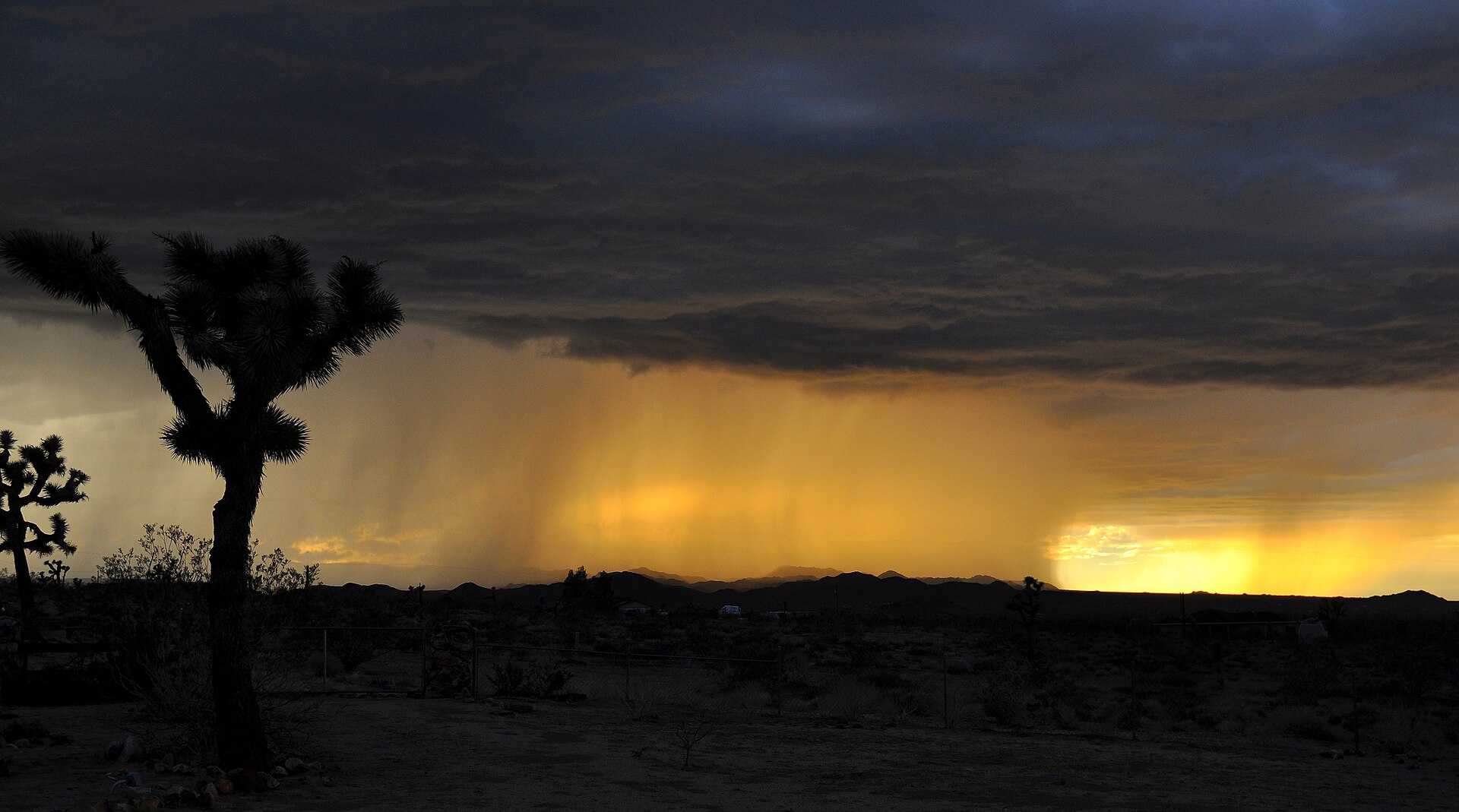
After a tropical cyclone hits, trailing winds blow in dry air in the storm’s wake, leading to a two-week calm after the storm where the chance of rain drops by 15-18% compared to non-cyclone conditions. Tropical cyclones are thirsty — sustaining multiple days of intense rain not only uses up all the water in the immediate area of the storm but also requires stealing moist air from the storm’s surroundings. This creates a trail of dry air that is blown in after the cyclone leaves, briefly changing the local water cycle. [Geophysical Research Letters study]

Climate models at risk of overestimating carbon storage by trees
The land surface absorbs about a third of human carbon dioxide emissions, but future drying could reduce that capacity. New research finds the impact of dry spells on Europe’s trees has been underestimated by a factor of 2 to 3 under 4.5 degrees of warming. Dry conditions restrict how quickly trees can incorporate carbon by growing new wood. When this limit is accounted for, Europe’s forests are projected to store up to 30% less carbon by 2069 than they did from 2005-2014. Researchers warn that many climate models are missing this drying effect on trees, which may mean climate projections are overestimating carbon removal. [Geophysical Research Letters study]

Future fire smoke could erase decades of air quality improvements in southwestern China
Smoke from increasing future fires is projected to cause more than 40,000 additional premature deaths in the Indochina Peninsula and southwestern China between 2058 and 2060, according to a new climate modelling study. Warmer temperatures, drier conditions, and changing wind patterns are expected to trigger more fires in the Indochina Peninsula, increasing downwind particulate concentrations by up to 58%. By 2060, smoke is expected to erase the air quality gains expected from emissions reductions in China. [JGR Atmospheres study]

Warming to worsen water cycle whiplash across the UK
When an area flips rapidly between drought and flood conditions, the water whiplash leads to increased flash flooding, declining water quality, and other costly and disruptive impacts. A new study of precipitation and river flows across the U.K. projects that combined dry and wet extremes — including dry spells up to 20 days longer and 6-40% increases in the risk of extreme flooding — will stack to cause parts of the U.K. to experience up to 5 more whiplash events every 30 years if the world warms 4 degrees Celsius. Although historically wet areas will generally get wetter, and dry areas drier, increased swings between extremes nationwide will require infrastructure adaptations that can cope with both too much water and not enough. [Earth’s Future study]

Malaria rebounds within years of control program ending in rural Brazil
New research found that cases of malaria rose by over 1000% in rural areas of the Brazilian Amazon, putting forest-edge communities at the highest level of risk after local programs stopped. This study offers a stark, data-driven warning about the impact of interruptions to malaria control programs and the critical role of landscape epidemiology in achieving and maintaining malaria elimination in Amazonian settings. [GeoHealth study]

Reconnecting to the Lunar Trailblazer with Light
Learning from the attempted rescue of the Lunar Trailblazer: how ground-based optical observations and laboratory measurements can improve recovery of the attitude of a spacecraft lost in space. [Eos editors’ highlight][Earth and Space Science study]

The Largest Ice Thickness Survey of Alaska’s Glaciers
A decade of NASA airborne radar surveys produces the most extensive inventory of glacier ice thickness for Alaska and northwestern Canada to date. [Eos editors’ highlight][Journal of Geophysical Research Earth Surface study]

7/2/2026: Rubber bits from your car tires could be shaping the clouds

A single car tire illuminated with daylight from a side angle

The tiny specks of rubber that flake off from rolling car tires end up as the most abundant microplastic floating in the atmosphere, potentially altering cloud formation. Credit: Obi on Unsplash

Featured Research

Rubber bits from your car tires could be shaping the clouds
The most common microplastics floating in the atmosphere come from car tires, which shed tiny bits of rubber as they roll around. Water in clouds condenses around those rubber particles and freezes into ice crystals. Researchers found tire particles instigate condensation better than other common microplastics by one to two orders of magnitude: even after the scientists blasted them with intense heat and light like they might experience on hot road surfaces, the rubber bits still outshone the competition. This phenomenon could play a surprisingly strong role in how clouds form, the team wrote, especially in bustling cities and as the number of vehicles rises worldwide. [Geophysical Research Letters study]

Western US wind power to remain viable, even as climate change weakens winds
Wind power potential across the U.S. Mountain West may fall by an average of 8.8% from 1980 levels by 2099, new model analyses project, with losses of 12% in northern Nevada and southeastern Wyoming and greater seasonal declines in winter than in summer. Even so, wind power in most high-elevation windy regions will likely remain comfortably economically viable, largely thanks to how mountain topography itself helps sustain wind patterns. The researchers hope their detailed wind maps will help inform strategic wind farm planning as climate change progresses. [Earth’s Future study]

  • See also: Terrestrial Stilling Projected to Continue in the Northern Hemisphere Mid-Latitudes [Earth’s Future study]

US heat-related hospitalizations could double by 2040
Across the 53 largest metro areas of the contiguous U.S., hospitalizations due to heat-related illness could more than double from 2012 levels by 2040, reaching 217,000 to 237,000 per year depending on future greenhouse gas emissions. Associated healthcare costs would also more than double, topping $1 billion per year. The findings, based on model simulations accounting for health risk factors and various climate and demographic projections, also indicate geographical differences: the West, South, and Southwest may rank at the top for the most total heat-related illness cases each year, but regions less infrastructurally prepared for heat such as the Northeast and the Ohio Valley may suffer more cases per extreme heat event. [GeoHealth study]

Long droughts associated with upticks in US firearm suicides
New research comparing mortality and weather data identified a 9.4% spike in U.S. firearm suicides during severe droughts lasting over 12 months between 2000 and 2018. Firearm suicide risk peaked at 10.9% above non-drought conditions during the worsening half of exceptionally bad droughts. When rainfall drops below normal levels for a year or more, people face not only dry soils and dusty air but also devastating economic and emotional impacts. Though the study didn’t establish a causal relationship between drought and suicide, the link is strong enough that the researchers suggest including mental health support in future drought response to reduce impact on the most at-risk groups, including older people and residents of rural communities. [GeoHealth study]

Bioenergy crops an economic and environmental win-win on steep Midwestern slopes
Growing two perennial bioenergy crops, Miscanthus and switchgrass, instead of corn on the sloping farmlands of the upper Mississippi River Basin could bring both economic and environmental benefits, according to a study that simulated such a swap in the period from 1984 to 2018. The substitution curtailed the runoff of certain types of nitrogen and phosphorous by 93% on average, with the greatest effect on slopes over 4% — an important outcome for water quality, since that nutrient runoff winds up in waterways. On net, it also raked in a potential $24.2 billion over the simulation period, due to both biofuel production and pollution-control cost savings. [Earth’s Future study]

Subscribe or update your subscription preferences

6/25/2026: Beetle-infested snow gums release more climate-altering compounds

A lone snow gum tree on a mountain slope covered in shrubs in boulders, overlooking rolling mountains in the distance under a partly cloudy sky

A lone snow gum tree (Eucalyptus pauciflora) in New South Wales, Australia. Wood-boring beetle infestations have caused dieback of snow gum forests across the Australian Alps. Credit: Toby Hudson on Wikimedia Commons

Featured Research 


Heatwave research roundup:
 

  • Can AI predict rare ‘butterfly effect’ weather events? [JGR Machine Learning and Computation study] 
  • Extreme temperatures: prediction vs. observation [JGR Atmospheres study] 
  • Unprecedented Europe heat in June–July 2019: Risk in the historical and future context [Geophysical Research Letters study] 
  • Heat Waves: Physical Understanding and Scientific Challenges [Reviews of Geophysics review] 

Changing climate may bring more big floods to eastern US
When intense rain falls over a large area all at once, flash floods in multiple catchments can combine into dangerous incidents like the 2023 Vermont floods, 2024 Hurricane Helene floods and 2024 Kentucky floods. In the contiguous United States, most extreme rainfall increasingly occurs during rare, larger-scale events rather than more common smaller events. In the eastern U.S., large events are also becoming more frequent, suggesting the region should prepare for outsized future flooding in the years ahead. [Geophysical Research Lettersstudy]  

Texas’ flooding risks rise with climate change, especially for roads and railways
By area, 25% of the U.S. state of Texas is already highly flood-prone. As new risk maps based on high-res models reveal, that 25% also contains half the state’s roads and railways and 80% of its bridges. By 2100, climate change alone could grow that high-risk area by 10% to 12%, exposing up to 15% more of Texas’ transportation infrastructure to severe flooding — even without accounting for future construction there. Since economies and emergency services depend on roads and railways, flood damage to transportation can hit especially hard. The researchers also note that existing regulatory maps, including FEMA’s, don’t capture major flood risks in rapidly urbanizing zones, underscoring the need for forward-looking disaster planning. [Earth’s Futurestudy]  

Beetle-infested snow gum trees let loose potentially climate-altering compounds
When infested with wood-boring beetle larvae, snow gum tree trunks in the Australian Alps release a resin that gives off chemicals known as volatile organic compounds — seven times more so than when not infested. Given the beetles’ ongoing spread through the mountains’ snow gum forests, that could have implications for the region’s climate, researchers say: volatile organic compounds influence atmospheric chemistry in ways that can promote cloud formation, sunlight reflectivity, and wildfire risk. [JGR Biogeosciencesstudy]  

Low-wind, low-sun ‘energy droughts’ challenge renewables in some regions
Rising adoption of solar and wind power have successfully averted the IPCC’s worst-case-scenario future, but not all regions have equally favorable weather conditions for renewables. A warming climate may exacerbate disparities by contributing to more days when low winds and minimal sunshine cause energy prices to spike. In densely populated southwestern China, already-limited renewable energy resources and low income levels make the region particularly vulnerable to this combination of extreme lows. Planning and investment are needed to offset the burden on less wealthy populations. [Earth’s Future study] 

This swirling ocean eddy shares food with its neighbors
On a research cruise in the Mediterranean Sea, scientists discovered an odd phenomenon around a swirling eddy. The eddy sucks low-nutrient surface water down below the reach of sunlight, concentrating those few nutrients within itself without sending many back up. Instead, it then pushes those nutrients out towards its edges — meaning the most nutrient-poor waters the team encountered in fact house a hidden relay system for gifting nutrients to neighboring waters. Small-scale currents like these abound in the oceans, raising questions about how they might shape the distribution of nutrients at the base of marine food webs on larger scales, too. [Geophysical Research Lettersstudy]  

Solar storms can affect Earth’s weather. A new study examines how.
New findings could help narrow down the mechanisms by which solar activity influences our weather. [Eos research spotlight] [Geophysical Research Letters study] 

Where methane is emitted matters for global burden
Methane emitted at higher latitude regions (Europe) tends to stay in the atmosphere longer, contributing to higher global concentrations than other regions (Asia, North America). [Eos editors’ highlight] [JGR Atmospheres study] 

Subscribe or update your subscription preferences 

6/18/2026: Earth’s largest inland sea is drying up

A sandy coastline of a tranquil sea curves off into the distance under a sunny sky with wispy clouds.

Shrinkage of the Caspian Sea (pictured), Earth’s largest landlocked water body, has invited comparisons to that of the Aral Sea since the 1960s, following Soviet Union irrigation efforts that diverted water from the two major rivers feeding it. Credit: Sasan Geranmehr, Wikimedia Commons

Featured Research 

As the Caspian Sea dries, saving it will require international action
The Caspian Sea, Earth’s largest inland water body, has been steadily shrinking since the early ‘90s. According to satellite data and river measurements, that’s mostly because river inflow has tanked — especially from the Volga River — due to upstream water usage, reservoir building, and evaporation from regional climate warming. In contrast, rainfall has held steady and evaporation from the sea’s surface has grown little. Rising levels of chlorophyll-a, a green pigment often used as a measure of algae in water, also point to mounting ecological stress. Mitigating the sea’s ongoing desiccation, as well as the ecological and socioeconomic consequences, will demand coordinated international water management efforts, the researchers wrote. [Earth’s Futurestudy]  

Clean air policies mean China sends less black carbon to the Arctic than 15 years ago
Arctic black carbon originating from China declined roughly 3% per year from 2009 to 2022, according to model simulations and measurements at Arctic observatories. Though China formerly emitted up to 30% of the black carbon winding up in the Arctic, national clean air policies have since limited those emissions, explaining most of the decline. Released from fossil fuel and biomass burning, black carbon can ride the wind from lower latitudes to the Arctic, where it warms the atmosphere and speeds up ice melting by darkening its surface. The results show that emissions controls in mid-latitude regions can mitigate these impacts. [Earth’s Future study] 

Rainfall losses from deforestation may transform parts, but not all, of the Amazon
Because trees release water into the atmosphere that eventually falls as rain, deforestation can lessen rainfall in the Amazon. New research modeling how moisture moves through the atmosphere indicates that while rainfall losses from deforestation alone likely won’t topple the entire rainforest, they could transform certain areas into drier, savanna-like landscapes — especially in southwestern Amazonia, where rainfall depends heavily on upwind forests remaining intact. The researchers estimate this could happen to 81% of the state of Rondônia. Losing forests in western Amazonia and the eastern Amazonia-Cerrado border would constrict downwind rainfall the most, making these key conservation areas, while reforestation in eastern Pará could help to actively boost rainfall. [Geophysical Research Lettersstudy]  

See also:

  • Deforestation lessens Amazon rainfall, and climate change hastens that process [press release] [Geophysical Research Letters study]

Pacific waves can travel for days, covering thousands of miles
From the storms where they were born, the longest-traveling waves in the Pacific can carry on for more than 12,000 kilometers (over 7,400 miles) over the course of 12 days. The figure comes from a year of data gathered from roughly 300 wave buoys drifting around the Pacific Ocean. The data also agree well with computer models of swells, indicate that modern models can accurately simulate how swells propagate and how fast they lose energy. [JGR Oceansstudy]  

For coastal lowlands like the Fens, no single fix for climate adaptation
The Fens, a coastal lowland of eastern England, faces a slew of interwoven threats from climate change, not just a few dominant ones. Sea level rise, flooding, drought, biodiversity loss and more are all on the table, making adaptation a complicated affair. Researchers used this region, with its history of intensive management and modifications for agriculture, as a case study for assessing how these risks might change and interact over the course of this century and found that a wide range of climate adaptations will be necessary. The team says their regionally focused risk assessment method may assist adaptation planners in other coastal lowlands facing compounding climate threats in the UK and beyond. [Earth’s Futurestudy]  

As wildfires increase in the West, so does suppression spending
A new study projects the intertwined relationship between fires and the money spent fighting them. [Eos research spotlight] [Earth’s Future study] 

Subscribe or update your subscription preferences 

6/11/2026: How long life on Earth could last

The sun shining over the face of the Earth as seen from space, with Earth's surface in the foreground and the sun in the background

The sun will eventually grow too bright for Earthly life to persist, but exactly when remains uncertain. A new study suggests the limit may lie hundreds of millions of years farther down the road than earlier research estimated. Credit: NASA

AGU News

AGU opposes rule that would rewrite the terms of US Science
Last week, the U.S. Office of Management and Budget proposed a federal rule that would embed political control into the rules governing federal research funding in the United States. If finalized as written, this rule would give political appointees veto power over peer review, allow the government to cancel active grants mid-project with minimal justification, ban entire categories of science from federal funding, and restrict researchers’ ability to publish their work and attend scientific conferences. AGU President Brandon Jones urges the AGU community to submit a comment through AGU’s Action Center before 13 July. [video statement on YouTube] [written statement From the Prow] [AGU Action Center comment submission page]

Featured Research

Life on Earth could last hundreds of millions of years longer than once thought
As the sun steadily brightens with age, life on Earth will eventually end. Either the planet will get too hot for life, or the rising heat will increase the rate at which it stores CO2 in carbonate rocks — reducing the greenhouse effect but leaving plants too little CO2 for photosynthesis, effectively ending life anyway. Previous studies of the second scenario estimated life has another 1.35 billion years to go. But new model simulations of future climate scenarios indicate it could last up to 1.8 billion years from now, since some photosynthetic life may thrive even at low CO2 levels. In this case, life will last about as long as Earth’s oceans, which will eventually be lost to space as the brightening sun heats the planet. [JGR Atmospheres study]

Restoring peatlands can reduce fires, Indonesia’s efforts show
After draining and deforestation paved the way for widespread peatland wildfires in 2015, efforts to restore Indonesia’s peatlands may be paying off. Damming canals and pumping in groundwater to re-wet the land resulted in 2.6 fewer fires per square kilometer (6.7 per square mile) in restored peatlands than in unrestored ones in 2019, based on satellite measurements. Though climate also played a role, researchers estimated those efforts contributed 38% of the drop in fires across over 3,900 square kilometers (1,500 square miles) of restored peatland between 2015 and 2019 — both El Niño years, which tend to make Indonesia drier. The results show restoration should remain a priority, the researchers wrote, though climate variability may render its benefits invisible in some El Niño years, such as 2023. [Geophysical Research Letters study]

Young, planted forests gobble CO2 to get leafy fast, potentially helping climate
Across China, planted forests upped their leaf area about 66% faster than natural forests from 2000 to 2022, according to satellite data and machine learning analysis. Even when comparing forests of similar age and growing conditions, planted forests got leafier 4.6% faster nationally, with an even greater difference in mixed and evergreen forests. That’s partly because those planted forests are younger and respond more strongly to rising CO2 levels in the atmosphere, using it to grow more vigorously. Although natural forests start outpacing planted ones once the latter hit around 40 years of age, researchers said the results still highlight how planted forests can help absorb CO2 to support climate action. [Geophysical Research Letters study]

El Chichón and Pinatubo volcanic eruptions slowed sea ice loss
Arctic sea ice has been shrinking over the past four decades, but after 2000, the retreat sped up abruptly. Sunlight-blocking aerosols from the 1982 El Chichón and 1991 Pinatubo eruptions counteracted the ice-melting effect of greenhouse gases during the 80s and 90s; if the volcanoes had not erupted, ice would have diminished 1.5 times faster before the turn of the millennium. Climate models accounting for both human and natural influences predict the arrival of ice-free Arctic summers decades earlier than those that only incorporate human emissions, around 2049 if greenhouse gas emissions continue at current levels. This timeframe generally agrees with estimates based on sea ice thickness. [Geophysical Research Letters study]

In some cases, hurricanes may help salt marshes withstand sea level rise
In 2017, Hurricane Irma dumped up to eight centimeters of new sediment in some coastal salt marshes, according to an analysis of 37 sites across four marshes tucked behind barrier islands from Florida to South Carolina. The finding suggests that although storms often erode salt marshes, they can also — under the right conditions of exposure, location and wind and wave strength — help build them back up. When this occurs, it makes salt marshes more resilient to sea level rise, which can kill off salt marsh plants via long periods of inundation. [JGR Earth Surface study]

Mangroves may be losing their grip on carbon storage as sea levels rise
Locally, mangroves can sometimes adapt to rising seas, but global trends look troubling. [Eos research spotlight] [Earth’s Future study]

Rocket launches and reentries harm Earth’s ozone layer
Solid-state fuels—recently used to help launch astronauts to the Moon for the first time in decades—appear to be the fuel type with the most detrimental effects on the ozone. [Eos research spotlight] [Earth’s Future study]

Subscribe or update your subscription preferences

6/4/2026: Storms on Titan can make 10-foot waves of methane and ethane

Vapors rise from the surface of a rocky sea on an alien world, with mountains in the distance and planetary bodies floating in the hazy sky above

An artist’s rendering of the surface of Saturn’s moon Titan. Though Titan is the only other world in our solar system with standing lakes and seas, its liquid bodies are made of methane and ethane, not water. Credit: Stan Richard; NASA

AGU News 

AGU opposes rule that would rewrite the terms of US Science
Last week, the U.S. Office of Management and Budget proposed a federal rule that would embed political control into the rules governing federal research funding in the United States. If finalized as written, this rule would give political appointees veto power over peer review, allow the government to cancel active grants mid-project with minimal justification, ban entire categories of science from federal funding, and restrict researchers’ ability to publish their work and attend scientific conferences. AGU President Brandon Jones urges the AGU community to submit a comment through AGU’s Action Center before 13 July. [statement From the Prow] 

Featured Research 

Storms on Titan can make 10-foot waves on methane and ethane seas
Saturn’s moon Titan has lakes and seas of methane and ethane, making it the only other world in our solar system with standing liquids on its surface. New simulations show that the same wind speed generates waves 30 times larger on Titan’s liquid bodies than on Earth’s. While daily winds on Titan are too weak to coax out any waves at all, stronger winds from spring and summer storms likely make waves up to about 1.5 feet high, on average, and up to around 10 feet high when storm winds blow their hardest. Based on their direction, storm waves likely sculpted the eastern shore of Ontario Lacus, a lake in the south of Titan. [JGR Planets study] 

Earth’s ballooning energy imbalance locks in more warming than expected
At the top of Earth’s atmosphere, the planet is gaining more energy from the Sun than it loses to space, an imbalance felt as warming temperatures on the ground. The gap is widening; the energy differential has more than doubled since 2001. Satellite measurements show energy accumulating in the climate system much faster than models predict. This means the ocean is absorbing more heat than expected and more future warming is locked in. If global societies were to restrict greenhouse gas emissions to very low levels starting now, the warming trend would not turn around before the 2040s, more than 10 years later than previous estimates. Surface temperatures would continue to rise as the extra heat already absorbed was distributed throughout Earth’s systems. [Geophysical Research Letters study]

See also:  

  • Global warming has accelerated in the last decade [press release] [Geophysical Research Letters study] 
  • Ocean will burp accumulated heat in an ideal cooling world [AGU Advances study]
  • Earth’s energy imbalance more than doubled in recent decades [AGU Advances commentary]

Air pollution may raise hospitalization risk for type 2 diabetics with other conditions 
Short-term air pollution exposure puts those with type 2 diabetes and cardiovascular disease, hypertension or peripheral vascular disease at greater risk of hospitalization. An analysis of over 92,000 hospital admissions of type 2 diabetics in China’s Sichuan Province, over half of which also had one of the comorbidities, showed air pollution raised hospitalization risk 1.5% to 4.3% depending on the comorbidity, especially around six to seven days after exposure. The resulting hospital costs totaled tens of millions of Chinese Yuan (millions of U.S. dollars), highlighting the impact of air pollution not only on vulnerable people’s health but also on healthcare expenses. [GeoHealth study] 

Which regions of the U.S. guzzle the most water per household, and why
Two months of monitoring by smart water meters in over 33,000 households across 39 major American cities bore these insights: households in the southwest, south, and northern Midwest used the most water, while those in coastal regions, especially in California, used the least. Behaviors — especially toilet flushing and shower time — explained most of the differences in water use per capita, while the efficiency of appliances, especially clothes washers, made the most impact between households. Sustainable urban water management should target both areas for improvement, the researchers wrote. [Water Resources Research study] 

See also: 

  • Toilets and showers make up the vast majority of household water use [press release][Earth’s Future study] 
  • Faced with water restrictions, many Americans would willingly pay to reuse water [newsletter item][Water Resources Research study] 

Uncovering the best conditions for finding hydrogen fuel in mountains
Erosion may augment the amount of hydrogen naturally stored in mountain ranges like the Alps and the Pyrenees, which could help humans pinpoint where to drill for the gas as a clean energy alternative to fossil fuels. When rocks from deep in Earth’s mantle get lifted towards the surface as mountains form, they pass through a suitable temperature range in which they can react with water to produce hydrogen. Erosion of the mountains can help bring those rocks towards the surface, making that process more efficient, new computer simulations suggest. Too much erosion, however, can bring them towards the surface so quickly that they spend less time in the temperature range necessary for the hydrogen-producing reaction. Excessive erosion can also wear away the porous rock layers that might otherwise store the newly made hydrogen. [JGR Solid Earth study] 

The surprising link between a cold blob and the Indian monsoon
Climate processes that at first glance appear separate can actually be intimately linked, modeling shows. [Eos research spotlight][AGU Advances study] 

Rivers in the Antarctic sky, captured in 3D
A new study shows that atmospheric rivers may be responsible for up to 90% of Antarctica’s annual precipitation. [Eos research spotlight][Geophysical Research Letters study] 

Model of complex blanket bog improves prediction of peat expansion
Peat expansion is tightly coupled to the global climate cycle. As a nature-based solution to climate change, we need to know how peatlands will respond to different climate scenarios. [Eos editors’ highlight][Water Resources Research study] 

Subscribe or update your subscription preferences 

5/28/2026: International laws curb shipping pollution

A cargo ship in the ocean, loaded with containers, seen from a bird's-eye view in the evening

A cargo ship off the coast of Venezuela. In response to environmental concerns, international regulations over the past two decades have required ships to switch to cleaner fuels in certain coastal regions. Credit: Wilfredor, Wikimedia Commons

AGU News 

Save US forecasts: AGU Presidents to join weather & climate marathon livestream
From 4pm EDT next Monday, 1 June to 6pm EDT Wednesday, 3 June, more than 100 weather and climate scientists will speak continuously for 50 hours in protest of federal funding and staffing cuts. AGU President Brandon Jones and AGU President-Elect Benjamin Zaichik will participate on 3 June at 2:00 – 2:40 pm EDT. [YouTube livestream] [event contact: [email protected]] [AGU leadership contact: [email protected]] 

Session highlights from the JpGU-AGU Joint Meeting 2026 in Chiba, Japan (and online)
Members of the news media interested in covering the Joint Meeting of the Japan Geoscience Union and AGU in Chiba, Japan from 24-29 May 2026, either online or in person, should complete pre-registration on the meeting press page. The meeting is accessible in English. Reporters can send registration questions to [email protected]. [Meeting website] [Meeting press page] [Info for online participation] [Info on session languages] [full program] [media advisory] [highlight sessions] 

Featured Research 

International laws successfully curbed maritime shipping pollution
Regulations on ship fuels have cut atmospheric pollutants along the US East Coast by at least 80% for vanadium, at least 67% for particulate nickel, and at least 53% for particulate sulfate. High-sulfur ship fuels emit these pollutants when burned, prompting the International Maritime Organization to enact regulations in 2012 and 2015 requiring ships to switch to low-sulfur fuels in certain North American coastal areas. The results, based on a 15-year dataset from monitoring sites along the East Coast and measurements from NASA flights over the northwestern Atlantic from 2020 to 2022, highlight the effectiveness of regulations for controlling maritime pollution, the researchers write. [JGR Atmospheres study] 

Sudden streamflow shifts present a rising hazard in the Mississippi River Basin
In a future of moderately high greenhouse gas emissions, major tributaries in the United States’ Mississippi River Basin should expect more frequent “hydrologic whiplash,” sudden shifts between high and low streamflow. Observations and climate models project that, by the end of this century, wet-to-dry whiplash may get 115% and 137% more common on the Missouri and Arkansas Rivers, respectively, compared to the period from 1851 to 1880 during which each river might have seen only one or two such events, researchers estimate. Booms and busts in rainfall and snowmelt will likely drive most of the increase. Understanding these trends may help this economically vital region alleviate their impacts on water resources and infrastructure. [Geophysical Research Letters study]

Seaweed could sink CO2 as efficiently as direct carbon capture
Farming, harvesting, and sinking massive amounts of seaweed could lock away planet-warming carbon dioxide as efficiently as technologies that directly capture the gas from the air, according to new model simulations. To grow, seaweed sucks up carbon from the waters near the ocean’s surface, prompting the ocean to absorb more CO2 from the atmosphere to make up for it, thereby mitigating climate change. Sinking seaweed at least 2,000 meters at a speed of 1,000 meters or more per day can, in some parts of the Pacific, lock away the carbon inside it for up to 500 years. This strategy gets less effective if the seaweed sinks too slowly or shallowly, or in places where water circulates too quickly between the depths and the surface. [Earth’s Future study] 

“Seed coating” tech could help restore degraded ecosystems
Seed coating technology, which wraps seeds in protective layers to help them germinate and grow, originated to improve crop yields — but a recent review of existing research indicates it could do the same for plants used to restore degraded ecosystems with salty, dry, or waterlogged soils. In these contexts, coatings can boost plant germination by over 23% and growth by over 43%. Coatings including micronutrients and oxygen-supply agents promote germination best, while those with beneficial microbes stimulate growth better, meaning it pays to match the right coating to the right species and environment. However, most coatings today are designed for grasses and legumes, highlighting the need to adapt the technology to suit restoration plants, the researchers write. [Earth’s Future study] 

Crust-shattering asteroids may have primed young Earth for life
Early in our planet’s history, asteroids pummeled Earth’s surface up to 100,000 times more often than today, fracturing its crust. Heat generated from those impacts, and rising from Earth’s interior, spurred fluids to circulate through those fractures, creating hydrothermal systems that could have lasted millions of years — a type of environment in which, scientists think, life may have originated or undergone early evolution. New computer simulations of differently sized asteroids hitting young Earth at various speeds suggest those impacts likely rendered vast regions of the upper eight kilometers (five miles) of Earth’s crust highly permeable for its first 1.5 billion years, promoting that kind of hydrothermal activity over long spans of time. [AGU Advances study] 

Subscribe or update your subscription preferences 

5/21/2026: Where irrigation is — and isn’t — going solar

Wheeled irrigation pipes shoot sprays of water over a grassy field with a valley and mountains in the background

Irrigation on agricultural land in Colorado, USA. The energy required to pump water for irrigation has environmental and economic costs, and many parts of the world are shifting to alternative irrigation power sources like solar. Credit: Tony Webster

AGU News 

Register for the JpGU-AGU 2026 Joint Meeting in Chiba, Japan (and online)
Members of the news media interested in covering the Joint Meeting of the Japan Geoscience Union and AGU in Chiba, Japan from 24-29 May 2026, either online or in person, should complete pre-registration at least two days in advance. Registration is free of charge for press covering the meeting and will grant access to all oral presentation sessions, poster sessions, and exhibition areas both online and in person. The meeting is accessible in English. Reporters can send registration questions to press@jpgu.org. [Meeting website] [Meeting press page] [Info for online participation] [Info on session languages] [full program] 

Featured Research 

Irrigation takes energy. Around the world, the sources of that power are changing.
Researchers have assembled the first global dataset (to the authors’ knowledge) revealing how much energy each country uses for irrigation, which power sources each relies on, and how those things are changing over time. Drawing on a combination of existing data and models, the effort indicates that many countries are shifting how they fuel their irrigation: solar-powered water pumps are on the rise in India and Pakistan, for instance, whereas China and the U.S. continue to rely mostly on the grid. Understanding these patterns can help inform food, energy, and water security goals as well as environmental efforts, the researchers wrote, since the energy cost of irrigation can affect both food prices and greenhouse gas emissions. [Earth’s Future study] 

Heat and drought may increasingly strike multiple global breadbaskets at once
Earth’s major agricultural regions will likely see simultaneous droughts and heatwaves occurring more often and for longer stretches through the end of this century, according to model projections. The Indo-Gangetic Plain may take the brunt, with drought-heatwaves eating up 32 more days per year under a mid-range emissions scenario than they did from 1982 to 2019. It won’t be alone, however: high-stress hot-dry extremes hitting over 30% of global breadbasket regions at once may also get more common, putting global food supply chains at risk as the planet’s population continues to grow. [Geophysical Research Letters study] 

As the Northern Hemisphere gets less dusty, its clouds trap less heat
As the Northern Hemisphere has gotten less dusty in recent decades, its clouds have gotten better at reflecting sunlight back into space, creating a cooling effect. Clouds can comprise both water droplets and ice crystals, but the former reflects sunlight better than the latter. Dust particles act as “seeds” around which ice crystals can form, so with less dust in the air, clouds in the Northern Hemisphere more readily take on a watery — and more reflective — form. The resultant cooling offsets about a quarter of the warming that other cloud-based phenomena cause, the authors write, meaning that Earth may be warming more slowly than climate models ignoring this effect project. [Geophysical Research Letters study] 

With less ice, more sunlight pierces the Arctic Ocean
As Arctic sea ice thins, shrinks in area, and melts earlier in the year due to human-induced warming, it reflects less sunlight, making the waters below brighter and warmer. Satellite and model data reveal that from 1984 to 2024, the Arctic Ocean took on about 300 megajoules of extra heat per square meter from sunlight alone — enough to melt a meter-thick layer of ice. Besides amplifying warming in a region already heating up faster than the rest of the globe, the energy from the extra sunlight could also alter marine food webs. [Geophysical Research Letters study] 

In some wetland soils, warming could ramp up microbes’ neurotoxin production
In a laboratory experiments, more heat caused microbes in wetland soils to more actively convert the mercury in those soils into methylmercury, a harmful neurotoxin — but only up to a point. This activity peaked at around 20 degrees Celsius, or 68 degrees Fahrenheit, but slowed down once temperatures reached 25 Celsius (77 Fahrenheit) due to nutrients for the microbes becoming more limited. Overall, the team wrote, this indicates that although warming generally boosts methylmercury buildup, how far this effect goes depends on the content of the soil itself. [JGR Biogeosciences study] 

How much will Western wildfires worsen under warming?
A new study reevaluates the use of vapor pressure deficit, or VPD, in climate models to predict increases in area burned by wildfire across the U.S. West. [Eos research spotlight] [AGU Advances study] 

Subscribe or update your subscription preferences 

5/14/2026 Astrobiology special edition: Microbes use hydrogen gas to make energy

Logo text: AbSciCon, 2026, 17-22 May 2026 - Madison, WI. Center illustration of a black and white cow wearing a space helmet jumping over a wheel of yellow cheese with Earth, Mars and another planet in the background.

AGU News

AbSciCon26 – Next week 17-22 May!
Next week, Astrobiology Science Conference will convene in Madison, Wisconsin, hosting 900 scientific posters, talks, town halls and plenary lectures. Reporters and press officers interested in press registration should email AGU Media Relations at [email protected]. Please include a link to a byline, masthead or a staff page listing your name and position. Freelancers should provide a link to a portfolio or links to at least three bylined science news stories published in the last 12 months.

Can’t make it in person? Remote attendees can join a small set of online-only discussion sessions on Zoom via the conference app. Recordings of the audio and slide presentations from in-person town halls, plenaries and oral sessions will be available on demand on the conference app about 72 hours after each session is finished. AGU media relations will be on site to help reporters connect with attending scientists.

[press information] [AbSciCon home] [program] [online-only sessions] [media advisories and tips]

Astrobiology Science Conference Highlights

*session start times are Central Daylight Time

Drill expedition finds living microbes 1 kilometer deep into the seafloor

  • Tuesday 2:00 PM abstract | app schedule
    Session: Turning Ocean Worlds Inside Out: From Drilling Beneath the Seafloor to Cryosphere Surfaces I Oral
  • Deep in Earth’s crust, single-celled organisms are carrying on with life, suggesting similar conditions could be habitable on other ocean worlds. The International Ocean Discovery Program Expedition 399 visited the Atlantis Massif, an underwater mountain rising 14,000 feet from the seafloor in the middle of the Atlantic, where tectonic activity has brought typically inaccessible mantle rock to the surface. The researchers were on a mission to sample life below the seabed and explore how non-biological reactions between water and rocks in this environment may simulate the ancient conditions that set the stage for life on Earth and, possibly, other worlds in our Solar System. They drilled 1,267.8 meters (4,159 feet) down from the southern wall near The Lost City Hydrothermal Field and found metabolically active microbes..


At mountain summits, soil microbes use hydrogen gas to make energy

  • Wednesday 2:00 PM abstract | app schedule
    Session: How Disequilibrium Fuels Life: Observations of Metabolic Opportunities Related to Dramatic Environmental Gradients I Oral
  • In the extreme heights of the Andes, soil microbes unlock hydrogen power. Thousands of meters up on Mt. Aconcagua in the Andes, in freezing cold, parching dryness, and intense UV radiation, microbes’ metabolisms get weird. After studying soil samples at elevations from 3,300 to 6,900 meters above sea level, researchers found that the higher the elevation, the more soil microbes use “trace hydrogen oxidation” to derive energy from tiny amounts of hydrogen gas in the atmosphere. Near the mountain’s summit, microbes used this strategy 75 times more intensely than at the lowest elevation where it was observed. The finding helps researchers understand how life persists not only in extreme Earth environments, but potentially under similar conditions on Mars.


These microbes may subsist on oxygen made by rocks

  • Wednesday 3:45 PM abstract | app schedule
    Session: Aerobic Aliens: Are Aerobic Worlds Inevitable? Pathways to Planetary Oxygenation I eLightning
  • With no plants around, these underground microbes get oxygen from rocks. Deep underground, the lack of sunlight prevents the creation of oxygen through photosynthesis by organisms like plants and algae, the way most oxygen on Earth is made — but microbes down there have other ways to get the gas. When crushed-up silicate minerals react with oxygen-free water, researchers found, they produce enough oxygen and hydrogen to support hardy subterranean microbes that don’t require much oxygen to live. Since silicate minerals and water occur on worlds like Mars, Europa, and Enceladus, it’s possible life could subsist in a similar way beyond Earth.


Need medicine in space? Just add water.

  • Wednesday 3:45 PM abstract | app schedule
    Session: Microbial and Human Habitability of Mars: Is Synthetic Biology the Solution? I Poster
  • Astronauts might one day make their own medications by adding water to a test tube. In the future, years-long space missions will need medicines to treat low bone density, radiation poisoning, and other medical issues — but these protein-based drugs would break down over the course of such long voyages, eventually rendering them useless. A better approach may involve taking the protein-building parts of living cells and freeze-drying them in test tubes, a method that has kept them viable for nearly three years in unpublished lab experiments. Adding water to a test tube could revive those protein-builders even years into a mission, giving astronauts the tools to make their own medicines on demand.


Forget washing machines: astronauts may clean their clothes with plasma guns

  • Thursday 10:00 AM abstract | app schedule
    Session: Planetary Protection for Crewed Missions: New Strategies, Emerging Technologies, and Lessons Learned I Oral
  • On future long-haul missions, even astronauts will need cozy comforts like bedding and sofas to stay comfortable for years in space. But current space-approved cleaning methods don’t work well on soft materials, which make great breeding grounds for microbes. Instead, researchers are trying another approach: blasting cotton T-shirt fabric with plasma jets, which produce reactive oxygen and nitrogen species that kill microbes better than vacuuming or surface wipes can. Trials on clean fabric so far show no impacts to the fabric itself, and researchers are now running tests with several microbe species. They also plan to test a handheld, soda-can-sized plasma jet cleaning tool currently being designed.


Exoplanet atmospheric complexity is an Earth-agnostic signature of life

  • Monday 2:00 PM abstract | app schedule
    Session: Assembly Theory Across Scales: From Molecules to Planetary Systems I eLightning
  • Life is a planetary process that accrues complexity on a global scale. To detect life beyond Earth without reference to Earth’s particular biology, scientists have proposed looking for signatures of molecular complexity based on the number of steps needed to construct a molecule. Biological molecules have a large “assembly index” of greater than 15. By extending this concept to atmospheric complexity, researchers can search for life in the spectra of exoplanet atmospheres as observed from our home planet (or general vicinity).


Humpback whale night thrums and other possible missed signals from non-human intelligences

  • Monday 3:45 PM abstract | app schedule
    Session: Searching for Technological Signatures of Life Beyond Earth II Poster
  • The search for extraterrestrial life is limited by human capacity to imagine how to look, listen and recognize intelligence. Low pitched (30 to 250 Hertz), above-water rumbles of humpback whales, recorded for the first time by scientific observers, demonstrate how observing the communication of non-human intelligent life on Earth expands our imagination of life beyond Earth. The “night thrums” can travel more than 10 kilometers above the waves, and had been noted by sea kayakers, lighthouse keepers and other quiet ocean visitors. The new study confirms a spectrum of other humpback aerial pizzles, chuffs, boils, howls and hoots that add an open-air dimension to the whales’ communication.


Icy worlds get new planetary protection guidelines

  • Monday 3:45 PM abstract | app schedule
    Session: Accessing Ocean Worlds: Challenges and Technologies for Sub-ice Exploration and Science I Poster
  • An international scientific committee aims to keep Europa, Enceladus and other icy moons pure for science – and Earth safe from returning samples. With the Europa Clipper and Juice missions en route to survey the large, icy moons of Jupiter for signs of life, astrobiologists are already planning for more robot missions to can drill into the ice and take samples. To prevent visiting spacecraft from contaminating pristine worlds with stowaway lifeforms from Earth, the Committee on Space Research recently released an update to its Planetary Protection Policy, first published in support of the 1967 UN Outer Space Treaty. The new guidelines define icy worlds, establish the driest and coldest conditions at which Earth life can survive and assign a 1,000-year period of biological exploration for all icy worlds during which contamination controls should be honored to preserve them for science.


Searching for life in the stars is controversial, putting some scientists’ safety at risk

  • Thursday 10:00 AM – 11:30 AM session abstracts
    Online Session: Safety for Scientists: Astrobiology, a Global Issue, and a Call to Action
  • Searching for life beyond earth can become an incendiary activity: it often generates significant public attention and emotion around a topic that is inherently controversial and uncertain. Misunderstandings about the science involved sometimes end in public backlash that threatens scientists’ safety. A session about how astrobiologists deal with these challenges will include talks on:
    • International safety recommendations and the specific safety challenges astrobiologists face. app schedule
    • How to foster trust between scientists and the public in advance, to preemptively mitigate the impacts when misunderstandings do arise and promote acknowledgement of scientific expertise even when science cannot offer certainty. app schedule
    • How potential public reactions to extraterrestrial life in the future could, by association, impact the researchers studying it. app schedule
    • Scientists’ firsthand experiences with the aftermath of putting controversial research out into the world. app schedule

###

5/7/2026: The Yangtze is stealing the headwaters of the Yellow River

A boat emitting a trail of smoke on a wide, peaceful river between steep cliffs at dusk.

Dusk on the Yangtze River. As the topographic divide between the Yangtze and Yellow rivers’ basins has moved over time, billions of cubic meters of water that once flowed into the latter each year now drain into the former. Credit: Andrew Hitchcock, Wikimedia Commons

AGU News 

AbSciCon26 registration open
Reporters and press officers interested in press registration for the Astrobiology Science Conference to meet in Madison, Wisconsin, 17-22 May should email AGU Media Relations at [email protected]. Please include a link to a byline, masthead or a staff page listing your name and position. Freelancers should provide a link to a portfolio or links to at least three bylined science news stories published in the last 12 months. [press information] [AbSciCon home] [program]  

Featured Research 

The Yangtze is stealing the headwaters of the Yellow River
China’s two longest rivers arise on the Tibetan Plateau, on opposite sides of a 3,000-kilometer-long divide that separates their drainage basins. Deep gorges and steep terrain shape the Yangtze headwaters while the Yellow flows through the gentle Zoige Basin. A new study argues the Yangtze is actively pirating the Yellow’s headwaters, pushing the divide northwestward. The climate swings of the Quaternary, the current ice age, amped up erosion in this region in favor of the steeper Yangtze basin. Over the last few million years, the Yangtze has stolen 30,000 square kilometers that once drained into the Yellow, reducing the annual runoff in upper Yellow River by 5 billion cubic meters. It’s about the same volume (4 billion cubic meters) that China plans to transfer back to the Yellow River through the western route of the massive South-to-North Water Diversion Project. [JGR Solid Earth study]

This asteroid literally dug up evidence of past water on Mars
Roughly fifteen years ago, an asteroid left a 25-meter-wide crater in Mars’s dusty Arabia Terra region, driving itself into the plains within a much larger, older crater. The impact acted as “nature’s drill,” write the authors of a new study, offering a rare glimpse beneath the Martian surface. Observations of the crater from the Mars Reconnaissance Orbiter have revealed that magnesium saponite — a clay mineral that only forms with water around — exists just a few meters down, presenting another piece of evidence for past water on Mars. [JGR Planets study]

Coral heat stress in 2024 over three times more anomalous than in most warm years 
Compared to the historical average from 1981 to 2010, marine heatwaves around the globe in 2024 spanned more days and were more intense by more than three standard deviations — in other words, exceeding the historical average over three times more than most other above-average years for marine heatwaves. The extreme conditions of that year, when the average global sea surface temperature reached a record 0.61 degrees Celsius above the historical average, contributed to the fourth worldwide coral bleaching event on record. Reefs in the Red Sea, the Coral Triangle, Fiji, the Caribbean, and Brazil suffered especially severe heat stress, researchers report. [Geophysical Research Letters study] 

ER visits from asthma spike during nighttime heatwaves in Baltimore
When heatwaves in Baltimore last through the night, emergency rooms receive more patients with heightened asthma symptoms. A new study drawing on hundreds of adult and pediatric cases from 2016 to 2022 and air temperature measurements at the neighborhood level found that socially vulnerable neighborhoods and those with the greatest nighttime temperature changes were most likely to see ER visits shoot up. Baltimore’s Code Red Extreme Heat alert system, which relies on daytime temperature forecasts, doesn’t capture this correlation between heat and asthma, potentially underestimating residents’ heat exposure. Including measurements taken at night, when the city’s heat island effect strengthens, could improve early warning systems, the researchers wrote. [Johns Hopkins University press release][GeoHealth study]

In extreme weather, Appalachian forests’ slow and steady response wins the race
Appalachian forests’ adaptations to droughts and floods only appear months or years after the fact. The delayed response may provide critical resilience for the forests’ ecosystems, reducing how much water vegetation drinks up during dry periods and promoting water recharge when precipitation increases. [Water Resources Research study]

How wildfires worsen flood risk
A new approach to analyzing watersheds shows how storms occurring after a wildfire can have higher flooding risk than similar storms that occurred before a fire. [Eos research spotlight][Water Resources Research study] 

Want to predict wildfire severity? Look to the state of vegetation
A new study connects satellite data on vegetation condition, topography, and weather conditions to examine the predicted versus actual burn severity of the 2025 Los Angeles wildfires. [Eos research spotlight][AGU Advances study] 

Where was Baltica 616 million years ago?
Disentangling magnetic signals in its ancient rocks gives an updated view of the paleocontinent’s position during the Ediacaran period. [Eos research spotlight][Geochemistry, Geophysics, Geosystems study] 

Toward marine cloud brightening at scale: A science agenda
Marine Cloud Brightening (MCB) is a Solar Radiation Management (SRM) solution to cool the planet by changing the albedo of low-altitude marine clouds to increase reflected shortwave radiation. [Eos editors’ highlight][AGU Advances study][AGU Ethical Framework Principles for Climate Intervention Research] 

Let’s not forget about long droughts
Why do conceptual hydrologic models struggle to model long-term droughts? A new study investigates. [Eos editors’ highlight][Water Resources Research study]

Subscribe or update your subscription preferences