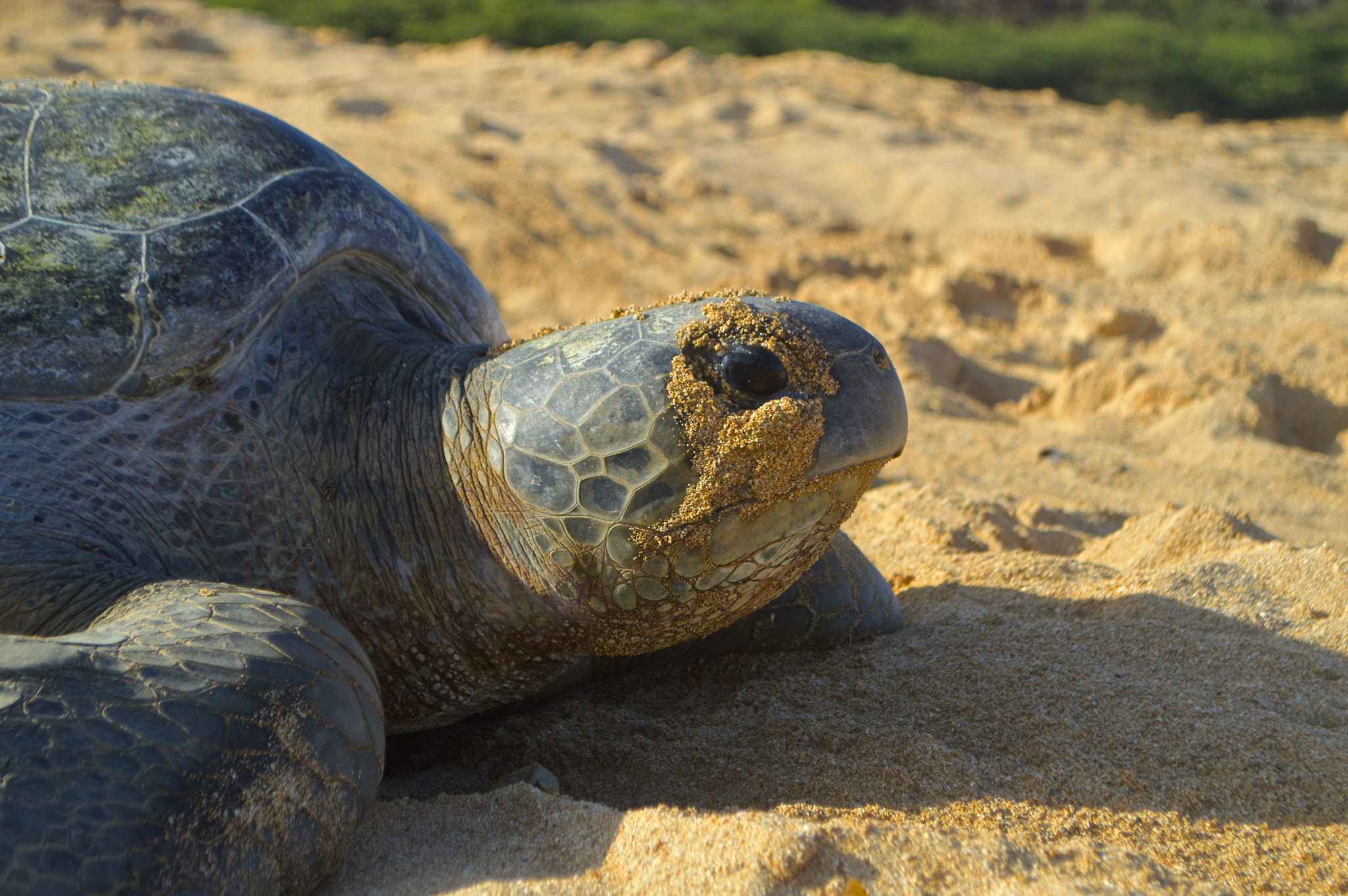
A female green sea turtle on Ascension Island, home to some of the world’s most important sea turtle nesting beaches. Four major nesting beaches around the world, including one on Ascension Island, are eroding over time as sea level rises, and there’s not always space for turtles to move further inland. Credit: Stefan Hunt, Wikimedia Commons
.jpeg)
AGU News
AGU letter to NSF on the proposed restructuring of NCAR
For more than six decades, National Center for Atmospheric Research has been a cornerstone of U.S. scientific leadership — advancing weather prediction, deepening understanding of the Earth system and training generations of scientists. In our response, AGU raises serious concerns about the assumptions behind dismantling such an integrated institution and emphasizes the critical role NCAR plays in protecting lives, supporting major economic sectors and advancing scientific discovery. [letter]
The state of ocean science: politics, pressure, and what comes next
What’s next for ocean science amid funding cuts and growing demand for research? Hear Janice Lachance, CEO of AGU, discuss the state of ocean science in a special episode of the SAMS Ocean Explorer podcast, recorded at the 2026 Ocean Sciences Meeting in Glasgow. [podcast] [related press briefing with AGU President Brandon Jones]
Featured Research
Sea level rise squeezes turtle nesting beaches
Rising seas and human development are squeezing critical sea turtle nesting sites.
A study of nine of the most important sea turtle nesting beaches around the globe found four show long-term erosion trends since 1980, losing nearly a meter a year in at least one place. Three of those sites also offer little space for turtles to nest further inland, putting that habitat especially at risk from rising seas. Researchers using satellite images, computer models, and coastal data to study these beaches’ shoreline movement over time noted that sea level rise does not affect them all evenly: in fact, three other beaches are widening, at a long-term trend of up to two meters per year in one location. The results may help guide more effective conservation, the team wrote. [Earth’s Future study]
With rivers dammed, estuaries lose their power to slow climate change
Since the Xiaolangdi Reservoir dammed China’s Yellow River in 1999, the amount of sediment reaching the river’s estuary has fallen nearly 90%, according to a new study drawing on data from 1984 to 2023. Consequently, the estuary’s carbon content and carbon burial rates have dropped 46% and 58%, respectively. River estuaries bury 70% to 90% of the globe’s marine organic carbon, helping to slow climate change, but damming has weakened that ability in major rivers including the Mekong, Mississippi, and Nile. Global dam-building may have cut estuaries’ carbon burial rates by over 33%, the researchers estimate, losing over 23 million metric tons of carbon burial per year. [Earth’s Future study]
Climate change may be making days slightly longer
Climatic changes can affect the length of Earth’s days by forming and melting glaciers and polar ice sheets, altering sea level and redistributing the planet’s water mass enough to change its rotation speed. To reveal how sea level changes have altered day length since the late Pliocene, researchers combined prehistoric climate data with a deep learning model. Human-driven climate change, they found, may be lengthening days at 1 to 1.5 milliseconds per century, depending on either a low- or high-emissions scenario this century. That may sound small, and the tidal influence of the moon still has a much stronger impact on day length. Still, it’s one of the fastest climate-induced rates of change in the past 3.6 million years and could impact activities like spacecraft navigation that require precise timekeeping or knowledge of Earth’s rotation, the researchers noted. [JGR Solid Earth study]
Daily satellite data on groundwater, ice melt and more may arrive in 2030s
Merging the observations of five existing and upcoming gravity satellite missions from Europe, China, and the U.S. may provide daily observations of water resources, ice melt, and earthquake impacts by the early 2030s, an unprecedented improvement over the monthly data currently provided by individual missions. New simulations indicate this “hybrid gravity satellite ensemble” would significantly boost scientists’ understanding of the amount of water stored in river basins, offering near-real-time tracking of groundwater depletion and enabling better water management. Scientists could also more accurately monitor the melting of glaciers and ice sheets, allowing for better tracking of sea level rise, as well as the amount of ground displaced by earthquakes. [Earth’s Future study]
Ross Sea may step up its carbon storage game as Antarctic ice melts
The eastern Ross Sea had among the highest dissolved organic carbon concentrations in Antarctic waters during extremely low sea ice conditions in 2023, according to a new study. The low sea ice enabled researchers to access the usually unreachable area, where they also recorded high iron concentrations and enhanced biological production. Iron-rich runoff from melting glaciers may have boosted microbial activity in the eastern Ross Sea, they wrote, producing organic carbon as a byproduct which then accumulated as water circulation patterns trapped it in place. As human-driven climate change fuels more glacial ice melt, the Ross Sea may emerge as a significant Antarctic carbon sink, though the researchers also emphasized the negative impacts of ice melt on ecosystems, sea level rise, and ocean circulation. [Global Biogeochemical Cycles study]
The “wet-gets-wetter” response to climate change does not always apply
While the precipitation response to a warming climate is often stated as “wet gets wetter,” this response does not apply to east-west overturning circulations like the Pacific Walker circulation. [Eos editors’ highlight][AGU Advances study]